







Hydrogen production water treatment removes dissolved minerals, ions, and organic matter from feedwater until conductivity falls below 1 microsiemens per centimeter, the purity level electrolyzers require to operate without damage. This purified output is ultrapure water, the feedwater grade electrolysis depends on.
Green hydrogen production relies on electrolysis powered by renewable electricity, and electrolyzers in that process depend on this water treatment step. Reverse osmosis performs the first and largest share of that purification work, removing the majority of dissolved solids before water reaches ion exchange or electrodeionization.
Water treatment quality determines electrolyzer reliability across the life of a green hydrogen plant. Electrolysis fails when feedwater carries silica, chloride, or hardness past this stage.
Reverse osmosis is essential for electrolysis because it protects the electrolyzer stack from the scaling and fouling that untreated feedwater causes. The sections below define this treatment train and the failure chain that follows when pretreatment is undersized.
What Is Water Treatment for Hydrogen Production?
Water treatment for hydrogen production is the multi-stage purification process that converts raw feedwater into ultrapure grade suitable for electrolysis. The process combines filtration, reverse osmosis, and final polishing to remove particles, dissolved minerals, and ionic contaminants before feedwater enters the electrolyzer.
Electrolysis is the process that splits water into hydrogen and oxygen using an electric current. Water electrolysis is the technical name for this reaction, and an electrolyzer is the equipment that houses it. Electrolyzer performance depends directly on feedwater purity.
Purity requirements differ by electrolyzer type, and the equipment sourced from industrial reverse osmosis systems must match that requirement. Alkaline electrolyzers require conductivity below 1 microsiemens per centimeter. Proton exchange membrane electrolyzers require conductivity below 0.1 microsiemens per centimeter, a tenfold stricter threshold.
Ultrapure water is feedwater purified to remove nearly all dissolved ions, meeting these electrolyzer specifications. A reverse osmosis and polishing train produces this grade from raw source water for hydrogen production facilities.
Feedwater treatment capacity scales with plant size. A larger electrolyzer array requires proportionally more ultrapure water capacity from the treatment system.
This purity difference explains why treatment system design varies by project. The next section examines why electrolysis depends on this purity level.
Why Does Electrolysis Require Ultrapure Water?
Electrolyzers require ultrapure water because dissolved minerals and particles in untreated water cause scaling, fouling, and catalyst degradation during electrolysis. These three failure mechanisms reduce hydrogen output and shorten equipment life.
Scaling occurs when dissolved hardness minerals and silica in feedwater precipitate onto hot or pressurized surfaces inside the electrolyzer. Scaling reduces water flow through the stack and increases the energy required to sustain electrolysis.
Fouling is a separate mechanism from scaling. Fouling occurs when particles, organic matter, or biological growth in the water supply accumulate on membrane and catalyst surfaces, blocking the active area available for electrolysis.
Three contaminants cause most electrolyzer water problems: silica, chloride, and iron. Silica forms hard, difficult-to-remove scale at elevated temperatures. Chloride corrodes metal components and degrades certain catalyst coatings. Iron precipitates and fouls membrane surfaces.
Conductivity limits reflect how sensitive each electrolyzer type is to these water-borne contaminants. Alkaline systems tolerate conductivity up to 1 microsiemens per centimeter. Proton exchange membrane systems require conductivity below 0.1 microsiemens per centimeter because their catalyst layers are more sensitive to ionic contamination in the feed.
Green hydrogen projects face this purity requirement regardless of plant scale. A small pilot electrolyzer and a large utility-scale hydrogen production facility both fail without adequate feedwater purification.
Preventing scaling, fouling, and catalyst degradation starts before water reaches the electrolyzer. The next section explains why reverse osmosis is the pretreatment stage that carries most of that responsibility.
Why Is Reverse Osmosis Essential for Electrolyzer Feedwater?
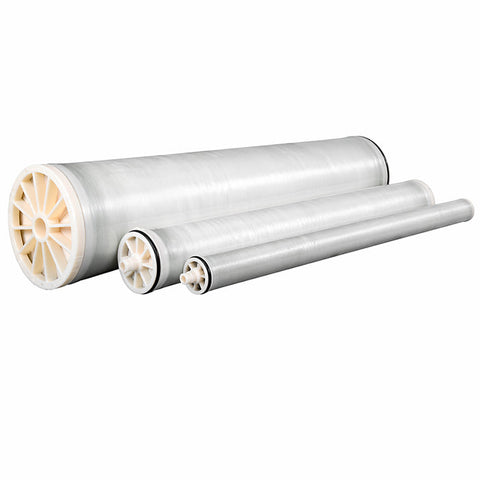
Reverse osmosis applies pressure to push water through a semipermeable membrane, producing a low-salinity permeate stream while concentrating rejected dissolved solids in a separate reject stream. This filtration step removes most of the dissolved load before water reaches downstream polishing.
A semipermeable membrane allows water molecules to pass while restricting dissolved ions, salts, and larger organic molecules. Pore structure, not a filter screen, drives this separation.
RO elements typically reject 95 to 99 percent of dissolved salts. Actual rejection varies by membrane type, feed composition, operating temperature, and system design. A documented rejection specification comes from the manufacturer for the specific feedwater involved.
RO must precede ion exchange or electrodeionization in a hydrogen-grade water treatment train. Mixed bed ion exchange resin and EDI modules have limited ionic capacity, and RO removes the bulk of the dissolved load before that capacity is consumed.
The permeate stream is the purified water that passes through and continues to downstream polishing. The concentrate stream is the rejected water carrying the removed dissolved solids, directed to drain or further processing.
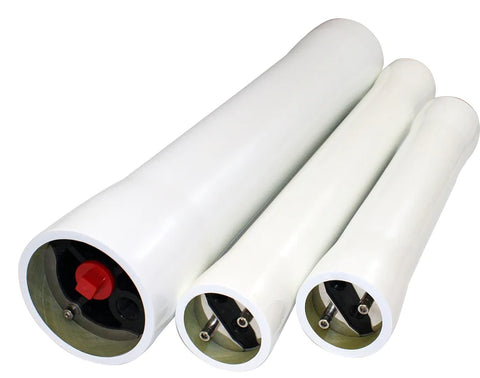
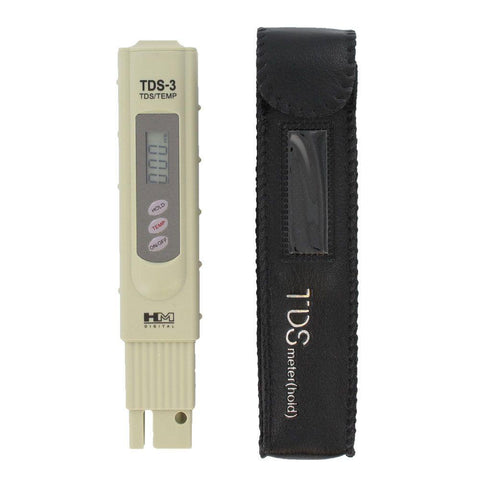
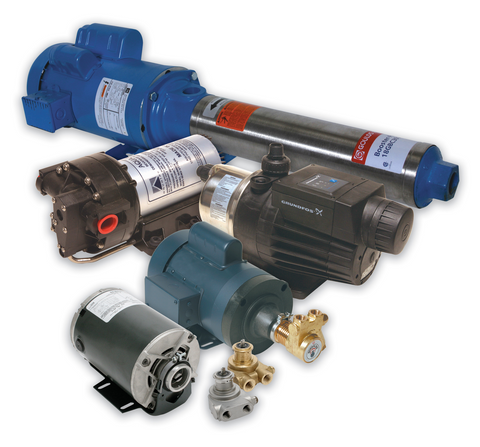
A complete water treatment system pairs the RO stage with supporting filtration components: membrane housings, filter cartridges, control systems, and pumps. Each component may be sourced as part of a matched system rather than assembled from mismatched parts.
Hydrogen production facilities rely on this treatment train to reach the conductivity level electrolysis requires. Sizing this treatment train correctly determines whether it prevents or allows the failure chain described next.
What Happens When Reverse Osmosis Pretreatment Fails Before Electrolysis?
Undersized RO pretreatment allows silica and hardness to pass through, which overloads downstream ion exchange or EDI resin capacity, which allows conductivity to rise past the electrolyzer's tolerance, which degrades the stack.
Undersizing begins the chain. An RO system sized for the wrong feedwater analysis or the wrong flow rate leaves more dissolved solids in the permeate than downstream polishing can absorb.
Resin overload follows next. Ion exchange resin and deionization systems carry a fixed ionic capacity, and the added silica or hardness load exhausts that capacity faster than the maintenance schedule anticipates.
Conductivity excursion is the third step. Once resin capacity is exhausted, conductivity rises past the electrolyzer's tolerance, 1 microsiemens per centimeter for alkaline systems and 0.1 microsiemens per centimeter for proton exchange membrane systems.
Stack degradation is the outcome. Contaminants that reach the electrolyzer at this stage cause scaling and catalyst degradation, reducing hydrogen output and increasing downtime and replacement cost.
Green hydrogen production economics depend on consistent electrolyzer output. Unplanned downtime from this failure chain directly increases the delivered cost of hydrogen from the facility.
Correct RO sizing against the actual source water analysis, not a generic assumption, prevents this chain from starting. Sizing accuracy depends on the water source itself.
Feedwater source varies significantly across hydrogen production sites, and that variation changes the treatment train's design.
How Does Feedwater Source Affect the RO Treatment Train Design?
Feedwater source determines RO treatment train design because groundwater, surface water, and brackish water each carry different contaminant profiles that require different pretreatment configurations.
Groundwater commonly carries dissolved iron, manganese, and hardness minerals. These contaminants require pretreatment such as oxidation and softening ahead of the RO stage to prevent premature fouling.
Surface water introduces different concerns. Organic matter, turbidity, and seasonal quality variability require multimedia or ultrafiltration pretreatment to protect RO performance across changing conditions.
Brackish or higher-salinity source water carries elevated total dissolved solids. This water quality condition requires higher operating pressure or a multi-pass RO configuration to reach the same finished water purity.
Water treatment system design starts from this source water profile, not from a standard template. Two hydrogen production sites with different source water can require substantially different treatment trains, even when both produce the same ultrapure water grade at the outlet.
Coastal green hydrogen projects near seawater sources face the most demanding pretreatment requirements, often specified around seawater reverse osmosis systems. Higher salinity increases both energy consumption and the pretreatment stages needed to reach ultrapure water specifications ahead of the RO system.
A documented water quality analysis, including temperature, determines which pretreatment configuration a given site requires. AXEON's technical support team reviews this analysis as part of pre-sale evaluation and sizing for current AXEON products.
Feedwater source establishes the treatment train's design basis. Translating that design basis into a purchasable system requires specific engineering inputs, covered next.
Related Reading:
- How Do Sea Water RO Membranes Withstand Extreme Salinity Conditions?
- How Do Brackish Water RO Membranes Improve Efficiency in Industrial Systems?
- Industrial Water Treatment for Manufacturing Plants: Processes, Systems, and Best Practices
What Should Engineers Specify When Sourcing a Hydrogen-Grade RO System?
Engineers specify source water analysis, required product water flow, recovery target, available pressure, and space and electrical constraints when requesting a hydrogen-grade RO system quote.
Provide a complete source water analysis, including temperature and seasonal variation. Specify the required product water flow rate in gallons per minute or liters per hour. Confirm the target recovery percentage for the site's water balance. State available feed pressure and electrical supply. Note space limitations for the equipment footprint.
Sourcing a complete system, membrane elements, housings, filtration cartridges, controls, and pumps and motors, from one manufacturer may simplify commissioning compared with assembling components from multiple suppliers, since matched components share documented compatibility across the treatment train.
AXEON Water Technologies engineers and manufactures these systems. AXEONSupply.com provides the online sourcing and wholesale purchasing platform for hydrogen production buyers and other industrial customers.
AXEONSupply.com ships within the United States and Canada. Domestic manufacturing and stocked components can shorten lead time compared with imported equipment awaiting customs clearance.
AXEON's design engineers may develop custom configurations, private-label packaging, and prototype units depending on the project scope and production volume.
Green hydrogen developers frequently request custom water treatment systems sized for specific electrolyzer capacity and future plant expansion. AXEON's systems accommodate this range of project scale.
Specification accuracy determines system fit. Engineers ready to move forward can submit a request for quotation with these inputs. Support during this process comes next.
Where Can Engineers Get Support Sizing a Hydrogen Production Water Treatment System?
AXEON's technical support team assists current AXEON customers with pre-sale evaluation, sizing, and product selection for hydrogen production water treatment systems within the applicable warranty period.
Have an AXEON account number ready, or contact the authorized seller for the original purchase. Provide the current source water analysis with temperature and a description of the application before contacting customer support.
Request a water quality assessment or sizing consultation to begin specifying an RO treatment train matched to a hydrogen production site's actual source water.
Water treatment decisions made early in a hydrogen production project affect electrolyzer reliability for the life of the plant. Sizing this system correctly from the start avoids the failure chain described earlier in this guide.
AXEON's reverse osmosis systems for industrial and ultrapure applications provide a starting reference point for engineers comparing configurations before finalizing a specification.