


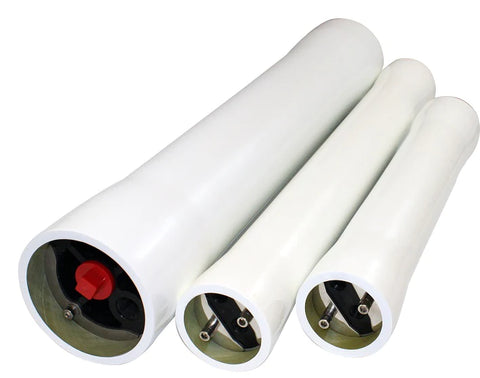

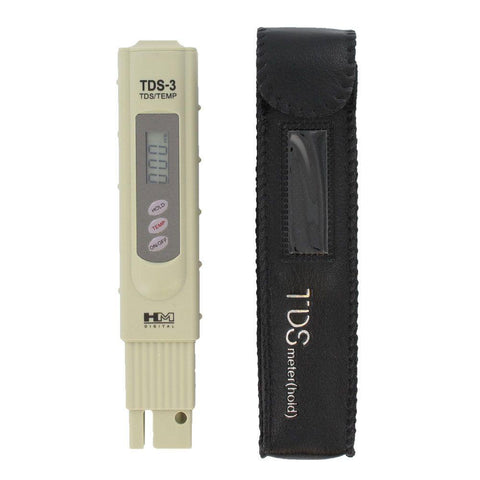


Sea water RO membranes withstand extreme salinity conditions through 3 primary engineering mechanisms: thin-film composite (TFC) polyamide layer construction, high-pressure operating design, and cross-linked polymer architecture. Seawater TDS ranges from 33,000 to 45,000 ppm — approximately 35 times higher than standard tap water TDS levels. TFC polyamide membranes achieve a salt rejection rate of 99.7% at standard SWRO test conditions. These 3 mechanisms operate simultaneously to maintain ion separation performance across seawater salinity ranges at operating pressures of 800–1,200 psi.
What Makes Sea Water RO Membranes Different from Standard RO Membranes?
Sea water RO membranes use a denser cross-linked polyamide active layer that rejects dissolved ions at seawater salinity levels of 33,000–45,000 ppm TDS. Standard brackish water RO membranes operate at 2,000–10,000 ppm TDS — less than one-third of seawater salinity levels.
The table below compares 3 RO membrane types across feedwater TDS range, operating pressure, and salt rejection rate:
| Membrane Type | Feedwater TDS (ppm) | Operating Pressure (psi) | Salt Rejection (%) |
|---|---|---|---|
| Residential RO | Up to 1,000 | 50–90 | 96–98 |
| Brackish Water RO | 1,000–10,000 | 150–400 | 98–99.5 |
| Sea Water RO | 33,000–45,000 | 800–1,200 | 99.4–99.8 |
Sea water RO membranes require 800–1,200 psi operating pressure to overcome the osmotic pressure of high-salinity feedwater—approximately 8–16 times higher than the pressure required for residential RO membranes.
How Does the Thin-Film Composite Layer Resist High-Salinity Feedwater?
The thin-film composite (TFC) polyamide active layer resists high-salinity feedwater by forming a dense, cross-linked molecular barrier that physically blocks dissolved sodium chloride (NaCl) and magnesium sulfate (MgSO₄) ions. The TFC active layer forms via interfacial polymerization of MPD (m-phenylenediamine) and TMC (trimesoyl chloride). At 2 wt% MPD and 0.1 wt/v% TMC concentrations, the cross-linked polyamide network achieves 98.6% salt rejection, per Nature Scientific Reports research (2025).
A TFC sea water RO membrane consists of 3 functional layers:
- Polyamide active layer (0.1–0.2 µm thick) — performs ion-level salt rejection by size exclusion and charge repulsion of NaCl and MgSO₄ molecules
- Polysulfone (PSf) support layer (40–60 µm thick) — provides mechanical integrity under 800–1,200 psi SWRO operating pressure without structural compression
- Polyester fabric backing layer — maintains dimensional stability of the membrane module during high-pressure seawater filtration cycles
Each of the 3 layers performs a distinct structural role. The polyamide active layer determines salt rejection performance. The polysulfone support layer determines pressure tolerance. The polyester backing layer determines module durability.
What Are the 4 Main Threats to Sea Water RO Membranes in High-Salinity Conditions?
4 fouling and degradation mechanisms reduce sea water RO membrane performance under extreme salinity conditions:
- Inorganic scaling — calcium carbonate (CaCO₃) and calcium sulfate (CaSO₄) crystals form on the polyamide surface when dissolved salt concentrations exceed solubility limits. Concentration polarization at the membrane surface accelerates CaCO₃ and CaSO₄ precipitation directly onto the active layer.
- Organic fouling — dissolved organic matter (DOM) in seawater adsorbs onto the polyamide active layer, increasing hydraulic resistance and reducing permeate flux below design flow rates.
- Biofouling — biomass accumulation on the membrane surface accounts for nearly 50% of total membrane fouling incidents in SWRO systems, per a 2025 comprehensive RO membrane fouling review published in the journal Desalination.
- Concentration polarization (CP) — an elevated salt concentration boundary layer forms directly at the membrane surface, locally increasing osmotic pressure beyond system design pressure and accelerating permeate flux decline.
All 4 fouling mechanisms are addressable through structured pretreatment protocols and antiscalant chemical dosing programs applied before feedwater contacts the sea water RO membrane element.
How Do Antiscalants and Pretreatment Protect Sea Water RO Membranes?
Antiscalants extend sea water RO membrane operational life from 3 years to 5–7 years by adsorbing onto CaCO₃ and CaSO₄ crystal growth sites on the polyamide surface, inhibiting scale nucleation before crystal formation begins.
3 standard pretreatment stages protect the sea water RO membrane element before feedwater contact:
- Sediment prefiltration (5-micron) — removes suspended solids, reducing feedwater Silt Density Index (SDI) below 3.0
- Carbon block prefiltration (10-micron) — reduces free chlorine to 0 ppm, preventing irreversible polyamide active layer degradation
- Antiscalant chemical injection — dosed at the feed line via chemical injection pump to inhibit inorganic scale formation across the membrane surface
AXEON Supply stocks antiscalants, antifoulants, sediment filter cartridges, carbon block cartridges, and chemical injection pumps compatible with standard SWRO pretreatment configurations.
What Are the Operating Pressure and Temperature Limits of Sea Water RO Membranes?
| Operating Parameter | Typical SWRO Operating Limit |
|---|---|
| Feedwater TDS | 33,000–45,000 ppm |
| Operating Pressure | 800–1,200 psi (55–83 bar) |
| Recovery Rate | 35–50% |
| Maximum Feed Temperature | 113°F (45°C) |
| Minimum Feed Temperature | 41°F (5°C) |
| Maximum Free Chlorine | 0 ppm |
| Maximum Feedwater SDI | < 3.0 |
| Salt Rejection | 99.4–99.8% |
Sea water RO membranes operate within 5 defined performance limits that determine safe and effective ion rejection:
- Operating pressure: 800–1,200 psi (55–83 bar) — the pressure range required to overcome seawater osmotic pressure at 33,000–45,000 ppm TDS
- Maximum feed temperature: 113°F (45°C) — above 113°F, the polyamide active layer undergoes irreversible thermal degradation
- Minimum feed temperature: 41°F (5°C) — below 41°F, water viscosity increases and reduces membrane permeate flux by up to 35%
- Maximum free chlorine: 0 ppm — chlorine exposure above 0.1 ppm causes irreversible polyamide active layer oxidation
- Maximum feedwater SDI:0 — feedwater Silt Density Index above 3.0 accelerates particulate fouling across the membrane surface
How Long Do Sea Water RO Membranes Last Under Extreme Salinity?
Sea water RO membranes last 3–5 years under standard seawater conditions with proper pretreatment, and up to 7 years with consistent antiscalant dosing, CIP (cleaning-in-place) protocols, and SDI monitoring.
3 conditions reduce sea water RO membrane lifespan below 3 years:
- Chlorine exposure above 0 ppm — causes irreversible polyamide active layer oxidation
- Feedwater SDI exceeding 3.0 — accelerates particulate fouling and active layer abrasion without prefiltration
- CIP cleaning intervals below recommended frequency — allows inorganic scale and biofilm accumulation to permanently reduce permeate flux
Sea water RO membranes withstand extreme salinity conditions through TFC polyamide layer construction, high-pressure design, and structured pretreatment — achieving 99.4–99.8% salt rejection at seawater TDS levels of 33,000–45,000 ppm. AXEON Supply provides sea water RO membrane elements, membrane housings, antiscalants, sediment cartridges, carbon block cartridges, pressure gauges, and flow meters for SWRO system maintenance and replacement requirements across the United States. Sea water RO membrane salt rejection performance depends on consistent adherence to operating pressure, temperature, SDI, and chlorine exposure limits.