







Food and beverage water treatment protects product quality, equipment uptime, and regulatory compliance in every processing plant. Water that touches product, packaging, or cleaning systems must meet standards set by the FDA, USDA, and 3-A Sanitary Standards before it enters a production line.
Four technologies handle this work: reverse osmosis, UV disinfection, ion exchange softening, and chemical dosing with pre-filtration. Each addresses a distinct risk, from dissolved solids to microbial contamination to scale buildup, and each maps to a specific compliance requirement covered below.
What Water Quality Standards Must Food and Beverage Processors Meet?
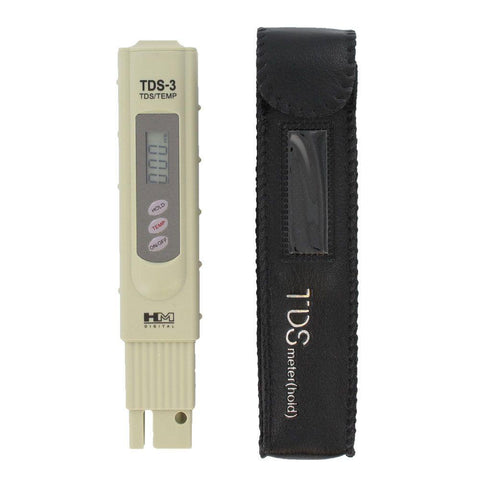
Food and beverage processors must meet FDA 21 CFR Part 129, USDA/FSIS requirements, and 3-A Sanitary Standards before water touches product, packaging, or processing equipment. These standards apply to both beverage manufacturing and food processing operations, with product-specific limits: soft drink production requires total dissolved solids under 10 ppm, brewing under 50 ppm, and dairy processing under 200 ppm.
These standards do not treat all water the same way. Each one targets a different risk in the production line.
FDA 21 CFR Part 129 governs water used in bottled and processed beverages. It sets microbiological and chemical limits that apply directly to product-contact water, not just facility water.
USDA and FSIS oversight applies to water used in meat, poultry, and dairy processing. These agencies inspect water systems as part of broader food safety audits, so a water treatment failure can trigger a facility-wide compliance issue.
3-A Sanitary Standards address the design and construction of equipment that contacts water and product. A treatment system built to 3-A standards is easier to clean, inspect, and validate during an audit.
Total dissolved solids limits vary by product because taste, shelf life, and process chemistry differ. A brewery tolerates more dissolved solids than a bottled water line. A dairy plant sits in the middle, driven by cleaning-in-place requirements rather than flavor alone.
Meeting these standards starts with knowing which one applies to a given product line, then selecting a treatment technology built to hit that specific number. For a broader look at how these standards apply across manufacturing, see our guide to water filtration for food processing systems and standards.
How Does Reverse Osmosis Support Food and Beverage Water Treatment?
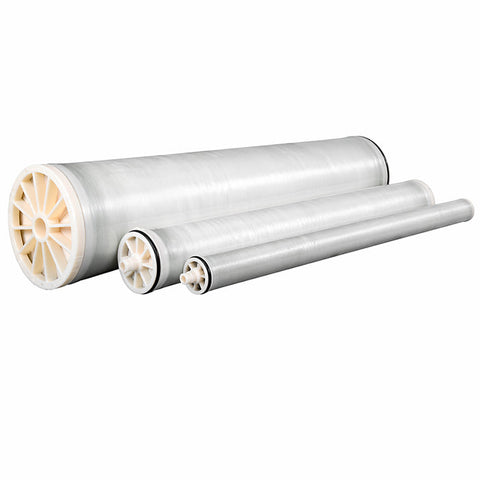
Reverse osmosis removes 90 to 99% of dissolved solids from water by forcing it through a semi-permeable membrane under pressure. It is the most widely used treatment technology in food and beverage processing because it produces consistent water quality regardless of source water variability.
The membrane blocks bacteria, viruses, and dissolved minerals while letting purified water pass through. Contaminants concentrate on one side and get flushed from the system, so the process runs continuously rather than requiring a filter change for every batch.
Different sub-industries lean on reverse osmosis for different reasons.
Dairy plants use it to hit the sub-200 ppm TDS threshold required for consistent product taste and shelf life. Breweries use it to control mineral content precisely, since water chemistry directly shapes beer flavor and fermentation. Bottling operations use it as the final purification step before water becomes product, often paired with UV disinfection downstream.
Membrane selection matters as much as the technology itself. A brackish water RO membrane performs differently than a low-fouling membrane, and the wrong choice increases cleaning frequency and shortens membrane life. Facilities drawing from higher-salinity sources should also see how sea water RO membranes withstand extreme salinity conditions, since the engineering requirements differ meaningfully from standard brackish applications.
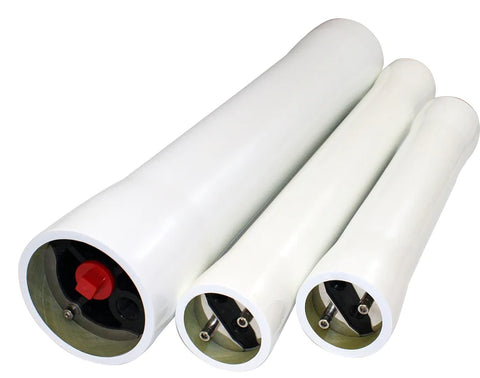
AXEON Supply manufactures reverse osmosis systems and membrane elements across residential, commercial, and industrial categories, including brackish water, low-fouling, and nanofiltration membranes suited to different source water conditions. Matching membrane type to actual source water chemistry, not just system size, is what keeps a food and beverage RO system running at its rated recovery rate over time.
When Is UV Disinfection Necessary for Food and Beverage Facilities?
UV disinfection is necessary wherever pathogens must be eliminated without adding chemical residue or altering taste. It uses ultraviolet light to destroy bacteria, viruses, and protozoa by damaging their DNA, with no chlorine or chemical byproduct left in the water.
This makes UV distinct from chlorination. Chlorine is effective, but it can affect flavor and odor in sensitive products. UV disinfects without changing what the water tastes like, which matters most in products where taste is the entire point.
Bottled water producers rely on UV as a final disinfection step before packaging, since it extends shelf life without compromising purity claims. Dairy processors use it on process water where any chemical residue could affect product safety or flavor. Non-carbonated beverage lines, including teas, concentrates, and soft drinks, use UV for the same reason: disinfection without taste interference.
UV also fits well downstream of reverse osmosis. RO removes dissolved solids and most microbial contamination; UV handles the pathogens that remain, giving a facility two independent barriers instead of one.
AXEON Supply offers ultraviolet sterilization systems, including UV sterilizers, ballasts, and bulbs, sized for commercial and industrial water treatment lines. Facilities that have not evaluated UV as a disinfection layer are often relying on chlorination alone, which leaves a taste-related gap that UV specifically closes.
What Role Do Water Softening and Ion Exchange Systems Play?
Water softening and ion exchange systems remove hardness minerals that cause scale buildup in boilers, heat exchangers, and cleaning-in-place systems. Left untreated, hardness reduces equipment efficiency, increases energy use, and shortens the service life of processing equipment.
Softening and deionization solve different problems. Softening exchanges calcium and magnesium ions for sodium ions, which prevents scale but does not produce ultrapure water. Deionization removes nearly all dissolved ions, producing water pure enough for sensitive applications like pharmaceutical-grade processing or high-purity rinse water.
Cleaning-in-place systems depend on consistent water hardness. Hard water leaves mineral deposits on tanks, pipes, and valves, which can trap residue and compromise sanitation between production runs. A brewery or dairy plant running CIP cycles on hard water fights a losing battle against buildup, regardless of how well the cleaning chemistry itself is formulated.
Boiler feedwater has the same vulnerability. Scale buildup inside a boiler reduces heat transfer efficiency and raises the risk of unplanned downtime, which is a direct production cost, not just a maintenance one.
AXEON Supply manufactures ion exchange systems for both water softening and deionization, sized for the flow rates typical of commercial and industrial food and beverage plants. Selecting between softening and deionization depends on what happens to the water downstream, not just its hardness level at the source.
How Do Chemical Dosing and Pre-Filtration Protect Process Water Quality?
Chemical dosing and pre-filtration prevent fouling and scaling in downstream equipment before water reaches reverse osmosis or UV systems. Antiscalants and antifoulants control mineral buildup on membranes, while sediment and media filtration remove suspended solids that would otherwise clog or damage sensitive components.
Pre-filtration comes first in the treatment sequence. Sediment filters catch sand, rust, and larger particles that would abrade membrane surfaces or reduce UV transmittance. Skipping this step shortens the life of every system installed downstream, since those components end up filtering out debris they were never designed to handle. Replacement timing matters here too. Facilities should follow a documented schedule for how often filter cartridges should be replaced in commercial water systems rather than replacing them reactively.
Chemical injection systems dose antiscalants and antifoulants at precise, controlled rates. This matters because underdosing allows scale to form on RO membranes, while overdosing wastes chemical and adds unnecessary cost. Both outcomes reduce system efficiency over time. For a full breakdown of options, see which water treatment chemicals prevent scaling and fouling in RO systems.
Process water quality depends on this sequence working together, not on any single step. A plant with excellent reverse osmosis but no pre-filtration will still see membrane fouling within months. A plant with pre-filtration but no chemical dosing will still see scale accumulate wherever water sits or heats.
AXEON Supply supplies chemical injection systems, media and cartridge filtration, and storage tanks that support this full sequence, from raw source water to finished process water. Getting the order right, filtration before chemical dosing before RO or UV, is what keeps a treatment system running at its rated capacity instead of degrading month over month.
RO vs. UV vs. Ion Exchange vs. Media Filtration
Each treatment technology covered above solves a distinct problem, so most food and beverage plants run several of them together rather than choosing one over the others.
| Technology | Primary Function | Typical Application | Standard/Regulation Addressed |
|---|---|---|---|
| Reverse Osmosis (RO) | Removes 90 to 99% of dissolved solids via semi-permeable membrane | Bottling, brewing, dairy process water | FDA 21 CFR 129, product-specific TDS limits |
| UV Disinfection | Destroys pathogens without chemical residue or taste change | Bottled water, dairy, non-carbonated beverages | USDA/FSIS, 3-A Sanitary Standards |
| Ion Exchange / Softening | Removes hardness minerals to protect boilers and CIP systems | Brewery and dairy CIP water, boiler feedwater | 3-A Sanitary Standards, equipment protection |
| Media / Cartridge Filtration | Removes suspended solids ahead of RO/UV | Pre-treatment for all downstream systems | FDA 21 CFR 129 (source water prep) |
Why Does Sourcing From a US and Canada-Based Manufacturer Matter for Compliance?
Sourcing from a US and Canada-based manufacturer matters because a compliance-critical system failure demands fast technical support, available parts, and direct access to engineering expertise, not a support ticket routed through an overseas distributor.
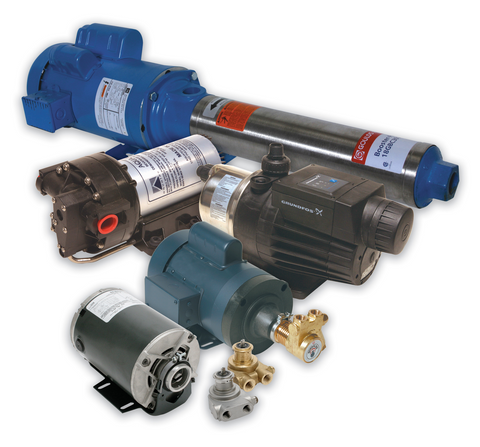
Water treatment failures do not wait for convenient timing. An RO membrane fouling event or a failed UV bulb during a production run can halt a line immediately, and every hour of downtime has a real production cost attached to it. Understanding what factors determine the lifespan of commercial reverse osmosis membranes and the most common causes of RO pump failure helps facilities plan maintenance before a failure happens, rather than reacting to one.
This article focuses on treating water before it enters production. Wastewater treatment, the water leaving a plant after processing, is a related but separate discipline with its own discharge permits and BOD/COD limits, and deserves its own dedicated evaluation.
AXEON Supply has manufactured membrane filtration systems and components for 37 years, with fulfillment and technical support based in Temecula, California. Its technical support process is documented and specific: customers provide an account number, system model and serial number, and a current water quality analysis, and receive a case number for tracking the issue through resolution.
This structure matters during an audit or a compliance deadline. A facility that can reach a manufacturer directly, describe the exact system and water conditions involved, and get a documented case number has a clearer record than one relying on a general distributor relationship.
AXEON Supply ships within the United States and Canada only, which keeps parts availability and lead times predictable for facilities in this region. For a plant manager weighing vendors, the practical question is not just which system performs best on paper, but which manufacturer will still be reachable and stocked when a system needs service six months or six years after installation.
What to Do Next
Start by identifying which standard applies to your product line: FDA 21 CFR Part 129 for bottled and processed beverages, USDA/FSIS for meat, poultry, and dairy, or 3-A Sanitary Standards for equipment design. That standard determines which treatment technologies are non-negotiable.
Next, compare your current water treatment setup against the sequence covered above: pre-filtration, chemical dosing, reverse osmosis or ion exchange, and UV disinfection. A gap in any one step puts the others at risk.
AXEON Supply provides reverse osmosis systems, UV sterilization, ion exchange, and chemical injection equipment built for food and beverage processing, along with documented technical support for sizing and troubleshooting. Explore our Food Service water treatment solutions or request a water quality analysis to identify where your current setup falls short of compliance requirements.