





Water is a direct ingredient, a sanitation medium, and a process utility in food manufacturing. Its quality determines product safety, equipment performance, and regulatory compliance simultaneously. Food processing facilities use water across 5 primary functions: ingredient formulation, equipment sanitation (CIP), steam generation, cooling systems, and product reconstitution.
Multi-stage filtration systems combining sediment removal, contaminant removal, membrane separation, and disinfection are common approaches food plants use to work toward suitable water quality for their intended use.
This guide covers the filtration technologies, FDA compliance standards, and system selection criteria that apply to commercial and industrial food processing operations.
What Is Water Filtration in Food Processing?
Water filtration in food processing is the mechanical, chemical, and biological removal of contaminants from process water to meet the water-quality specifications required for a given use. It supports product safety, equipment service life, and compliance with applicable food-safety and regulatory requirements across production zones.
Food-processing water must be suitable for its intended use and meet applicable potable-water, food-safety, process, product-quality, and equipment requirements. Different uses within the same plant may require different water-quality specifications. Water filtration is not a single device. It is typically a treatment train, where each stage addresses a specific type of contamination. Common categories of concern include suspended solids, microorganisms, disinfectants, organic compounds, hardness, dissolved salts, metals, and process-specific chemical contaminants.
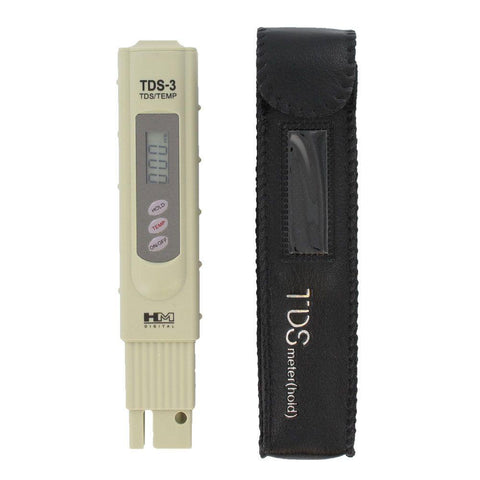
Total Dissolved Solids (TDS) is the measurement of all inorganic and organic substances dissolved in water, expressed in milligrams per liter (mg/L).
Elevated TDS may affect flavor, formulation, scaling, or process consistency in certain applications. Acceptable TDS should be established from the product specification, equipment requirements, and a full water analysis rather than from one universal threshold. Reverse osmosis can substantially reduce TDS; final permeate quality depends on feedwater composition, membrane selection, operating conditions, system recovery, and whether single-pass, double-pass, or polishing treatment is used.
What Role Does Water Play in Food Production?
Water use varies widely across food categories, plant designs, production methods, sanitation programs, and reuse practices. Facilities should calculate their own water balance by process area. The five specific water use categories in a food plant are:
- Ingredient water: water incorporated directly into the food product (beverages, sauces, dairy)
- Equipment sanitation water: water used in CIP cycles to flush, clean, and rinse processing lines
- Steam generation water: boiler feed water for cooking, sterilization, and retort processes
- Cooling water: water circulated through heat exchangers and refrigeration systems
- Product reconstitution water: water used to rehydrate concentrated or powdered food ingredients
Ingredient-water specifications are product-specific. Some formulations require low-mineral water, while others require controlled concentrations of calcium, magnesium, alkalinity, sulfate, chloride, or other constituents.
Plants may use centralized treatment, separate application-specific systems, point-of-use polishing, or a combination of these approaches.
What Contaminants Affect Water Quality in Food Plants?
Source-water concerns vary by location and may include disinfectant residual, hardness, alkalinity, TDS, iron, manganese, organic matter, microorganisms, and other regulated or process-sensitive constituents. Each requires a filtration or treatment approach matched to the specific concern rather than a fixed universal category list.
Suspended solids can enter food plant water supplies through aging municipal infrastructure or well-water sources. Microorganisms, including bacteria and other pathogens, may colonize water distribution lines and biofilm surfaces where controls are inadequate. Disinfectant residuals such as chlorine and chloramines can react with organic matter to produce disinfection byproducts and, depending on concentration, affect flavor. Hardness (calcium and magnesium) can deposit scale on heat-transfer surfaces. Elevated TDS may affect flavor, texture, or process consistency depending on the product. Organic compounds from groundwater or surface-water sources may require adsorption-based removal.
How Does Hard Water Damage Food Processing Equipment?
Hard water contains elevated concentrations of dissolved calcium and magnesium. Scale acts as an insulating layer on heat-transfer surfaces and can reduce efficiency, increase fuel consumption, and contribute to overheating or premature equipment failure.
Water softeners reduce hardness through ion exchange. Membrane elements using nanofiltration (NF) can reduce hardness without conventional resin regeneration, but NF produces a concentrate stream and requires appropriate pretreatment, pressure, cleaning, and residuals management.
When Should Chlorine or Chloramine Be Reduced in Food-Processing Water?
Chlorine is widely used to control microbial risk and is not inherently a food-safety hazard at typical potable-water residuals. Disinfectant residual may need to be reduced where it affects product flavor, fermentation, sensitive membranes, process chemistry, or equipment specifications.
In some processes, residual oxidants can react with organic matter or interfere with flavor, fermentation, ingredients, or downstream treatment. Many polyamide RO membranes have little or no tolerance for continuous free-chlorine exposure. Dechlorination should meet the specific membrane manufacturer’s oxidant limits.
Filter cartridges using activated carbon can reduce free chlorine and certain organic compounds. Chloramine removal may require catalytic carbon, greater media volume, longer contact time, or another validated treatment approach.
What Are the Main Types of Water Filtration Systems for Food Processing?
Common technologies include sediment and media filtration, activated carbon, ion exchange, microfiltration, ultrafiltration, nanofiltration, reverse osmosis, UV, ozone, and chemical disinfection. Each technology addresses specific types of contamination, and system configuration should be selected based on the application.
No single filtration technology removes all contaminant categories. The correct system configuration is determined by incoming source water quality, the required output water specification for the intended use, and the system’s flow rate requirement. NSF/ANSI/CAN 61 certification may be required or specified for certain drinking-water system components. Facilities should confirm the applicable certification, sanitary-design, food-contact, plumbing, and customer requirements for each installation.
What Does a Sediment Filter Remove in a Food Plant?
A sediment filter removes suspended particles including sand, silt, rust, and debris. Sediment filtration is a common pretreatment step where particulate loading requires it. The appropriate filter type and rating depend on source-water quality and downstream equipment.
Many packaged filter cartridges are used upstream of membrane systems in food plants. The rating should follow the system and membrane manufacturer’s specifications.
How Does Activated Carbon Filtration Protect Food and Beverage Quality?
Activated carbon filtration removes chlorine, chloramines, certain organic compounds, and taste and odor compounds through adsorption onto porous carbon media.
Carbon media installed in filter housings can reduce free chlorine and certain organic compounds. Chloramine removal often requires catalytic carbon, greater contact time, or another validated treatment approach compared to free-chlorine removal. Carbon treatment can help protect flavor profiles in beverages, dairy products, and baked goods.
What Is Ultrafiltration and Microfiltration in Food Processing?
Ultrafiltration (UF) is a pressure-driven membrane filtration process that can remove bacteria, protozoa, colloids, and suspended solids. Virus removal varies by membrane and validated system performance.
Microfiltration (MF) operates at a larger pore size than UF and can remove suspended solids and larger microorganisms from water and liquid food streams.
UF and MF can remove microorganisms and suspended matter, but any claimed log reduction should be based on validated system-specific testing and maintained membrane integrity. The three primary food processing applications for UF and MF systems are:
- Dairy processing: UF-based process membranes are used in cheese and dairy protein applications as part of product processing, which is distinct from utility water treatment and requires sanitary, product-contact equipment design
- Beverage clarification: MF can remove yeast, haze-forming compounds, and microorganisms from juice, wine, and beer, and may allow processing without heat treatment in some applications
- Bottling line pre-treatment: UF can reduce microbial loading as part of a validated microbial-control strategy at the point of filling
Under proper operating and integrity conditions, the membrane substantially reduces particles and organisms larger than its effective separation range.
How Does Reverse Osmosis Work for Food and Beverage Manufacturing?
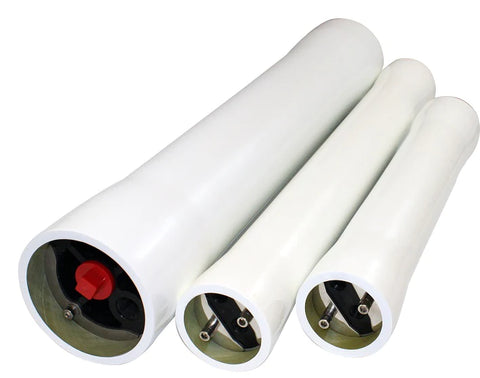
Reverse osmosis (RO) uses a dense semipermeable membrane and applied pressure to separate water from dissolved constituents. RO typically provides high overall salt rejection, but constituent-specific rejection varies with membrane type, molecular properties, pH, temperature, pressure, and system conditions.
RO systems produce two output streams: permeate water (the purified product water) and reject water, also called concentrate. Concentrate salinity increases as recovery rises; the concentration factor should be calculated from the system design and operating recovery.
Published capacity is based on the manufacturer’s stated test conditions. Actual production varies with feedwater temperature, salinity, pressure, recovery, membrane age, and fouling.
Commercial reverse osmosis systems are sized to the facility’s requirements based on a full water analysis and system design.
Applications where RO commonly delivers operational value include:
- Beverage reconstitution: RO permeate can provide a consistent water base, formulated to the product’s specific requirements
- Steam boiler feed water: RO can materially reduce dissolved solids and hardness loading, helping lower scale potential and chemical demand; boiler-feed requirements must be based on boiler pressure, manufacturer limits, condensate return, and complete water chemistry
- Combi-oven water supply: treatment should meet the equipment manufacturer’s water-quality specification
- Dairy ingredient water: treatment should meet the product’s formulation requirements and the equipment manufacturer’s specification
When Is UV Disinfection Used in Food-Plant Water Treatment?
UV disinfection exposes water to ultraviolet light, which can inactivate susceptible microorganisms. UV systems do not render a complete piping or processing system sterile.
Validated UV disinfection systems are sized according to the target organisms, required log inactivation, flow, UV transmittance, lamp condition, and reactor performance. UV is typically positioned after sediment and carbon pretreatment because suspended particles and disinfectant residuals can absorb UV energy and reduce disinfection effectiveness.
What Are the FDA and Food Safety Standards for Water in Food Processing?
Facilities subject to 21 CFR Part 117 must provide an adequate water supply from a suitable source for intended operations and control water-related hazards through current good manufacturing practices and, where applicable, the facility’s food-safety plan.
Applicable frameworks depend on the commodity, jurisdiction, source-water arrangement, process, and intended use. They may include FDA preventive-controls requirements, USDA/FSIS regulations, potable-water rules, state or provincial requirements, HACCP plans, customer standards, and sanitary-design specifications. Canadian facilities apply equivalent standards through the Safe Food for Canadians Regulations (SFCR).
What Does FSMA Require for Water Quality in Food Facilities?
A facility’s hazard analysis should evaluate whether water presents a known or reasonably foreseeable biological, chemical, or physical hazard. Monitoring, verification, corrective action, and recordkeeping requirements depend on the preventive controls and sanitation procedures the facility determines are necessary.
Where water treatment is part of a preventive control or sanitation program, maintenance and monitoring records may support verification that the system is operating as intended.
What Does NSF/ANSI 61 Certification Mean for Water Filtration Equipment?
NSF/ANSI/CAN 61 establishes health-effects criteria for materials and products contacting drinking water. Whether certification is required depends on the jurisdiction, application, specification, approving authority, customer requirements, and applicable plumbing or drinking-water rules. The standard addresses substances imparted to drinking water; it does not by itself establish sanitary cleanability, hygienic design, microbial performance, filtration performance, food-contact compliance, or CIP suitability.
Certain dairy, beverage, and food-processing applications may require equipment conforming to applicable 3-A Sanitary Standards or other hygienic-design requirements, depending on whether the equipment contacts product, ingredients, or cleaned food-contact surfaces. Hygienic design aims to minimize harborage points, support drainability, and allow effective cleaning and sanitation.
How Do You Select the Right Water Filtration System for a Food Processing Plant?
Selecting a water filtration system for a food plant requires a source water analysis, identification of relevant constituents, an appropriate flow rate calculation, and selection of components suited to the specific production application.
System selection begins with source water data. The selection framework includes:
- Test source water: measure TDS, hardness, turbidity, pH, iron, chlorine/chloramines, and microbial count (CFU/mL)
- Identify contaminant priorities: determine which constituents require treatment based on the product specification, process requirements, and applicable regulations
- Calculate required flow rate: size the system to peak daily water demand across all production use categories
- Configure treatment sequence: develop the treatment order based on source-water analysis, process requirements, microbial risk, equipment compatibility, and sanitary design
An undersized system may fail to maintain storage, operate with insufficient recovery time, or encourage operators to exceed recommended pressure, recovery, or service intervals.
What Water Quality Parameters Should You Test Before Choosing a System?
Testing should be selected based on the source, any known symptoms, the treatment technology under consideration, the product specification, and regulatory requirements. Common parameters using measuring and testing equipment include TDS, hardness, turbidity, pH, iron, manganese, alkalinity, disinfectant residual, and microbial indicators, along with any constituents relevant to the specific source or application.
RO may be evaluated where dissolved constituents exceed the product, process, equipment, or reuse specification. Softening or NF pretreatment may be evaluated where hardness and scale risk are a concern. Even relatively low iron concentrations may create fouling risk under oxidizing conditions; a qualified designer should evaluate total and dissolved iron, manganese, pH, oxidant exposure, and precipitation potential.
What Does an Example Treatment Configuration Look Like in a Commercial Food Plant?
The following is an example treatment configuration, not a universal requirement. Not every source requires carbon, and not every system requires RO or UV:
- Sediment or media filtration: removes suspended particles where particulate loading requires it
- Activated carbon: removes chlorine, chloramines, and certain organic compounds where present
- Membrane treatment (UF, NF, or RO): reduces TDS, hardness, and microorganisms as required by the application
- Disinfection (UV, ozone, or chemical): provides an additional microbial control barrier where warranted
A municipal potable-water supply may already be suitable for certain food uses without additional treatment. The appropriate configuration depends on source-water analysis and the specific application.
Which Food Processing Applications Require Water Filtration?
Water treatment needs vary across dairy processing, beverage manufacturing, meat and poultry processing, produce washing, brewery operations, and commercial food service. Each application demands a different approach based on water contact classification, product sensitivity, and the applicable regulatory framework.
How Is Water Filtration Used in Dairy Processing?
Dairy facilities use membrane technology in two distinct contexts: utility water treatment (producing suitable water for cleaning, cooling, or ingredient use) and product processing, such as UF-based protein separation or concentration during cheese and dairy manufacturing. Product-processing membrane systems require sanitary, product-contact equipment design and are distinct from standard water-treatment systems.
Dairy applications may require equipment conforming to applicable 3-A Sanitary Standards or other hygienic-design requirements, depending on whether the equipment contacts product or cleaned food-contact surfaces.
What Water Treatment Does Beverage Manufacturing Require?
Beverage manufacturers often use RO to produce a mineral-neutral water base, allowing formulators to add back mineral concentrations to match a specific product profile. Brewers often adjust calcium, sulfate, chloride, alkalinity, and other ions according to source-water chemistry, mash requirements, yeast performance, and beer style; these vary by recipe and are not fixed universal ranges.
How Do Meat and Produce Processing Facilities Use Water Filtration?
USDA FSIS requires potable water at points of animal food contact in federally inspected facilities, with specific requirements established through each establishment’s HACCP, sanitation, and verification program.
Produce-wash water management may involve disinfectant control, filtration, water replacement, monitoring, and application-specific microbial controls. The appropriate strategy depends on whether the activity falls under the Produce Safety Rule, Preventive Controls Rule, or another applicable requirement.
How Can Food Plants Reduce Water Consumption with Membrane Filtration?
Membrane filtration systems with water recovery configurations can reduce food plant water consumption; the achievable reduction depends on feedwater chemistry, reuse quality requirements, sanitation constraints, concentrate management, process integration, and the plant’s overall water balance.
Common water reuse applications in food processing facilities include:
- RO permeate reuse for CIP rinse water: RO-treated permeate may replace potable water in certain rinse applications, subject to sanitation and product-safety requirements.
- UF concentrate recovery in dairy: recoverable fractions from process streams may be further processed rather than discharged, depending on the application.
- Treated reject water for cooling towers: reuse of RO concentrate for applications such as cooling tower makeup requires evaluation of cycles of concentration, scaling indices, chloride and sulfate, silica, corrosion, microbiological control, blowdown, and discharge limitations; it is not a simple pH-adjustment-and-antiscalant solution
Food plants implementing water reuse programs can reduce wastewater discharge volumes and associated surcharge costs, subject to local permit thresholds and treatment requirements.
A correctly specified, well-maintained water treatment system, configured to the facility’s source water quality, production volume, and use category requirements, supports consistent water quality across production zones. A comprehensive source water analysis is an essential first step for any food plant water filtration system specification, helping facilities avoid common issues such as inadequate pretreatment, undersized capacity, and components that do not meet applicable certification or sanitary-design requirements.
AXEON Water Technologies engineers and manufactures commercial and industrial membrane-filtration systems and components. Through AXEONSupply.com, food-processing facilities, dealers, contractors, and system integrators can source AXEON products and selected third-party water-treatment equipment.