





This guide explains the membrane filtration, sediment removal, softening, disinfection, dosing, storage, and control technologies used to address irrigation, livestock, well-water, and greenhouse applications.
What Are Agricultural Water Treatment Systems?
Agricultural water treatment refers to equipment that removes contaminants from water used for irrigation, livestock, and crop production, combining filtration, disinfection, and dosing systems to protect crop yield, animal health, and irrigation lines.
Water treatment addresses three attributes: the water source, the contaminant profile, and the required output quality. Sources include wells, surface water, and municipal supply. Contaminants range from sediment and iron to salinity and pathogens. Requirements differ by use, since irrigation water tolerates higher mineral content than livestock drinking water or greenhouse recirculation water.
Agriculture accounts for approximately 70 percent of global freshwater withdrawals, making water quality and efficient water management critical concerns for many agricultural operations. AXEON Water Technologies engineers and manufactures membrane filtration systems and components, while AXEONSupply.com provides agricultural buyers with access to water treatment systems, replacement components, chemicals, and related equipment.
AXEON Supply solutions connect each treatment method to a specific contaminant problem, from well water iron to irrigation salinity, pairing a defined water issue with a matched treatment answer.
Why Does Farm Water Quality Affect Crop and Livestock Health?
Poor water quality can reduce crop yield and threaten livestock health. Elevated salinity, sodium, chloride, boron, sediment, and pathogens may interfere with plant development, soil structure, animal performance, and irrigation-system operation.
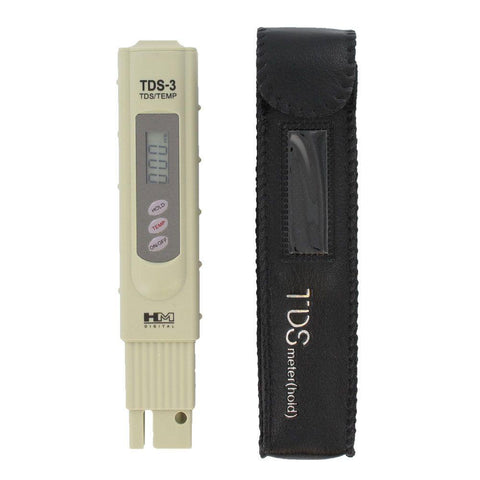
That reading measures the combined concentration of minerals and salts dissolved in water. High readings raise soil salinity, which blocks root water absorption and lowers water-use efficiency. Turbidity measures suspended particles that cloud water and shield pathogens from disinfection. Salinity refers specifically to salt concentration, which damages sensitive crops even at moderate water quality levels. Pathogens are disease-causing organisms that spread through untreated water and threaten both livestock health and food safety compliance.
Iron and manganese buildup from well water can stain irrigation equipment and contribute to clogged drip emitters, reducing distribution uniformity across a field. Agricultural operations that overlook water-quality problems may face compounding costs: lower yield today, and equipment replacement or compliance violations after treatment gaps go unaddressed.
Every water contaminant connects to a specific treatment technology in agriculture, covered next.
What Water Treatment Technologies Are Used in Agriculture?
Agricultural water treatment may use reverse osmosis, sediment and media filtration, ion exchange, oxidation, UV disinfection, chemical dosing, chlorination, storage, and flow-control technologies, depending on the source water and application.
These treatment systems work together. Filtration removes particles before disinfection kills pathogens, and dosing protects downstream equipment. The sections below break down each water treatment method and the parts that deliver it.
How Do Reverse Osmosis (RO) Membranes Treat Agricultural Water?
Reverse-osmosis membranes force water through a semipermeable barrier under pressure, reducing dissolved salts, sodium, chloride, boron, and other dissolved constituents. Actual rejection varies by membrane, contaminant, operating conditions, pH, temperature, and system design.
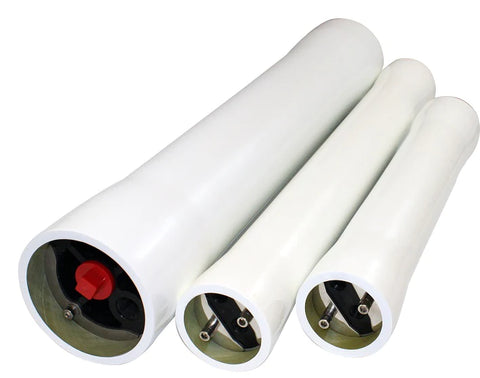
Reverse-osmosis systems suit brackish water and well water with elevated salinity. A commercial reverse-osmosis system pairs a membrane housing with pretreatment filtration to help prevent fouling, since scale and sediment can shorten its life. AXEONSupply.com offers brackish-water RO membranes, membrane housings, cartridges, pumps, valves, fittings, and other components for commercial agricultural applications.
Choosing an RO system depends on salinity level and crop sensitivity, and RO selection should generally begin with a water test. RO may be appropriate when salinity or specific dissolved contaminants cannot be adequately managed through source blending, irrigation practices, crop selection, or other treatment methods. See the difference between residential and commercial RO membranes for sizing context.
What Do Sediment Filters Remove From Farm Water?
Sediment filters remove sand, silt, and suspended solids that would otherwise clog irrigation emitters and foul a downstream filter, typically capturing particles down to 5 to 20 microns depending on filter grade.
Sand entering an irrigation line without a filter can shorten pump life and reduce distribution uniformity. Water filtration at this stage helps protect downstream components, from softeners to membrane elements. AXEONSupply.com stocks bag-filter housings, sediment cartridges, and cartridge-filter housings sized to match well and surface flow rates. Replacement timing is covered in how often filter cartridges should be replaced in commercial water systems.
How Does Water Softening Work for Agricultural Use?
Water softening uses ion-exchange resin to exchange calcium and magnesium for sodium or potassium, helping control hardness-related scale in certain equipment and treatment processes. Whether softening is appropriate depends on the complete water analysis and the intended agricultural use.
Hard water left untreated coats pipes, valves, and water emitters with mineral scale, narrowing flow paths over time and raising energy costs on farm pumps. Water filtration systems paired with a softener can extend the service life of downstream equipment on farms running multiple treatment systems together. AXEONSupply.com offers water-softening systems and components sized for wells with elevated hardness.
What Role Do Media Filters Play in Agricultural Filtration?
Media filters remove suspended organic matter, algae, and fine debris from surface-water sources by passing water through a graded media bed. They are commonly used where screen or disc filtration alone may not adequately remove deformable organic material.
Surface water carries algae and plant material that mechanical screen filters miss, making media filtration an important treatment step for many canal or pond sources, depending on water quality and irrigation equipment. AXEONSupply.com media filtration systems help remove this load before it reaches downstream filters, since algae fouling on filters generally costs more to correct than to prevent through upfront filtration.
How Does UV Disinfection Eliminate Pathogens in Farm Water?
UV disinfection exposes water to germicidal ultraviolet light, which inactivates susceptible microorganisms by damaging their genetic material without adding a chemical residual.
UV may be incorporated into agricultural water-management programs intended to reduce microbial risk. Applicability to FSMA, GlobalG.A.P., CFIA, state, provincial, or other requirements should be evaluated for the specific operation and water use. UV water treatment requires clarity free of turbidity, since suspended particles block the light and shield pathogens, which is why disinfection follows sediment treatment rather than treating raw supply directly. AXEON Supply's Ultraviolet Sterilization Systems are sized for farm-scale flow rates.
What Is Chemical Dosing Used For in Agricultural Water Treatment?
Chemical dosing injects antiscalant and antifoulant solution into water ahead of a membrane to help prevent mineral scale and biological fouling that shorten membrane life. Antiscalant dosage is determined from the complete feedwater analysis and system operating conditions, including the scaling species present, system recovery, pH, temperature, membrane selection, and chemical formulation.
Antiscalants keep minerals like calcium suspended in water rather than crystallizing on membrane surfaces during treatment. Pretreatment chemicals may help control certain scaling and fouling conditions, but they must be selected based on the water analysis, membrane compatibility, and the type of foulant present. Selecting the right products can extend the interval between cleanings, which helps manage agricultural water-treatment costs on a farm water system. AXEON Supply carries chemical injection systems and dosing pumps, two solutions matched to farm conditions. See which water treatment chemicals prevent scaling and fouling in RO systems for a closer look at antiscalant selection.
How Does Chlorination Disinfect Agricultural Water Supplies?
Chlorination commonly uses sodium hypochlorite or another approved chlorine-based disinfectant to reduce susceptible microorganisms and provide a measurable disinfectant residual. The chlorine dose and target residual must be established for the specific water quality, contact time, application, equipment compatibility, and applicable regulatory requirements.
Well water and surface water can both benefit from chlorination ahead of storage, since standing supply without residual disinfectant may regrow bacteria. Commercial water operations favor chlorination for its low cost and long shelf life, though commercial water sources with heavy organic load often need pretreatment before chlorination performs reliably.
Why Are Storage Tanks and Flow Control Valves Important Components?
Storage tanks hold treated water for consistent supply during peak irrigation demand, while flow-control valves regulate pressure through treatment systems so downstream components receive water within their design range.
Without storage, treatment systems must match demand instantly, which strains pumps and membranes during high-draw periods. Flow-control valves regulate flow and pressure, while appropriately selected check valves or backflow-prevention devices help prevent reverse flow and cross-connection contamination. AXEON Supply supplies Pressurized Tanks, Atmospheric Tanks, and Valves and Switches sized to farm systems, a pairing covered next when matching flow and system capacity to source water.
How Does Irrigation Water Treatment Improve Crop Yield?
Irrigation water treatment removes salinity, sodium, and suspended solids that damage sensitive crops, protecting drip irrigation emitters from clogging and helping growers maintain consistent yield and clean water across salt-sensitive plantings like almonds and citrus.
Salinity in irrigation water reduces root uptake and stunts growth, while sodium buildup degrades soil structure over repeated irrigation cycles. Reverse osmosis, filtration, blending, oxidation, and other treatment methods may be used to address specific irrigation-water problems. Conventional sodium-cycle softening requires careful evaluation because it does not lower total salinity and may increase the water's sodium concentration. When correctly selected and maintained, treatment can reduce suspended solids and precipitates that contribute to emitter clogging, helping support more uniform irrigation distribution. Agricultural water quality varies by source, so farms drawing agricultural water from wells face different irrigation needs than those on surface water, a distinction covered next.
What Is Involved in Well Water Treatment for Farms?
Farm well water may contain iron, manganese, hardness, hydrogen sulfide, salinity, nitrate, microorganisms, or other constituents depending on local geology and land use. Treatment should be selected only after testing the specific source.
These minerals oxidize into orange-brown deposits that foul valves and water lines, while hydrogen sulfide produces a rotten-egg smell farm workers notice immediately in well water. Farms need oxidation filtration or treatment matched to the specific mineral load, since agricultural water from deep aquifers differs from shallow wells. Iron and manganese are common groundwater concerns in many agricultural regions, but concentrations vary by aquifer and location, making treatment selection dependent on a water test before equipment is chosen.
How Is Water Treated for Livestock Operations?
Water treatment for livestock protects herd health by removing bacteria, sediment, and dissolved minerals before drinking water reaches troughs, since poor water quality lowers feed intake and weight gain across the herd.
Livestock-water quality should be evaluated for microbial contamination, nitrate and nitrite, salinity, sulfate, toxic elements, and other species-specific concerns. Applicable limits and recommendations vary by animal, age, jurisdiction, and production system. Depending on the water source and risk profile, a treatment train may include sediment filtration, oxidation, UV, chlorination, or other technologies. Filtration removes particulates that clog float valves, while UV treatment neutralizes pathogens without adding chemical residue to water troughs. Compliance with state and provincial standards depends on regular testing, and treatment records help operations document consistent quality during inspections.
What Water Treatment Do Greenhouse Operations Require?
Water treatment for greenhouses controls pathogens and balances nutrient concentration in recirculating irrigation. Recirculating greenhouse and controlled-environment systems may recover and reuse a substantial portion of their irrigation water, which can also recirculate salts and plant pathogens when treatment and monitoring are inadequate.
Filtration can remove suspended algae and debris, while properly designed UV treatment can inactivate susceptible waterborne microorganisms before recirculated solution reaches drip systems. Existing biofilm in tanks and distribution piping may require separate cleaning and sanitation procedures. Reverse osmosis systems can correct salt buildup so nutrient dosing stays precise across cycles. Regular water testing tracks pH, EC, and pathogen load, guiding when water purification equipment needs servicing. AXEON Supply's filtration and UV systems support tight quality tolerances in enclosed growing environments.
How Do You Choose the Right Agricultural Water Treatment System?
Choosing the right agricultural water treatment system starts by identifying the water source, since wells, surface supply, and municipal water each carry different contaminant profiles that shape system design.
Testing the water first helps confirm which contaminants a system must address, whether iron, salinity, bacteria, or sediment. Match system flow to peak demand across irrigation, livestock, or greenhouse use so systems perform reliably across the treatment train. Select the technologies covered earlier, RO, softening, UV, or chlorination, based on contaminant profile and system fit. Commercial operations often combine several system types into one commercial treatment train for full commercial coverage.
AXEON Supply's commercial chemical selector and sizing tools, backed by complimentary technical support, help buyers configure water treatment systems suited to exact needs. Use the Membrane Chemical Selector & Sizing Tool and the Membrane Cross Referencing Tool to match equipment to a specific water profile.
Why Work With AXEON Supply for Agricultural Water Treatment?
AXEON Water Technologies has engineered and manufactured membrane filtration components for more than 3 decades. AXEONSupply.com supplies farms, agribusinesses, and dealers across the United States and Canada with RO membranes, filters, and complete water-treatment solutions.
Eligible customers receive access to complimentary technical support, membrane cross-reference tools, and system sizing calculators built to match equipment to specific water conditions. AXEONSupply.com stocks parts and service resources in both countries, helping reduce downtime when components need replacement. Farms researching treatment solutions can read more about AXEON Supply or request a quote for RO, softening, UV, and filtration equipment suited to agricultural operations.