


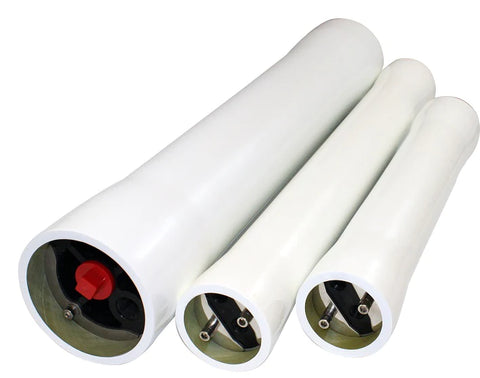



Filter cartridges in commercial water systems require replacement every 1 to 6 months. Replacement frequency is determined by 3 primary variables: cartridge type, daily water throughput volume, and source water quality. Sediment cartridges in high-turbidity municipal supply systems require replacement as frequently as every 4 weeks. Carbon block cartridges in moderate-demand commercial systems require replacement every 3 to 6 months.
What Are the Standard Replacement Intervals by Cartridge Type?
The table below defines baseline replacement intervals, performance-based replacement triggers, and applicable NSF/ANSI standards for 5 filter cartridge types used in commercial water systems.
| Cartridge Type | Baseline Interval | Replacement Trigger | NSF/ANSI Standard |
|---|---|---|---|
| Sediment (PP Spun) | Every 1–3 months | 15 PSI differential pressure across housing | NSF/ANSI 42 |
| Carbon Block | Every 3–6 months | Chlorine taste or odor breakthrough at output | NSF/ANSI 42 |
| Inline Post-Carbon | Every 6–12 months | TDS rise or detectable taste change | NSF/ANSI 42/58 |
| Specialty / DI Resin | Every 6–12 months | TDS output reading above system threshold | NSF/ANSI 58 |
| RO Pre-Filter | Every 3–6 months | 10 PSI pressure drop across filter housing | NSF/ANSI 58 |
Intervals listed represent baseline replacement schedules under standard commercial operating conditions. Commercial systems processing above 10,000 gallons per day require interval adjustments of 30% to 50% shorter than baseline, based on actual throughput volume and source water TDS levels.
What Variables Accelerate Filter Cartridge Replacement in Commercial Systems?
4 variables reduce filter cartridge service life below baseline intervals in commercial water systems.
- Source water TDS: Source water above 500 ppm TDS reduces carbon block cartridge service life by up to 40% below the 3–6 month baseline interval.
- Daily throughput volume: Commercial systems processing above 10,000 gallons per day exhaust sediment cartridges up to 3 times faster than systems processing under 2,500 gallons per day.
- Municipal vs. well water source: Well water with elevated iron content above 0.3 mg/L loads sediment cartridges 2 times faster than treated municipal supply water.
- Seasonal sediment variation: Spring runoff periods increase source water turbidity by 30% to 60% in surface-fed municipal supplies, directly accelerating sediment cartridge loading rates.
What Performance Indicators Signal Filter Cartridge Replacement?
There are 4 measurable performance indicators that signal filter cartridge replacement in commercial water systems.
- Measure differential pressure: Differential pressure at or above 15 PSI across a single-cartridge housing indicates sediment cartridge replacement. Multi-cartridge stainless steel housings rated at 150 PSI require replacement at 20 PSI differential.
- Monitor TDS output: A TDS rise of 15% above baseline post-filter reading signals carbon block or DI resin cartridge exhaustion.
- Track flow rate degradation: A 20% reduction in system output GPM against established baseline indicates sediment cartridge loading and restricted flow.
- Log service hours against throughput: Filter cartridges processing above manufacturer-rated gallons require immediate replacement regardless of calendar date.
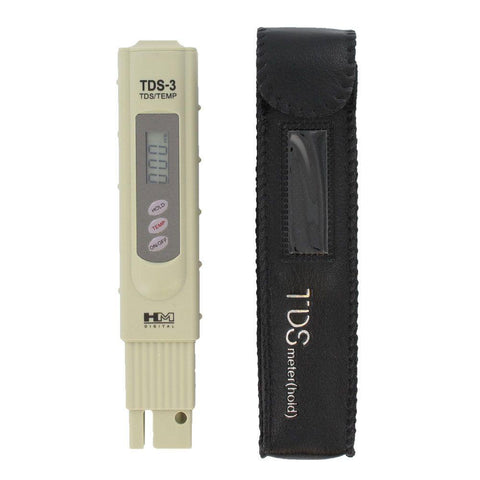
Pressure gauges, inline monitors, and handheld TDS meters — available through AXEON Supply's Measuring and Testing product line — enable proactive performance tracking between scheduled maintenance intervals.
Do Commercial Industries Have Different Filter Cartridge Replacement Requirements?
3 commercial industries operate under stricter filter cartridge replacement standards than general commercial facilities.
- Food & Beverage: Facilities operating under FDA 21 CFR Part 110 require sediment filter cartridge replacement every 30 days in direct product-water contact systems. NSF/ANSI 42 and NSF/ANSI 58 certified cartridges govern chlorine reduction and TDS performance thresholds for product water quality compliance.
- Healthcare and Hospitals: Joint Commission water management plan requirements mandate documented filter cartridge replacement schedules. Carbon block and sediment cartridge replacement intervals are governed by facility-specific water management protocols, typically every 30 to 90 days depending on water system type and volume.
- Industrial Manufacturing: Process water purity specifications determine filter cartridge replacement intervals. Facilities producing pharmaceutical-grade or semiconductor-grade process water replace DI resin cartridges when output TDS exceeds 1 ppm above the established production threshold.
What Happens When Filter Cartridge Replacement Is Delayed in Commercial Systems?
Delayed filter cartridge replacement produces 4 operational and financial consequences in commercial water systems.
- Membrane fouling: A clogged sediment pre-filter cartridge increases RO membrane replacement frequency by up to 50%, directly increasing annual maintenance costs.
- Pressure damage: Differential pressure exceeding 30 PSI across a single-cartridge housing risks Buna-N O-ring seal failure on housings rated at 90 to 125 PSI maximum operating pressure.
- Compliance failure: Operating a commercial water system with an overloaded filter cartridge violates NSF/ANSI 42 and NSF/ANSI 58 certified performance ratings for chlorine reduction and TDS removal.
- Water quality degradation: Exhausted carbon block cartridges allow chlorine breakthrough into output water used in food processing, beverage production, and laboratory applications.
Scheduled filter cartridge replacement is cost prevention, not cost addition.
Commercial water systems require interval-based and throughput-based filter cartridge replacement schedules, not calendar-based schedules, anchored to cartridge type, daily volume, and source water quality. AXEON Supply stocks sediment cartridges, carbon block cartridges, single-cartridge and multi-cartridge filter housings, pressure gauges, and inline monitors for commercial water treatment systems. These parts support compliant, scheduled maintenance programs for commercial water systems across the United States.