





Medical facilities use water with different quality requirements depending on the application. Medical-device processing, dialysis, laboratory testing, sterilizer operation, and general facility use are governed by different standards, equipment requirements, and monitoring programs. A healthcare water filtration system removes dissolved minerals, organic compounds, bacteria, and endotoxins that ordinary tap water contains, producing water suitable for clinical use. Healthcare facilities classify this water into three categories for device processing: utility water, critical water, and steam. ANSI/AAMI ST108:2023 addresses water used in the processing of medical devices, while dialysis water, laboratory reagent water, pharmaceutical water, potable water, and other facility-water applications are addressed by separate standards or requirements. These water systems protect patients from infection risk and protect surgical instruments from corrosion and staining during sterile processing.
What Counts as Water Quality in a Medical Facility?
Water quality in a medical setting is the classification of water by treatment level and intended use during device reprocessing. Healthcare facilities separate water into three tiers: utility water, critical water, and steam, each defined by ANSI/AAMI ST108:2023.
Every facility that reprocesses surgical instruments depends on this classification. Utility water is water that meets the applicable quality requirements for specified cleaning and rinsing steps. Its source and treatment may vary according to incoming water quality, equipment instructions, and facility design. Critical water is treated to meet defined chemical and microbial quality requirements. A system may use reverse osmosis, deionization, electrodeionization, ultrafiltration, UV, or other validated processes in an appropriate treatment train. Steam used for sterilization must be generated and delivered in a manner that supports effective sterilization and avoids unacceptable residues or damage. Steam quality depends on feedwater, boiler chemistry, generation equipment, piping, and operating conditions.
Facilities should use water meeting the quality specified for the particular processing step, device manufacturer's instructions for use, and applicable standards. Using water that does not meet those requirements can contribute to residue, staining, corrosion, cleaning failure, or microbial risk. Each tier connects to a specific reprocessing stage, and matching water quality to that stage protects patients and equipment.
Utility Water vs. Critical Water vs. Steam
The table below defines three water categories inside a medical facility utility system, labeled by primary use and treatment level.
| Water Category | Primary Use | Treatment Level |
|---|---|---|
| Utility | Flushing, washing, preliminary rinsing | Municipal supply, basic filtration |
| Critical water | Final rinsing before sterilization | Reverse osmosis and deionization |
| Steam | Sterilizer vapor phase | Heated past boiling point |
A facility that treats utility water as interchangeable with the next tier risks contaminating instruments during the final rinse. This tier demands the highest treatment level because it contacts devices immediately before sterilization. Vapor purity depends on the water system feeding the sterilizer, and these water systems fall under one governing standard: ANSI/AAMI ST108:2023.
What Is the ANSI/AAMI ST108 Standard?
ANSI/AAMI ST108:2023 is the American National Standard published by AAMI in 2023 that defines water quality requirements for medical device processing. ST108 supersedes the earlier AAMI TIR34 technical information report and establishes a formal American National Standard for water used in medical-device processing. Its applicability may arise through facility policy, accreditation expectations, manufacturer instructions, contractual requirements, or applicable regulation.
AAMI, the Association for the Advancement of Medical Instrumentation, developed ST108 with input from nearly 120 subject matter experts. Unlike its predecessor, this guidance assigns clear, quantifiable thresholds to each processing stage rather than general recommendations. AAMI organized this document around three water categories: utility water, critical water, and steam, and ST108 calls for a multidisciplinary water-management approach with defined responsibilities for water quality, testing, monitoring, corrective action, and documentation. Facilities should confirm the standard's exact team and governance requirements from the current licensed edition.
Facilities that cite AAMI ST108 in written policy face the same compliance expectations as any other national standard. AAMI ST108 assigns responsibility for ongoing monitoring, testing frequency, and documentation during processing, connecting this standard directly to the water categories defined earlier and to the numeric thresholds covered next.
What ST108 Requires by the Numbers
ST108 establishes chemical and microbial acceptance criteria for water used in medical-device processing. The applicable limits, sampling locations, test methods, and monitoring frequencies should be confirmed from the current licensed standard and the relevant equipment manufacturers' instructions.
| Parameter | Critical Water Limit | Unit |
|---|---|---|
| Bacteria | Less than or equal to 10 | CFU/mL |
| Endotoxin | Less than or equal to 10 | EU/mL |
| Total organic carbon | Less than or equal to 1 | ppm |
| Conductivity | Less than 10 | µS/cm at 25°C |
Bacteria and endotoxin limits target microbial contamination that survives lower treatment grades. Total organic carbon measures residual carbon content left after reverse osmosis and deionization, since trace impurities can interfere with cleaning chemistry during device processing. Conductivity confirms that dissolved ionic content stays low enough to prevent mineral deposits on instruments.
A facility documents compliance with these four requirements through routine testing rather than a single measurement, since bacteria counts and carbon levels can drift between test intervals.
Why Does Water Purity Affect Patient Safety and Instruments?
Water purity affects patient safety because contaminated water can introduce bacteria, endotoxin, or mineral residue directly onto surgical instruments, dialysis equipment, and endoscopes during final rinsing and reprocessing, undermining sterile conditions each device needs before contact.
Reprocessing departments rely on critical water for the final rinse step because Inadequate final-rinse water can leave mineral, chemical, or microbial residues that contribute to staining, corrosion, cleaning failures, or patient-safety concerns. A single lapse in this treatment stage can leave mineral spotting on a sterile tray or endotoxin on a surgical tool, and neither defect is visible during a routine safety inspection.
Dialysis water is not governed by ST108. Hemodialysis systems are subject to separate AAMI/ISO requirements addressing water treatment, storage, distribution, dialysate preparation, chemical contaminants, microorganisms, and endotoxin. During hemodialysis, a patient's blood is separated from dialysate by a semipermeable membrane. Because patients are exposed to large volumes of dialysis fluid across this membrane, chemical and microbial water quality is critical. CDC reports that a hemodialysis patient may be exposed to approximately 300 to 600 liters of water during an average week.
Facilities monitor and document water quality at defined frequencies and locations according to the standard, risk assessment, equipment instructions, system design, and facility policy. A facility that treats purity as a patient safety control, not a housekeeping task, protects both sterile instrument integrity and the patients who depend on that equipment.
What Water Purification Systems Produce Medical-Grade Water?
Medical facilities produce purified water through a water treatment train that typically combines pretreatment filtration, reverse osmosis, and deionization or electrodeionization, with each stage removing a different category of contaminant before water reaches critical or utility grade.
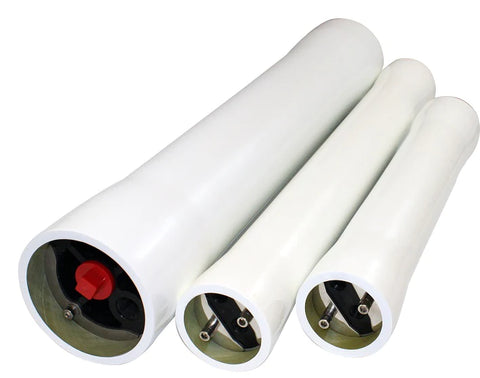
Reverse osmosis (RO) sits at the center of most purification systems. RO substantially reduces dissolved ions, many organic compounds, particles, and microorganisms. Final water quality depends on pretreatment, membrane selection, system recovery, operating conditions, downstream polishing, distribution design, sanitation, and monitoring. Activated carbon may be used to reduce chlorine or chloramine before chlorine-sensitive RO membranes. Carbon-system sizing, contact time, redundancy, microbial control, and breakthrough monitoring must be appropriate for the disinfectant and application.
Purification equipment for medical facilities differs from municipal water treatment plants in scale and consistency requirements. Medical-facility purification systems differ from municipal drinking-water systems in scale, end-use specifications, distribution design, monitoring, and operational requirements. Facility engineers typically size this equipment to handle peak demand from multiple departments rather than a single average flow rate, and they schedule preventive treatment reviews to confirm purification performance stays consistent.
AXEON Water Technologies engineers and manufactures reverse-osmosis systems, membrane elements, and related equipment. AXEONSupply.com distributes AXEON products and selected third-party water-treatment components, giving facility engineers a reference point for how each stage of water purification fits into the overall system rather than a single isolated product. For a closer look at how membrane choice affects long-term performance, see What Factors Determine the Lifespan of Commercial Reverse Osmosis Membranes?.
AXEON components may be incorporated by qualified system designers into treatment systems developed for healthcare or laboratory applications. Compliance depends on the complete system, validation, operation, monitoring, distribution loop, maintenance program, and intended use, not on an individual membrane or component alone.
The Treatment Train, Stage by Stage
A medical water system may include sediment filtration, softening, carbon treatment, RO, DI or EDI, UV, ultrafiltration, storage, continuous recirculation, sanitization, and point-of-use treatment. The appropriate sequence depends on the required water specification and source-water analysis.
A sediment cartridge removes particulate matter first, protecting downstream membranes and valves from abrasion. A carbon filter follows, reducing chlorine and chloramine ahead of the membrane. Oxidant exposure can damage chlorine-sensitive polyamide RO membranes and reduce rejection performance over time. Pretreatment should be designed according to the membrane manufacturer's oxidant-tolerance specifications. This sequence matters because a facility that skips this filter stage often replaces its RO membranes far sooner than the manufacturer's rated service life, and neglected filters raise operating costs across the whole system. For guidance on how often these components need service, see How Often Should Filter Cartridges Be Replaced in Commercial Water Systems?.
UV, ozone, heat, chemical sanitation, and ultrafiltration may be used to control microorganisms within the generation, storage, and distribution system. System design must also minimize stagnation, dead legs, and conditions that promote biofilm. Some water purification systems add a secondary disinfection point closer to point-of-use fixtures, since worn filters in upstream stages can let bacteria regrow in storage tanks or distribution piping even after these steps succeed.
Storage and distribution close the loop. High-purity storage and distribution systems are often designed for continuous or frequent recirculation, appropriate flow velocity, drainability, and sanitization to limit stagnation and microbial growth. Critical parameters may be monitored using redundant instruments, alarms, periodic verification, and laboratory testing so that a single failed sensor does not conceal a system problem.
What Is ASTM and CLSI Reagent Water Used For?
ASTM and CLSI reagent water grades define laboratory water purity levels for diagnostic testing, chemical analysis, and instrument calibration, separate from the ANSI/AAMI standards that govern water used directly on patients or reprocessed instruments.
ASTM D1193-24 defines the characteristics of four reagent-water types and additional microbiological grades. The appropriate type and grade must be selected for the applicable analytical method or instrument requirement. Clinical laboratories should follow the water-quality requirements specified by the assay, instrument manufacturer, laboratory procedure, and applicable guidance such as CLSI GP40, since a hospital's core lab often runs both ASTM-referenced equipment and CLSI-referenced testing protocols side by side.
A laboratory selects its grade based on the assay, not a single facility-wide standard. High-purity water suited for a chemistry analyzer may fall short of what a molecular diagnostics laboratory requires. A laboratory may use centralized generation, separate distribution loops, point-of-use polishing, or analyzer-integrated purification depending on its testing requirements. This reagent water system also requires its own periodic testing schedule, distinct from the critical water testing used for reprocessing, since contamination here affects test accuracy rather than patient contact.
How Do Hospitals Monitor and Test Water Quality?
A hospital monitors water quality through a combination of continuous online monitoring for conductivity and flow, periodic laboratory testing for bacteria and endotoxin, and a documented water management program that assigns responsibility for each requirement.
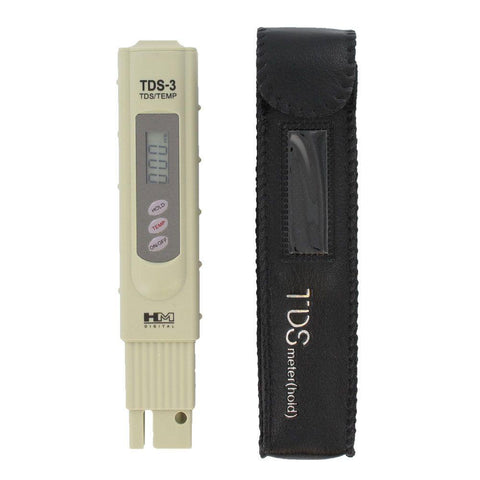
A hospital typically assigns online monitoring to facilities staff, who watch conductivity, pressure, and temperature in real time through building automation systems. Online instruments are installed at selected critical control points, while representative points of use may be sampled according to the facility's monitoring plan. Laboratory testing for bacteria, endotoxin, and total organic carbon runs on a schedule set by the applicable standard, manufacturer requirements, water-management plan, and facility risk assessment.
A water management program under ANSI/AAMI ST108 calls for a written plan, not just monitoring records. This program names a management team, defines testing frequency, and sets escalation steps when a result falls outside its limit, and it lists specific requirements for each classification. Hospitals that treat monitoring and testing as separate tasks handled by different departments often miss the pattern a unified management view would catch, since a slow drift in one parameter can signal a requirements gap building across several monitoring cycles before any single test crosses the line. Incomplete records can make it difficult for a facility to demonstrate that its water-management program is implemented and effective during internal reviews, accreditation surveys, or regulatory inspections.
What Happens When Medical Facility Water Fails Compliance?
When a result falls outside an acceptance criterion, the facility should follow its approved corrective-action procedure. Actions may include confirming the result, assessing affected equipment and devices, restricting use, notifying designated clinical and technical personnel, sanitizing or repairing the system, and documenting return to service.
A sterile-processing water deviation should be managed under the device-processing water program. A dialysis-water deviation should be managed under the dialysis facility's separate clinical, technical, and regulatory procedures, since a single elevated reading can indicate contamination that would otherwise reach patients directly. Hospitals with a written water management program already have escalation steps defined before any failure occurs, which shortens the time between a failed result and a corrective action.
Hospitals without this documentation often lose time deciding who has authority to shut down a loop, and that delay itself becomes a compliance finding during the next accreditation survey. A facility engineer who logs every deviation across the facility, not just the failures that trigger a shutdown, builds a record that shows a pattern rather than an isolated event, which matters both for patient safety and for the next hospital inspection.
How Should a Medical Facility Select a Water-Purification System?
Facility engineers should begin by identifying each water use and its applicable quality requirement. Medical-device processing, laboratory testing, dialysis, pharmacy operations, sterilizer feed, and general facility use should be evaluated separately rather than assigned to one central purity specification.
The design process should consider source-water quality, peak and average demand, treatment redundancy, distribution-loop materials, sanitization methods, monitoring points, alarm capabilities, service access, replacement-part availability, and total cost of ownership. Equipment must also be compatible with the applicable standard and the instructions for the devices or instruments it serves.
Vendor evaluation should address engineering experience, documentation, commissioning support, preventive maintenance, response time, operator training, and the ability to support the complete system throughout its expected service life.
Closing Summary and Next Step
Medical facility water quality standards now rest on a specific framework, ANSI/AAMI ST108 for critical and utility water, ASTM and CLSI for laboratory reagent water, and a documented management program tying both together. A facility that treats its water system as part of medical device reprocessing, not a separate utility concern, protects every medical device that passes through that system.
Medical devices depend on water systems at nearly every processing step, from the final rinse before medical device sterilization to the reagent water used in diagnostic testing, and on the water systems that feed sterile processing generally for all these devices. Getting these water systems right protects medical devices, protects patients, and keeps a facility aligned with accreditation review, since medical devices carry that risk directly and other medical devices depend on the same standard.
A facility engineer evaluating a water system upgrade should start with a water quality standards gap assessment against ST108, then match equipment and medical device workflows, and the devices tied to them, to that assessment before selecting a vendor for the replacement water system or the equipment it will serve.
About This Guidance
This overview draws on ANSI/AAMI ST108, ASTM and CLSI reagent water standards, and established reprocessing practice used across healthcare facilities in the United States and Canada. AXEON Water Technologies is the manufacturer, and AXEONSupply.com is the distributor of membrane filtration equipment for water treatment applications for more than 3 decades, supplying healthcare facilities, laboratories, and industrial sites with reverse osmosis systems, replacement parts, and technical support for existing installations.