







AXEON Water Technologies has engineered membrane filtration systems for over 3 decades. AXEONsupply provides direct access to the RO membranes, housings, cartridges, and control systems this team designs, sizes, and supports, backed by technical guidance throughout the sourcing and startup process.
What Is Battery Manufacturing Water Treatment?
Battery manufacturing water treatment is the process of purifying incoming water so it meets the exact purity standards lithium-ion cell production requires. Membrane filtration equipment, including reverse osmosis and ion exchange, removes dissolved minerals and treats wastewater before it leaves the facility for discharge or reuse.
A battery plant runs two separate water systems working side by side. The first purifies incoming water to a level far above typical industrial standards. The second treats wastewater generated during production so it meets safe discharge requirements.
Membrane filtration is the core technology behind both systems. This method forces water through a thin, semipermeable barrier, separating dissolved contaminants from clean liquid on the other side of the barrier. Reverse osmosis, ultrafiltration, and ion exchange each apply this same principle at a different stage of the treatment cycle.
Meeting battery manufacturing water treatment requirements starts with understanding why this industry demands purity levels beyond what most manufacturing plants require for their own processes.
Why Does Battery Manufacturing Require Ultrapure Water?
Battery manufacturing requires ultrapure water because ionic conductivity above 0.1 microsiemens per centimeter introduces dissolved minerals that contaminate electrolyte fill and electrode coating, reducing battery performance and safety. ASTM D1193 Type I water, the highest recognized purity grade, requires conductivity below 0.056 microsiemens per centimeter at 25 degrees Celsius.
Three production stages depend on this water grade. Electrolyte fill introduces water-sensitive chemicals directly into the cell. Electrode coating applies slurry that must stay free of contaminating ions. Cell assembly seals components where residual water minerals can compromise performance during production.
Water that misses this specification carries real consequences. Dissolved minerals interfere with electrochemical reactions inside a finished cell. A contaminated batch can fail quality testing, and it can introduce a safety risk once the battery reaches a vehicle or storage system.
Reaching this water purity requires more than one filtration stage. A reverse osmosis membrane applies pressure to move water through a thin, semipermeable barrier, producing a low-mineral stream while concentrating rejected salts on the other side.
Additional membrane filtration stages typically follow this step. The EPA regulates the wastewater side of battery manufacturing separately, under its own effluent guidelines program.
What Components Make Up a Battery Plant Water Treatment System?
A battery plant water treatment system relies on five core component categories: RO membranes, membrane housings, filter cartridges, pumps, and control systems, each defined by a specific function that connects directly to overall system performance.
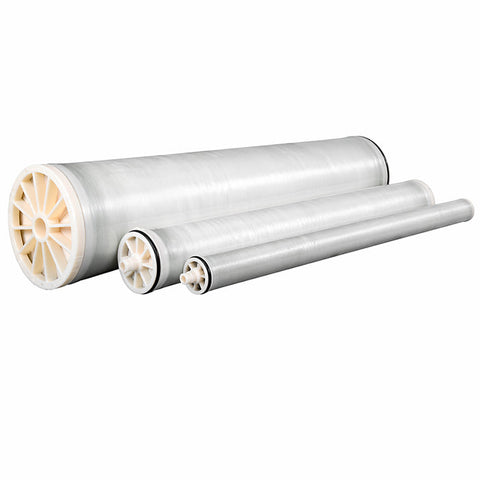
A battery plant water treatment system relies on five core component categories, and each one plays a distinct role inside the larger filtration systems a facility depends on daily. RO membranes reject dissolved ions from the incoming water supply before that water reaches later stages.
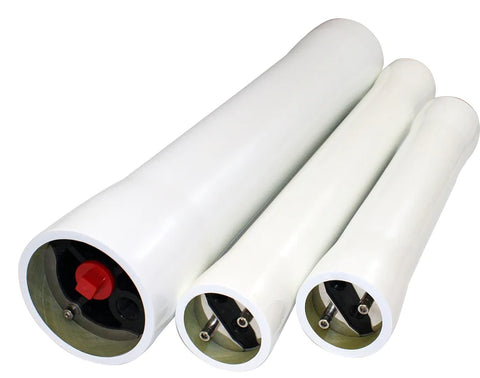
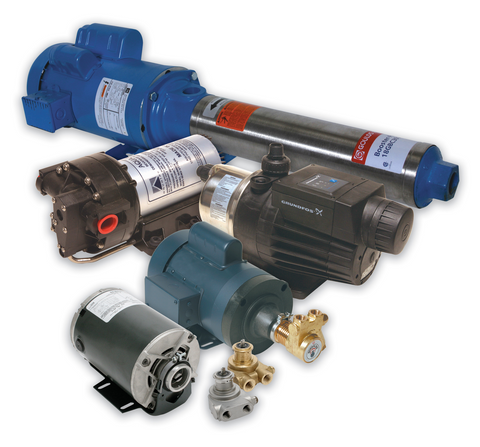
Membrane housings contain those membranes safely under continuous pressure throughout normal operation. Filter cartridges remove particulates before water reaches the membranes further downstream in the treatment train. Pumps generate the pressure the filtration equipment needs to function, and control systems automate operation across every production stage.
| Component | Function | Sourcing Consideration |
|---|---|---|
| RO membranes | Reject dissolved ions to reach target resistivity | Must match feedwater chemistry and flow rate |
| Membrane housings | Contain membrane elements under system pressure | Housing material and pressure rating must match membrane count |
| Filter cartridges | Remove particulates before membranes to prevent fouling | Micron rating must match upstream water quality |
| Pumps | Generate pressure required for reverse osmosis | Capacity must match system flow rate and production volume |
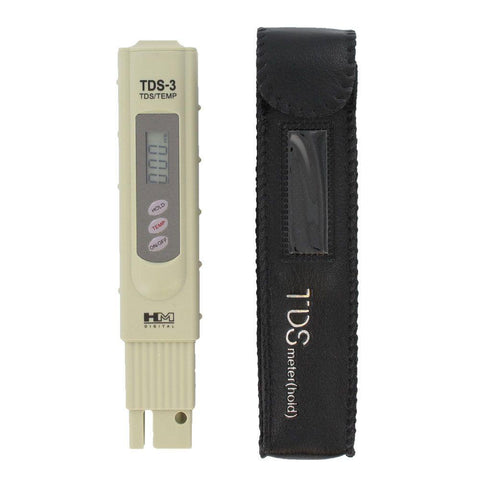
| Control systems | Automate operation and monitor water quality | Must integrate with existing plant monitoring infrastructure |
Each component connects directly to a specific function inside these systems as a whole. A mismatched housing, an undersized filter, or control systems built for the wrong flow rate can prevent the full setup from reaching the water quality battery production requires at scale.
AXEONsupply supplies these components, along with related filtration products, as private label or custom branded products, letting a facility standardize membrane specifications and control systems across multiple production sites using just one manufacturer and one design standard for every plant.
How Much Water Does a Battery Gigafactory Use?
A representative battery gigafactory uses approximately 440 million gallons of water annually, with 220 million gallons discharged for further treatment and 132 million gallons lost to evaporation during normal daily operation, according to an engineering analysis published by Battery Tech Online covering gigafactory water reuse opportunities across North America.
This demand strains local water utility systems in smaller communities near a new facility. In some regions, a single new plant's water use during production reaches 28% of the surrounding area's existing daily domestic supply, based on the same published analysis of recent gigafactory construction projects.
Water at this volume cannot simply leave the site once it finishes the production process. It requires the same wastewater treatment stages a battery plant water treatment process is designed to handle at every single stage of daily operation.
What Happens to Battery Plant Wastewater Before Discharge?
Battery wastewater treatment removes dissolved metals, residual solvents, and process chemicals through membrane filtration and ion exchange before water reaches a discharge permit limit, addressing contamination sources tied directly to cathode, anode, and electrolyte production stages found at every single production facility.
Cathode production generates battery wastewater containing dissolved metals such as nickel and cobalt. Anode production introduces graphite particulates and residual solvents into the same water stream. Electrolyte handling adds trace battery chemicals that standard industrial wastewater removal steps were not originally designed to address at typical facilities.
Electrode manufacturing also uses PVDF, a specialty binder that holds electrode components in place. PVDF production has drawn regulatory scrutiny for persistent byproducts, according to reporting from The Examination, which adds pressure on battery manufacturers to document their full treatment solutions and removal methods clearly and consistently.
Membrane filtration and control systems address this contamination directly at the source. The same removal components described earlier work together across the industrial wastewater treatment side of the plant, applying targeted removal at each contamination point rather than one generic treatment solutions package.
Battery wastewater differs from generic industrial water solutions in its combination of dissolved metals, organic solvents, and trace battery chemicals, which is why additional wastewater treatment and water reuse solutions become a practical next step once full discharge requirements are met.
How Does Water Reuse Reduce Costs at Battery Manufacturing Facilities?
Water reuse reduces costs at battery manufacturing facilities through four documented scenarios: blowdown and reverse osmosis concentrate recovery, stormwater capture, plume capture, and condensate collection, with payback periods ranging from 4 years for stormwater capture to 34 years for condensate collection systems, according to Battery Tech Online.
Stormwater capture reaches payback fastest among these four options, returning its installation cost within 4 years. Plume capture systems return cost within 6 years, while condensate collection systems installed across multiple facility water zones take 34 years to reach the same point.
Some facilities pursue further treatment beyond these four scenarios once basic systems are in place, aiming for near total water recovery. Zero liquid discharge, often abbreviated as zero liquid discharge ZLD, recovers essentially all process water while reducing remaining contaminants to solid waste, according to Saltworks Technologies.
Zero liquid discharge demands higher upfront capital investment than the four scenarios listed above, but it eliminates ongoing discharge permit exposure entirely, a tradeoff battery manufacturers weigh against standard reuse savings during initial facility design and construction planning stages.
What Should You Look for When Sourcing Battery Plant Water Treatment Equipment?
Sourcing battery plant water treatment equipment requires verifying membrane compatibility with feed water chemistry, confirming housing pressure ratings match system design, selecting control systems that integrate with plant monitoring, and choosing a supplier that provides pre-sale sizing support and documented technical specifications before final purchase and installation begins at the facility site.
This decision carries more weight for lithium-ion battery manufacturing than for standard industrial water applications, since a facility cannot easily swap equipment once production begins.
A lithium-ion battery plant runs continuously once operations start, so equipment sourced without proper verification becomes a production risk rather than a routine maintenance issue addressed later.
A lithium battery producer expanding to a second site faces this same sourcing decision again during every new facility build across the country.
Reviewing published case studies from prior projects, alongside documented products, technical resources, and treatment solutions, helps confirm a supplier's real experience with lithium battery manufacturing before a facility commits to specific water treatment solutions and its full range of sourcing solutions available today.
- Verify membrane compatibility with source water quality analysis before ordering any component
- Confirm housing pressure ratings against system flow requirements for the full facility
- Select control systems compatible with existing plant infrastructure and monitoring standards
- Request custom branded or private label component products for multi facility standardization
- Evaluate supplier capacity for bulk manufacturing and system integration across every project
Why Source Battery Manufacturing Water Treatment Components from AXEONsupply?
AXEON Water Technologies has engineered membrane filtration systems for 3 decades plus, and AXEONsupply provides direct customer access to the components this manufacturer produces for battery manufacturing applications nationwide, backed by consistent manufacturing standards and quality processes.
AXEON's technical support team provides pre-sale sizing, system start-up assistance, and thorough operational troubleshooting for every product it manufactures, documented in its published Technical Support Policy and available to accounts in good standing.
AXEON Water Technologies is the manufacturer that engineers and builds these components, while AXEONsupply is the platform that makes them available for direct purchase, a manufacturing distinction that matters when carefully evaluating treatment solutions.
Battery recycling adds demand alongside battery production, and battery recycling volumes climb as more battery production plants close out service life. Recycling facilities and battery production lines require treatment solutions, since recycling shares wastewater solutions and manufacturing operations.
The demand lithium-ion batteries generate keeps rising alongside recycling volume and recycling capacity across every growing region. Steady lithium-ion battery production and growing lithium-ion batteries output support proven solutions growth, manufacturing consistency, more manufacturing capacity, and recycling gains sector wide.
How Do You Get Started Sourcing Water Treatment Components for a Battery Facility Build?
Getting started requires three specific inputs: a source water analysis, a target production volume, and system design specifications, which the AXEONsupply team uses to match membrane and filter selections to a facility's exact treatment needs across every application and site condition.
Contact the AXEONsupply team directly to request a formal quote, discuss custom-branded or private label packaging options, or get filter and membrane support along with additional treatment solutions resources through phone or the contact page for ongoing project resources and needs.
For a fuller look at how AXEON Water Technologies designs water treatment systems and wastewater treatment solutions across facility types, see the AXEON corporate guide to industrial water treatment for manufacturing plants and broader filter, membrane, and resources support.