





Dealers replace a handful of water treatment parts far more often than others, and those parts drive most repeat service and B2B orders. These seven categories help dealers focus stocking plans on the components that fail or foul first, so critical RO, filtration, and ion exchange systems stay online.
Why Certain Parts Get Replaced So Often
Water treatment parts replace at different rates based on exposure, fouling, and operating hours. Filter cartridges, membranes, resins, and monitoring instruments wear out predictably, while pumps, tanks, and controllers fail less frequently but with higher urgency.
Dealers face three recurring problems when these parts are not stocked. Unplanned downtime costs industrial facilities $5,000 to $50,000 per hour in lost production. Rushed emergency orders compress margins with expedited freight and premium pricing. Missing inventory forces dealers to lose service contracts to competitors who maintain ready stock.
Structured stocking around the 7 most replaced water treatment parts solves all three problems and builds consistent B2B ordering patterns through AXEON SUPPLY.
Who Needs to Care About These 7 Parts?
This guide targets dealers, OEM assemblers, and service companies supporting commercial and light industrial water treatment systems across the United States. Maintenance managers and procurement professionals at facilities operating ion exchange systems, reverse osmosis systems, and pure water systems depend on these partners for reliable parts supply.
The focus is on consumables and wear parts replaced during routine service cycles, not complete system sales. Filter cartridges, membrane elements, ion exchange resins, testing equipment, storage tanks, controllers, and ancillary seals drive 70% to 85% of recurring B2B orders in the water treatment parts channel. Dealers who stock these seven categories capture predictable repeat business and reduce customer downtime.
How Were the "7 Most Replaced Water Treatment Parts" Identified?
The seven categories reflect typical replacement frequency, consumption patterns, and stocking behavior observed in reverse osmosis and filtration-based water treatment systems across commercial and industrial applications. These parts fail, foul, or degrade faster than structural components like housings, frames, or piping.
The categories align with AXEON SUPPLY's core product lines: membrane elements, filter cartridges, resins and medias, measuring and testing equipment, storage and distribution tanks, controllers, and ancillary replacement items including seals and hardware.
Pre-Filtration and Polishing Filter Cartridges (Sediment and Carbon)
Sediment and carbon cartridges act as the first line of defense in RO and ion exchange systems, capturing suspended solids, chlorine, color, and organic compounds before they reach more sensitive components. Because these contaminants accumulate directly in the cartridge media, pressure drop rises and performance declines faster than in downstream parts, making cartridges the most frequently replaced items in many treatment trains. In commercial systems with higher flow and loading, sediment cartridges are often replaced in roughly 3–6 month intervals, while lighter duty or cleaner feed water can extend that interval toward 6–12 months.
Dealers can keep cartridges consistently available by tracking monthly run rates by micron rating and cartridge size, such as 2.5 inch versus 4.5 inch diameters and 10 inch versus 20 inch lengths, and by holding at least one to two full replacement cycles in stock for their most common system builds. Grouping SKUs into stocking families—sediment depth filters, carbon block cartridges, inline post-filters, and refillable cartridge bodies—helps convert one-off purchases into standard, repeatable B2B ordering patterns with predictable replenishment points.
RO Membrane Elements (Tap, Brackish, Low-Energy)
RO membrane elements are high-value consumables that control product water quality, system recovery, and operating pressure directly. When membranes foul or scale, permeate flow drops and salt passage rises, forcing operators to clean or replace elements to restore performance. Industrial and commercial RO membranes typically operate 3 to 5 years under controlled pretreatment and regular chemical cleaning, while harsher feed water conditions, poor pretreatment, or aggressive fouling can compress that window to 2 to 3 years.
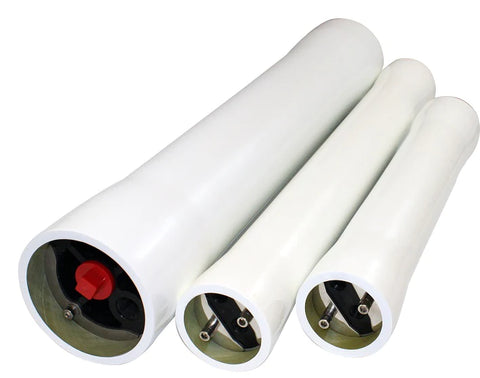
Dealers stock membranes intelligently by organizing inventory around form factor—2.5 inch, 4 inch, and 8 inch diameters combined with 14 inch, 21 inch, 40 inch, and 8040 lengths—and by operating pressure class, including low-energy HF4 series, extra-low-energy HF5 series, high rejection HR3 series, and brackish XE1 series membranes. Dealers serving OEMs and service companies maintain at least one full train's worth of replacement elements for their top standard system configurations, plus a small buffer for emergency replacements. Membranes are one category where "Made in USA" can be used when factually correct for specific AXEON membranes, while avoiding origin claims for assembled systems.
Ion Exchange Resins and Specialty Medias
Softening resins, mixed-bed DI resins, and specialty medias such as calcite are replaced on multi-year cycles rather than monthly intervals, but they are critical to consistent water quality and system performance. Ion exchange resins in industrial conditions typically operate 3 to 8 years, depending on regeneration control, organic fouling, chlorine exposure, and feed water loading.
Dealers stock resin and media formats that match their cartridge lines and tank sizes, including refillable cartridges, mixed-bed DI cartridges in 2.5-inch and 4-inch diameters, and bulk bags for mineral tank recharging. Maintaining a modest surplus on fast-moving resin SKUs prevents stockouts when customers upgrade or re-bed multiple vessels simultaneously, a pattern that concentrates demand into short windows.
Measuring, Testing, and Monitoring Components (TDS Meters, Flow Meters, Gauges)
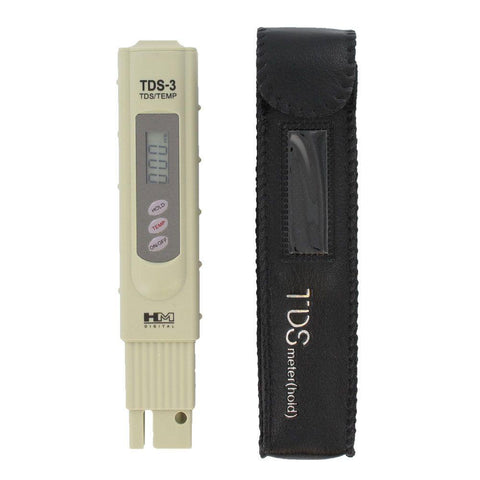
Inline TDS meters, handheld testers, flow meters, and pressure gauges operate under continuous pressure, vibration, and contact with varying water chemistry, which can cause sensor drift, lens fogging, seal wear, and mechanical damage over time. Accurate readings from these instruments are essential for deciding when membranes, filters, and resins have reached the end of life, so failures often generate urgent replacement requests from service teams and plant operators.
Dealers can simplify stocking by standardizing on a focused set of panel-mount pressure gauges, inline TDS monitors, and handheld meters that match the most common pressure ranges, flow rates, and TDS levels encountered in their customer base. Pairing every new RO or ion exchange project with recommended spare meters and gauges on the original order helps B2B clients adopt a consistent replenishment pattern through AXEON SUPPLY, rather than sourcing instruments piecemeal when failures occur.
Storage and Distribution Tanks (Atmospheric and Pressurized)
Atmospheric tanks, pressurized bladder tanks, and associated bulkhead fittings require replacement when mechanical damage, age-related stress cracking, or capacity changes force upgrades. Tanks are not replaced as frequently as filters or membranes, but failures create immediate downtime because systems cannot store or deliver treated water, making stocked inventory valuable for dealers serving time-sensitive accounts.
Dealers stock a core range of vertical atmospheric tanks organized by gallon capacity bands—such as 100, 200, 300, 500, and 1000 gallon sizes—and a small set of pressurized RO bladder tanks that match common residential and light commercial configurations. Bundling tank fittings and bulkhead kits as standard add-ons ensures one order delivers all required tank-side parts, reducing follow-up calls and incomplete installations.
Controllers and Critical Control Accessories
RO controllers, mini-controllers, and control accessories such as level switches and leak detectors are electronic components subject to failure from power surges, sensor faults, or age-related degradation. When controllers fail, otherwise healthy membranes, pumps, and vessels sit idle, converting a low-cost electronic failure into hours or days of unplanned downtime.
Dealers keep at least one compatible controller on hand for each major RO platform or control scheme they support, along with common probes and leak sensors. Documenting which controller SKUs pair with which membrane and pump configurations simplifies re-ordering through AXEON SUPPLY and accelerates troubleshooting when service calls arrive.
Ancillary Replacement Items: Seals, Brine Seals, ATDs, Bags, and Hardware
Brine seals, anti-telescoping devices, filter bags, gaskets, and small hardware are replaced during membrane changeouts, vessel servicing, and bag filter maintenance cycles. These lower-cost items are purchased in multiples, and consistent availability encourages dealers to consolidate B2B orders with a single supplier rather than splitting orders across vendors.
Dealers treat these parts as "attachment SKUs" linked to membrane, cartridge, or tank part numbers, so they are reordered automatically as part of standard service kits. Setting reorder points based on the number of systems in the field and typical annual service frequency converts ad hoc purchases into predictable replenishment cycles.
How Dealers Can Build a Simple Stocking Plan with AXEON SUPPLY
Dealers build effective stocking plans using a three-step method. First, map the installed base by system type—RO, softening, DI, and cartridge filtration—to understand total part consumption. Second, identify which of the seven part categories each system consumes each year predictably, based on manufacturer service schedules and actual replacement history. Third, set minimum and target stock levels by SKU family, aligned with lead times and typical service intervals.
Working with AXEON SUPPLY allows dealers to consolidate membrane elements, filter cartridges, storage tanks, controllers, resins, and testing equipment into a consistent B2B ordering rhythm instead of one-off emergency purchases. Structured stocking around these seven most replaced parts reduces rush shipping costs, protects dealer margins, and supports higher system uptime for end customers.