





Spot‑free water is no longer a “nice to have” add‑on for professional car wash operators; it directly affects customer satisfaction, rewash rates, and membership retention.
This guide explains how spot‑free water systems work and how to apply them in real car wash operations. You will learn the roles of reverse osmosis (RO) and deionization (DI), how to size a system for your bays and volume, how to monitor TDS and maintain performance, and when to upgrade or reconfigure your setup.
What Is a Spot‑Free Rinse in a Car Wash?
A spot-free rinse uses low-TDS water during the final rinse to minimize the mineral residue left behind as droplets evaporate. When the system and wash chemistry are operating correctly, this substantially reduces visible spotting on glass, paint, and trim. In most municipal or well water, dissolved minerals such as calcium, magnesium, and silica remain on the surface after drying and form visible rings, haze, or white spots.
Spot-free systems reduce most of these total dissolved solids (TDS) using reverse osmosis (RO), deionization (DI), or a combination of both, so operators can substantially reduce streaking and spotting without relying only on manual towel drying. Final appearance also depends on factors beyond TDS, including chemical residue, wax or drying-agent application, rinse equipment cleanliness, windblown dust, and how completely the vehicle is rinsed.
In practice, the main wash, detergent, and protectant stages still use untreated, softened, or municipal water, while the spot‑free water is reserved for the final rinse arch or self‑serve “spot‑free” selection, where even a small reduction in TDS dramatically improves the drying result and perceived wash quality.
Why Spot‑Free Water Matters for Car Wash Operators
Spot‑free water directly affects how customers judge your wash quality because it controls whether vehicles leave with clear glass and glossy paint or visible mineral spots. When you remove dissolved solids from the final rinse, droplets evaporate cleanly instead of drying into white rings, streaks, or haze that trigger complaints.
Consistent spot‑free results reduce rewashes, protect your brand promise, and support higher-priced packages that include a guaranteed ‘spot-free rinse’ as a clear value-added feature.
Operators also gain practical efficiency: less towel work at the exit, fewer callbacks for fleet accounts, and less risk of water spots etching into coatings or delicate finishes.
Over time, a well‑designed spot‑free system becomes part of your competitive edge, because customers remember how their vehicle looked several hours after leaving the wash, not just how it looked under the dryers.
How Spot‑Free Water Systems Work (RO and DI Basics)
How Reverse Osmosis (RO) Works in Car Washes
Reverse osmosis applies pressure to move water through a semipermeable membrane, producing a lower-salinity permeate stream while concentrating rejected dissolved constituents in a separate stream. Typical RO systems reject approximately 95 to 99 percent or more of feedwater TDS, depending on the membrane, feed composition, temperature, and system design. Commercial reverse osmosis systems are built to deliver this low-TDS permeate for the spot-free rinse stage.
In a car wash application, this process typically removes the majority of Total Dissolved Solids, so the permeate water dries without leaving heavy mineral residue behind.
The RO unit receives pretreated feedwater, applies pressure to move it across the membrane, and sends the permeate to a storage tank for the spot‑free arch or self‑serve “spot‑free rinse” setting.
Because RO production is limited by membrane capacity and temperature, operators usually run the system steadily to fill storage rather than relying on instant production during peak traffic. This makes RO especially useful for in‑bay automatics and tunnels that need a predictable volume of low‑TDS water every day.
How Deionization (DI) Works for Spot‑Free Rinse
Deionization typically uses cation- and anion-exchange resins to remove positively and negatively charged ions from water. In mixed-bed DI systems, hydrogen and hydroxyl ions released by the resins combine to form water, producing a near-zero TDS result. Many operators rely on packaged ion exchange systems to supply DI water for spot-free rinses, often as a polishing stage after RO.
In practice, car wash operators often use mixed‑bed DI tanks to polish RO water down to very low TDS levels or to provide spot‑free water in lower‑volume setups. Resin life depends on the ionic composition and conductivity of the incoming water, the resin capacity, the required endpoint quality, and the total volume processed, not on hardness alone. For car wash operators, TDS or conductivity is a useful operational proxy for tracking resin condition, though it is not a complete water analysis.
Once the resin becomes saturated, TDS readings rise, and the tank must be replaced or regenerated to maintain spot‑free performance. DI is common for mobile detailers, small self‑serve sites, or as a final stage for demanding applications where even light mineral residue on dark paint or glass is unacceptable.
Spot-Free Water vs Untreated or Softened Car Wash Water: Key Differences
A spot‑free rinse uses highly purified water that dries clear, while regular tap or softened water often leaves mineral spots, streaks, or haze after evaporation. In most car wash locations, incoming water contains dissolved minerals measured as Total Dissolved Solids (TDS), which concentrate into visible residue when droplets dry on glass, paint, and chrome.
Many operators establish a site-specific final-rinse TDS or conductivity target based on feedwater quality, wash chemistry, drying conditions, and the level of finish expected. Lower values generally reduce the amount of mineral residue available to form spots. Regular or softened water still has enough dissolved solids to cause spotting, even if hardness is reduced, which is why operators typically reserve RO or DI water for the final rinse only.
In practice, this means wash and wax stages can run on tap or softened water for cost efficiency, while spot‑free water is used sparingly in the last arch or self‑serve setting to control final appearance and reduce towel work.
How to Choose the Right Size RO System for Your Car Wash
Choosing the right size RO system starts with understanding how many gallons of spot‑free water your site actually needs per day and during peak hours. For preliminary sizing, multiply measured or estimated final-rinse gallons per vehicle by projected daily vehicle count. Whenever possible, confirm actual usage from nozzle flow rates, controller timing, meter data, or equipment-manufacturer specifications rather than relying on a general industry estimate.
For illustration only, a site using 8 gallons per vehicle and washing 300 vehicles per day would require approximately 2,400 gallons of spot-free rinse water per day. Commercial reverse osmosis systems sized with adequate production and storage capacity can comfortably supply that volume of low-TDS water across the operating day.
RO production should be evaluated at the site’s expected feedwater temperature, pressure, and TDS, not only at the system’s nominal rated conditions, since colder feedwater and higher TDS can significantly reduce output. Storage and delivery pumps must then be sized for the maximum short-term rinse demand.
This approach lets the RO unit produce water steadily, while properly sized storage tanks and accessories and delivery pumps handle short, intense peaks when multiple bays or an express tunnel call for spot‑free water at the same time.
Choosing RO Membranes and DI Components for Spot‑Free Systems
The right combination of RO membranes and DI components determines how consistently you deliver spot‑free results and what your cost per wash looks like over time. Start by matching RO membrane capacity and rejection performance to your daily spot‑free demand, typical feed water temperature, and TDS levels.
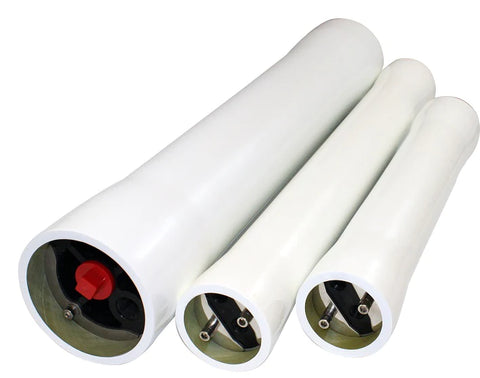
Commercial car wash applications usually benefit from RO membrane elements that are engineered for higher flow rates and stable rejection at the pressures and temperatures common in municipal supplies, rather than smaller residential elements.
Pretreatment may include sediment and activated-carbon cartridges. Sediment filtration removes particles that can foul equipment, while properly sized activated carbon can reduce oxidants such as free chlorine before they reach chlorine-sensitive polyamide RO membranes. The dechlorination method should be selected according to whether the municipal disinfectant is free chlorine, chloramine, or another oxidant, since a standard carbon cartridge sized for free chlorine may not provide adequate chloramine removal at the same flow rate. Sediment and carbon filter cartridges are a common starting point, though pretreatment requirements should always be based on the complete system configuration and the equipment manufacturer’s specifications.
On the DI side, treat resin tanks as a consumable that converts remaining TDS into predictable cost per gallon. Choose mixed‑bed DI tanks sized for your expected throughput and incoming water quality, and plan for monitoring with an inline conductivity or TDS meter to help identify when product water quality is approaching your established replacement or regeneration threshold.
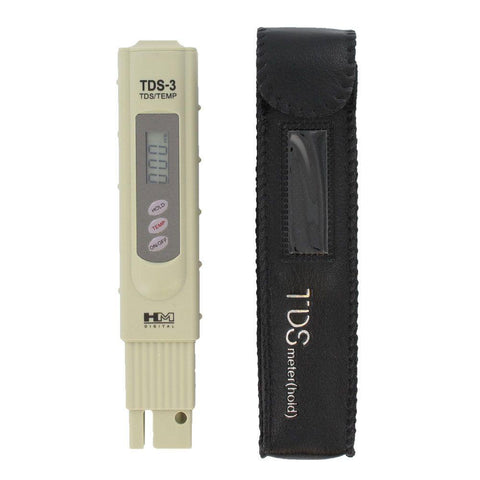
Most handheld and inline TDS meters estimate TDS from conductivity; operators using DI polishing may prefer a conductivity or resistivity instrument with suitable low-range resolution.
Many operators pair RO with a DI polishing stage, which dramatically reduces DI consumption because the RO handles most of the load while the DI removes the last few ppm for demanding finishes. For smaller sites or mobile detailers, DI‑only setups can still be effective when volume is modest and water quality is monitored closely.
Axeon Supply provides online and wholesale access to AXEON RO systems, membrane elements, and compatible pretreatment and polishing components, helping operators translate these principles into a specific bill of materials configured for in-bay automatics, self-serve bays, or express tunnels.
Best Practices for Operating and Maintaining Spot‑Free Systems
What Pre‑Filtration Does Your System Need?
Prefiltration protects your spot-free system by removing sediment and oxidants such as chlorine before water reaches the RO membranes. Sediment and carbon filter cartridges capture sand, rust, and fine particles that would otherwise plug flow paths or create pressure drops, while properly selected carbon media reduces chlorine or chloramine exposure to protect the membrane.”
Durable filter housings make it easier to maintain correct flow and perform quick cartridge changes during routine service. Replace sediment filters according to pressure differential, flow performance, and the manufacturer’s guidance. Replace or service activated-carbon media according to oxidant breakthrough testing, treated volume, contact time, water quality, and the manufacturer’s rated capacity, not pressure drop alone.
This upfront protection keeps your spot‑free water quality consistent and reduces unplanned downtime caused by fouled or prematurely failed elements.
How Should You Monitor TDS and System Performance?
Total Dissolved Solids (TDS) is the simplest day‑to‑day indicator of whether your spot‑free system is still delivering the water quality you expect. Install an inline TDS meter at the RO outlet and, if you run a DI polishing stage, at the DI outlet so you can see both values at a glance, and include handheld testers as part of the measuring and testing equipment every spot‑free system uses to track water quality at key points.
When you log readings over time, you can spot trends, but a rise in permeate conductivity or TDS may indicate a change in feedwater, operating pressure, temperature, recovery, membrane condition, seals, or instrument performance rather than scaling or chlorine damage alone. Comparing normalized performance and calculating salt rejection, using the formula salt rejection percent equals one minus the ratio of permeate conductivity to feed conductivity, multiplied by 100, helps confirm whether a membrane issue is actually present before concluding the membrane is scaled or chemically damaged.
Setting clear action thresholds, such as “investigate when TDS climbs above our normal operating range,” helps your team respond early, instead of waiting until customers see visible spotting on vehicles.
What Routine Maintenance Prevents Downtime?
A simple maintenance routine keeps your spot‑free system reliable and avoids last‑minute scrambles during busy periods. Replace sediment filters based on pressure differential and condition, and service or replace carbon media based on treated volume and breakthrough testing rather than calendar dates alone, so pretreatment continues to protect the RO membranes effectively.
Check operating pressures, flows, and TDS readings on a regular schedule, and record them in a log to catch small changes before they become service issues. Inspect storage tanks, pumps, motors, valves, and distribution piping for leaks, air ingress, or scale buildup that might restrict flow to your final rinse arch or self‑serve guns.
Many operators also schedule periodic reviews with their water treatment partner or suppliers like Axeon Supply to confirm sizing, component condition, and settings, which helps extend equipment life and maintain true spot‑free performance over the long term.
Water Quality Testing for Spot‑Free Performance
Water quality testing confirms whether your spot‑free system is truly delivering the low‑TDS water your process depends on. For car wash operators, the most critical measurements are incoming feed water TDS and hardness, RO permeate TDS, and, if DI polishing is used, conductivity or TDS after the resin stage.
Regularly recording these values lets you see how seasonal changes or municipal adjustments affect your system and how hard your membranes and resin are working.
At a minimum, test feed water and RO permeate TDS during installation, after any major equipment change, and on a defined schedule, such as weekly or monthly depending on volume. Feedwater hardness is a useful indicator, but a complete water analysis, including alkalinity, pH, sulfate, and silica, is needed to fully evaluate membrane scaling risk and select appropriate recovery, pretreatment, or antiscalant settings.
If you notice rising TDS at the RO outlet, investigate pre‑filtration, pressures, and membrane condition; if TDS climbs after DI, schedule resin replacement or regeneration. A simple, documented testing routine prevents surprises, supports stable spot‑free results, and gives you data to discuss with your filtration partner when planning upgrades or adjustments.
When to Upgrade or Reconfigure Your Spot‑Free System
You upgrade or reconfigure a spot‑free system when it no longer supports your actual traffic, quality standards, or operating costs. Persistent spotting complaints, even when TDS readings appear within the usual range, should first trigger a broader investigation of meter accuracy, rinse coverage, chemical carryover, wash chemistry, storage contamination, nozzle condition, water temperature, and final-rinse volume before the system is declared undersized.
Rising rewash rates, more towel work at the exit, or growing “invisible labor” to fix water spots on dark vehicles all point to an undersized or aging setup.
Capacity growth is a clear trigger: if you add bays, extend operating hours, or see sustained volume increases, the original RO and storage sizing may not keep up. Cold feedwater can materially reduce RO production, while seasonal wash-volume increases raise demand; both effects should be built into storage and capacity planning.
Frequent component failures, membrane replacements, or DI tank changes also suggest that the system is working too hard for the water quality it receives.
In these situations, a structured review of feed water analysis, TDS logs, and actual gallons per day, ideally with a specialist supplier such as Axeon Supply, helps determine whether you need more RO capacity, additional storage, DI polishing, or a complete redesign to restore reliable spot‑free performance.
Why Car Wash Operators Partner with Axeon Supply
Spot‑free water systems only perform as well as the engineering, components, and support behind them. Car wash operators look for partners who understand both membrane filtration and the realities of busy in‑bay automatics, tunnels, and self‑serve sites.
AXEON Water Technologies engineers and manufactures commercial RO systems, membrane elements, housings, and related equipment, while Axeon Supply provides online and wholesale access to AXEON products and selected third-party components. Together they offer commercial-grade equipment suitable for car wash and other demanding commercial water treatment applications, not only light residential use.
AXEON’s history in membrane filtration and system design gives operators confidence that their spot-free solution can be sized and configured from real application experience.
For eligible direct customers and supported products, AXEON’s technical team can assist with presale evaluation, system selection, startup guidance, and troubleshooting within the scope of its technical support policy.
With online ordering, documented policies, and a defined support process, Axeon Supply offers a practical way for US and Canadian car wash businesses to keep critical spot-free components and consumables flowing, while relying on a specialist partner to help protect uptime and final rinse quality.
Key Takeaways for Spot‑Free Water at Your Car Wash
- Define a clear spot-free rinse target based on your feedwater, wash chemistry, and finish expectations, rather than assuming one universal TDS number applies to every site.
- Choose an appropriate RO and DI configuration based on your bays, daily volume, and feed water quality, so the system can reliably meet real‑world demand.
- Size your RO capacity and storage with headroom for peak hours, accounting for gallons of spot‑free rinse per vehicle and seasonal variations in traffic and temperature.
- Monitor TDS, conductivity, pressures, and flows routinely at key points in the system, and investigate multiple possible causes before assuming a membrane or resin failure.
- Follow a capacity- and condition-based maintenance schedule for prefilters, membranes, and DI tanks, rather than relying on calendar dates or pressure drop alone.
- Periodically review water quality, rewash rates, and complaints, and rule out non-system causes of spotting before deciding to upgrade or reconfigure your spot-free system.
- Work with a knowledgeable filtration partner such as Axeon Supply to align system design, components, and technical support with the specific needs of your car wash operation.