







Reverse osmosis (RO) is a core purification step in pharmaceutical water treatment, but RO alone does not ensure compliance with USP Purified Water or Water for Injection (WFI) requirements. For pharmaceutical manufacturers and water treatment system designers, selecting the right treatment process requires understanding the intended water grade, applicable quality standards, and production needs.
This guide explains USP water requirements, how RO supports pharmaceutical water purification, the key stages of system design, and the monitoring and validation practices needed to maintain consistent water quality.
Why Is Water Quality Critical in Pharmaceutical Manufacturing?
Water quality is critical in pharmaceutical manufacturing because it can affect product purity, manufacturing consistency, equipment cleanliness, and contamination control. Water must meet the quality requirements of its intended use to protect product safety and maintain reliable manufacturing processes.
Water is used as an ingredient in drug formulations and for cleaning and rinsing manufacturing equipment. Chemical impurities, microorganisms, and bacterial endotoxins can compromise product purity and increase contamination risks. Residues left on equipment may also affect subsequent production batches.
Maintaining water quality requires more than effective treatment. Improperly designed storage tanks, distribution piping, or circulation systems can allow microbial growth and compromise water quality after purification. Manufacturers must therefore monitor water at the point of use to ensure it remains suitable for its intended application throughout the production process.
What Are USP Water Standards for Pharmaceutical Use?
USP water standards define quality requirements for water used in pharmaceutical manufacturing, including its chemical purity and microbiological control. The required grade depends on the water’s intended use, the product being manufactured, and applicable regulatory requirements.
The United States Pharmacopeia (USP) publishes compendial standards that help manufacturers establish appropriate pharmaceutical water quality.
Two important pharmaceutical water grades are Purified Water (PW) and Water for Injection (WFI). Although both require controlled quality, they serve different applications and have distinct requirements.
USP Purified Water vs. Water for Injection (WFI)
| Quality parameter | Purified Water (PW) | Water for Injection (WFI) |
|---|---|---|
| Conductivity | Must meet USP General Chapter 〈645〉 requirements. Stage 1 uses a temperature-dependent limit; 1.3 µS/cm at 25°C is a commonly cited value. | Must meet the applicable USP 〈645〉 requirements. |
| Total organic carbon (TOC) | Not more than 500 µg/L (500 ppb), under USP 〈643〉. | Not more than 500 µg/L (500 ppb), under USP 〈643〉. |
| Microbiological quality | Establish appropriate microbial alert and action levels based on the intended use, system design, and applicable guidance. | Requires stringent microbial control, with appropriate alert and action levels established for the system. |
| Bacterial endotoxins | No universal endotoxin limit applies to all Purified Water uses; requirements depend on the application. | Not more than 0.25 USP Endotoxin Units (EU)/mL under the applicable WFI monograph. |
| Typical applications | Pharmaceutical formulations, equipment cleaning, rinsing, and laboratory uses where Purified Water is appropriate. | Applications requiring WFI quality, including the preparation of certain parenteral products. |
| Production | Produced using a suitable purification process that meets the applicable compendial requirements. | Produced by distillation or another purification process that meets the applicable USP definition and requirements. |
Which USP Requirements Should Manufacturers Consider?
Manufacturers should review the applicable USP–NF monographs and general chapters to establish water quality specifications, testing procedures, and system controls.
- Purified Water and WFI monographs: Define the requirements for each pharmaceutical water grade, including applicable chemical and endotoxin specifications.
- USP General Chapter 〈643〉, Total Organic Carbon: Specifies the test for organic impurities, with a commonly cited acceptance limit of 500 µg/L (500 ppb).
- USP General Chapter 〈645〉, Water Conductivity: Defines the conductivity test procedures and acceptance criteria. The applicable limit depends on the test stage and temperature.
- USP General Chapter 〈1231〉, Water for Pharmaceutical Purposes: Provides guidance on water treatment, system design, validation, storage, distribution, and monitoring.
Microbiological action levels require separate consideration. FDA's Guide to Inspections of High Purity Water Systems published in 1993 states that an action limit below 10 CFU/100 mL is acceptable for WFI, while an action limit above 100 CFU/mL for Purified Water is unacceptable under that guidance. These are FDA inspection-guide recommendations, not universal USP microbiological limits. Manufacturers must establish appropriate system-specific controls based on product risk and applicable requirements.
Consult the official USP resources and the FDA guide to high-purity water systems to verify the requirements relevant to the application.
Can Reverse Osmosis Be Used to Produce Water for Injection?
Yes. USP-NF permits WFI production through distillation or an alternative process demonstrated to be equivalent or superior in removing chemicals and microorganisms.
RO-based systems may combine single-pass or double-pass RO with additional purification, such as electrodeionization (EDI) or ultrafiltration. The complete system must be validated to meet WFI requirements, including microbial and endotoxin control.
Requirements vary by jurisdiction. Manufacturers should verify current USP-NF and European Pharmacopoeia requirements before selecting a WFI production process.
How Does Reverse Osmosis Work in Pharmaceutical Water Treatment?
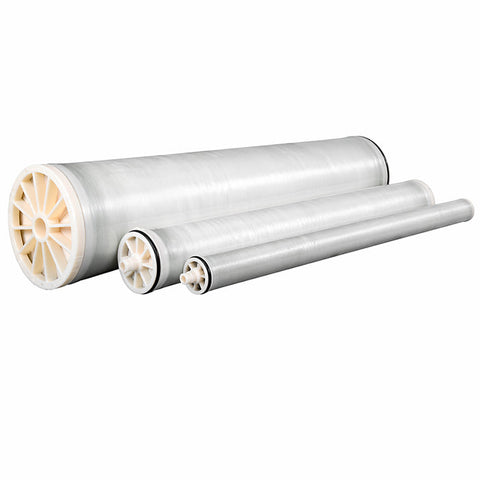
Reverse osmosis (RO) uses pressure to push feedwater through a semipermeable membrane. The membrane allows water to pass while reducing many dissolved salts, organic compounds, particles, and microorganisms. This produces purified water for further treatment when required.
Learn more about how reverse osmosis ensures high-purity water in other critical applications.
What Contaminants Can RO Membranes Reduce?
RO membranes reduce dissolved salts, many organic compounds, suspended particles, and microorganisms. Their effectiveness depends on membrane type, feedwater composition, operating pressure, and overall system design. RO can also help reduce microbial contaminants and endotoxins, but it should not be treated as an absolute barrier against them. Performance must be verified under actual operating conditions.
Why RO Alone May Not Be Enough
RO is an important purification stage, but it does not automatically ensure compliance with USP water standards. Depending on the required water grade, the system may need additional treatment, such as electrodeionization, ultraviolet treatment, or ultrafiltration.
The U.S. Food and Drug Administration (FDA) highlights the importance of system design, validation, and monitoring in its guidance on high-purity pharmaceutical water systems. Manufacturers must verify that the complete treatment and distribution system consistently delivers water that meets the specifications for its intended use.
What Does a Pharmaceutical RO Water Treatment System Include?
A pharmaceutical RO water treatment system typically includes feedwater assessment, pretreatment, reverse osmosis, and additional purification where required. Storage, distribution, and point-of-use monitoring help maintain water quality and ensure the system meets its intended requirements.
Key Stages of a Pharmaceutical Water Purification System
A typical pharmaceutical water purification train follows the below mentioned stages and each stage serves a specific purpose in controlling water quality.
- Feedwater assessment: Water analysis identifies dissolved salts, hardness, chlorine, organic compounds, and other contaminants that may affect treatment performance.
- Pretreatment and filtration: Filters, water softeners, and other suitable technologies help reduce suspended solids, hardness, and oxidants that could damage or foul the RO membrane.
- Reverse osmosis (RO): Pressure drives water through the semipermeable membrane, reducing many dissolved contaminants and producing permeate for further treatment.
- Additional purification: Depending on the required water grade, technologies such as electrodeionization, ultraviolet treatment, or ultrafiltration may provide further control of ionic impurities, microorganisms, or endotoxins.
- Storage, distribution, and monitoring: Properly designed sanitary tanks and a suitable water distribution loop help preserve water quality. Routine monitoring at the point of use helps detect changes before they affect manufacturing processes.
The final configuration depends on feedwater analysis, required USP water grade, system capacity, and applicable quality requirements. A well-designed pharmaceutical RO system must work as an integrated treatment and distribution system, rather than as a standalone membrane unit.
How Can Manufacturers Maintain Pharmaceutical Water Quality?
Manufacturers maintain pharmaceutical water quality through routine testing, system validation, effective sanitation, and documented maintenance. These controls help ensure water consistently meets the requirements of its intended use.
Water Quality Monitoring and Testing
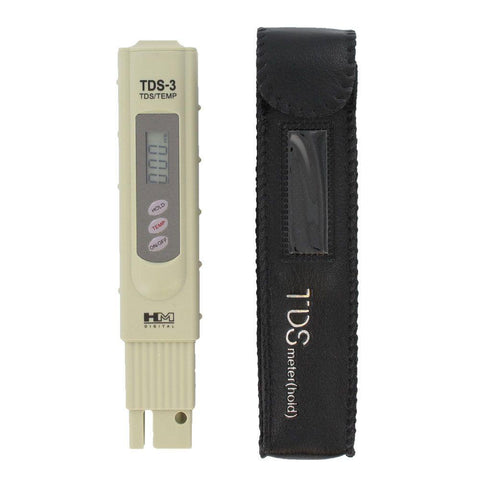
Conductivity testing detects changes in ionic purity, while total organic carbon (TOC) testing measures organic impurities. Microbiological and endotoxin testing help assess contamination risks where applicable. Sampling should cover relevant points in the treatment train, storage system, distribution loop, and points of use. USP General Chapters 〈643〉 and 〈645〉 address TOC and conductivity testing, respectively.
System Validation and Documentation
Qualification and validation establish whether the system consistently produces water of the required quality. Operating procedures, instrument calibration, maintenance records, and test results support ongoing control. Manufacturers should document deviations, investigate their causes, and assess system changes before implementation.
Sanitation and Microbial Control
Microorganisms can form biofilms on wetted surfaces, making contamination difficult to control. Proper circulation, minimal stagnant sections, effective sanitization, and routine monitoring help manage microbial risks.
The FDA's guidance on high-purity water systems and USP General Chapter 〈1231〉 provide guidance for developing appropriate controls. Manufacturers should consult current applicable requirements when establishing site-specific procedures.
What Should Manufacturers Consider When Selecting an RO System?
Selecting a pharmaceutical RO system starts with defining the required water quality, intended use, and operating conditions. Capacity and purchase price matter, but the system must also support consistent water quality and applicable USP requirements.
Manufacturers should evaluate the following factors:
- Required water grade: Identify whether the application requires USP Purified Water, WFI, or another defined quality standard.
- Feedwater quality: Assess water chemistry and seasonal variations to determine pretreatment needs.
- Capacity and recovery: Account for peak demand, production volume, and water recovery requirements.
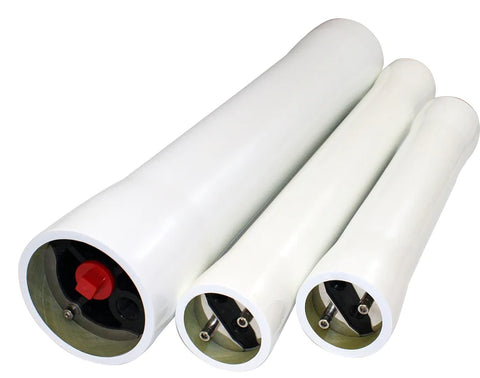
- Membrane compatibility: Confirm that the RO membrane elements and pretreatment components suit the feedwater and operating conditions.
- Sanitation and microbial control: Consider sanitization methods, circulation, and biofilm prevention.
- Monitoring and maintenance: Evaluate instrumentation, alarms, serviceability, and replacement-part availability.
- Validation and technical support: Confirm access to relevant documentation and qualified engineering assistance.
A thorough engineering assessment helps ensure the system meets current needs and supports future production requirements.
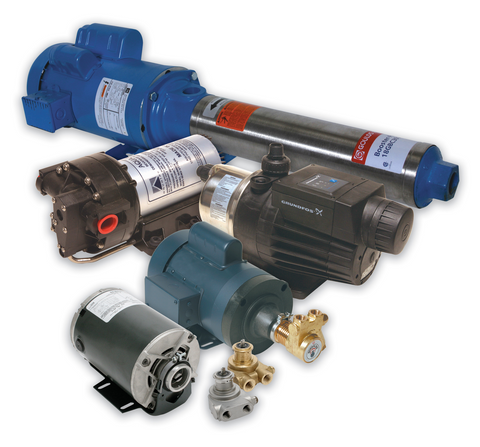
For pharmaceutical RO system requirements, AXEON Supply offers water treatment components, including RO membranes, pretreatment products, cleaning chemicals, and instrumentation to support system performance and maintenance.
When Should You Seek Expert Support for a Pharmaceutical RO System?
Expert support can help when a pharmaceutical RO system shows declining permeate production, changing conductivity, recurring membrane fouling, scaling, or repeated microbiological excursions. Water quality drifting outside established alert or action levels also warrants investigation. Professional assistance is valuable when upgrading equipment, increasing capacity, or troubleshooting persistent performance issues.
Experienced water-treatment professionals can review operating data, identify potential causes of performance changes, assess membrane and component suitability, and recommend maintenance or system improvements. Their input can help manufacturers maintain consistent operation and plan upgrades based on actual process requirements.
For assistance with RO system components and water treatment equipment, manufacturers can consult AXEON Supply. Regulatory compliance, however, must be established through the manufacturer's own quality systems, validation activities, and applicable regulatory requirements.
Building a Reliable Pharmaceutical Water Purification System
Reverse osmosis plays an important role in pharmaceutical water treatment by reducing dissolved contaminants and supporting the production of water that meets defined quality requirements. However, reliable pharmaceutical water quality depends on more than RO membranes. Proper pretreatment, additional purification where required, sanitary storage and distribution, and ongoing monitoring all contribute to consistent performance.
Selecting the right system begins with understanding the required USP water grade, feedwater conditions, and production demands. Manufacturers can consult experienced water-treatment professionals for guidance on RO performance, membrane selection, and system troubleshooting.
AXEON Supply can help identify suitable water treatment components and equipment to support pharmaceutical water purification needs.