


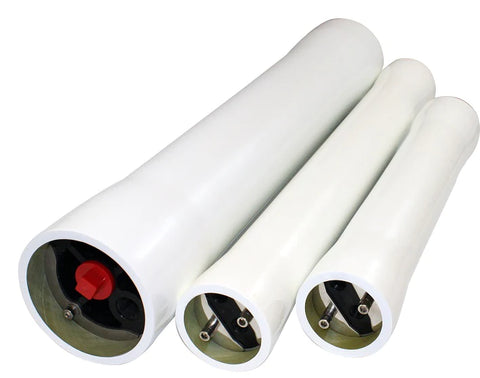

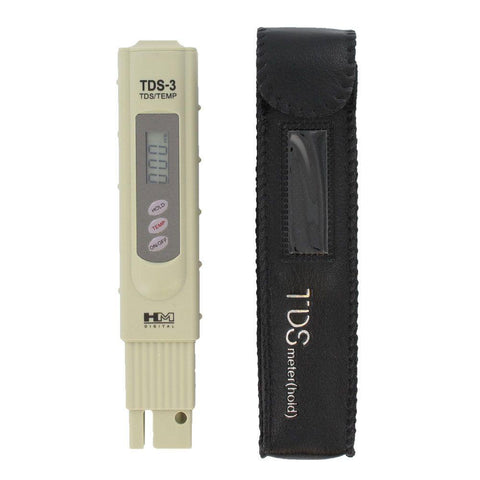


Selecting the right RO membrane housing depends on 6 factors: pressure rating, housing diameter/length, flow rate capacity, port size, material type, and number of membrane elements. Each factor directly determines whether the housing performs reliably or fails under system operating conditions. Pressure rating and flow rate are the 2 primary constraints — every other factor is evaluated against them first.
What Pressure Rating Does an RO Membrane Housing Require?
An RO membrane housing requires 1 of 3 pressure ratings: 150 PSI for standard tap water systems, 300 PSI for brackish water systems, or 600–1,000 PSI for seawater desalination systems. Selecting a housing below the system's operating pressure can cause structural failure at the vessel body or end cap seal.
3 pressure values govern every housing specification:
- Rated Working Pressure (RWP) — the maximum continuous operating pressure the housing sustains safely
- Test Pressure — 1.5× the RWP, applied during factory quality validation (e.g., 225 PSI test pressure for a 150 PSI RWP housing)
- Burst Pressure — the pressure at which structural failure occurs, typically 4× the RWP
The table below maps each pressure class to its corresponding application:
RO Membrane Housing Pressure Classes by Application
| Pressure Class | Rated Working Pressure | Typical Application |
|---|---|---|
| Standard | 150 PSI | Residential, light commercial tap water |
| High-Pressure | 300 PSI | Industrial brackish water |
| Ultra-High | 600–1,000 PSI | Seawater desalination |
Always select a housing rated at or above the system's maximum operating pressure — not the average operating pressure.
How Do You Match Housing Diameter to Flow Rate?
RO membrane housings are available in 3 standard diameters — 2.5-inch, 4-inch, and 8-inch. Housing diameter must match the membrane element diameter exactly — a mismatched diameter creates a bypass gap between the element and housing wall, reducing rejection rates and system output.
3 housing diameters map directly to system scale:
- 2.5-inch housing (2540 configuration) — residential point-of-entry systems, up to 2,000 GPD; accepts 2.5-inch membrane elements only
- 4-inch housing (4040 configuration) — light commercial systems, 1–12 GPM; accepts 4-inch diameter membrane elements only
- 8-inch housing (8040 configuration) — industrial systems, up to 75 GPM; accepts 8-inch diameter membrane elements only
Select housing diameter based on the membrane element diameter specified for the system — not on pipe connection size.
How Does Port Size Affect Flow Rate Performance?
Port size directly controls flow rate — a undersized port creates pressure drop that reduces system output regardless of housing diameter or membrane element capacity. RO membrane housings are available in various standard FNPT port sizes: 1/4", 3/8", 1/2", 3/4", and 1".
Each port size maps to a specific application scale:
- 1/4" FNPT
- 3/8"–1/2" FNPT
- 3/4"–1" FNPT
- 1-1/4 - 1-1/2" FNPT
Select port size based on the system's peak flow demand — not the average daily output.
Which Housing Material Is Right for Your Application?
RO membrane housings are manufactured in 3 materials — polypropylene/PVC, stainless steel, and fiberglass (FRP) — and feed water chemistry is the primary selection criterion for each. Pressure rating and installation environment are the 2 secondary criteria.
3 material types cover all standard RO applications:
- Polypropylene/PVC housing — residential and light commercial indoor systems; rated to 125 PSI maximum; chemically resistant to chlorinated tap water; lowest unit cost of the 3 material types
- 304L/316L Stainless Steel housing — industrial and commercial systems; rated to 150 PSI; corrosion-resistant to aggressive feed water chemistries including high-TDS and acidic streams; the standard material for food & beverage and pharmaceutical applications
- Fiberglass (FRP) housing — outdoor, brackish water, and seawater systems; UV-resistant; rated for high-pressure configurations up to 1,000 PSI; maintains structural integrity across temperature cycling
How Many Membrane Elements Does the Housing Support?
Housing length determines element count — a single vessel holds 1, 2, 3, 4, 6 membrane elements depending on its length, directly setting the system's total output capacity.
4 element configurations cover the full range of RO system scales:
- 1-element housing
- 2-element housing
- 3-element housing
- 4-element housing
- 6-element housing
Multi-element vessels reduce total vessel count in large systems. Common brand names for commercial and industrial RO membrane housings are: AXEON, Codeline by Pentair, Protec Arisawa, Pheonix, Bel and ROPV.
What O-Ring and End Cap Specifications Matter for Pressure Sealing?
O-ring material must match feed water chemistry — an incompatible O-ring material swells, compresses unevenly, or degrades, causing bypass leaks at system operating pressure. AXEON Supply stocks replacement O-rings for 2.5" and 4.5" housings across 3 material grades:
- Buna-N (Nitrile) — standard chlorinated tap water systems; rated 40°F–125°F
- EPDM — ozone-treated or peroxide-based feed water systems
- Viton — high-temperature or solvent-contaminated feed water above 125°F
End caps must match the housing series exactly — cross-series end caps cause thread stripping and seal failure at pressure.
RO Membrane Housing Maintenance Checklist
7 maintenance steps extend RO membrane housing service life and prevent pressure failure during system operation.
- Inspect O-ring seals every 6 months for compression set, cracking, or chemical degradation — replace with the correct Buna-N, EPDM, or Viton grade for your feed water chemistry
- Check inlet and outlet port connections for thread wear or fitting corrosion at each membrane element replacement
- Verify system operating pressure against the housing's Rated Working Pressure (RWP) before every startup
- Flush the housing interior with clean feed water before inserting a replacement membrane element
- Replace Buna-N O-rings at every disassembly — reusing compressed O-rings causes bypass leaks at operating pressure
- Inspect the housing exterior for UV discoloration, surface cracking, or structural deformation on all outdoor installations
- Confirm end cap thread engagement — a minimum of 3 full thread turns is required for pressure-rated sealing
Proper housing maintenance prevents the 3 most common failure modes: O-ring bypass, thread seal failure, and pressure-rated housing fracture.
Conclusion
Selecting the right RO membrane housing diameter for pressure and flow rates requires matching all 6 factors: pressure rating, housing diameter/length, flow rate capacity, port size, material type, and element count. AXEON Supply's membrane housing catalog covers plastic, stainless steel, and fiberglass configurations across all pressure classes and flow rate ranges.