





Flow meters and pressure gauges improve RO system diagnostics by providing real-time flow rate and operating pressure data at 3 measurement points: feed water inlet, interstage stage, and permeate outlet. These 2 instruments quantify membrane fouling, pre-filter cartridge blockage, and booster pump pressure loss — converting invisible system conditions into measurable diagnostic evidence before irreversible membrane damage occurs.
What Are Flow Meters and Pressure Gauges in an RO System?
A flow meter is a diagnostic instrument that measures volumetric flow rate — expressed in GPM or LPM — on the feed, permeate, and concentrate lines of an RO system. Two flow meter configurations serve RO applications: panel mount and inline. A pressure gauge is a diagnostic instrument that measures operating pressure — expressed in PSI or BAR — at the pre-filter inlet, pump outlet, and membrane housing. Two pressure gauge types serve RO diagnostics: standard and differential.
What Diagnostic Role Does Each Instrument Perform?
Flow meters perform 3 quantitative flow diagnostics and pressure gauges perform 3 pressure-based diagnostics across an RO system's operational stages.
Flow Meter Diagnostic Roles:
- Measures permeate flow rate — a 15%+ drop from the normalized baseline identifies early-stage membrane fouling before rejection failure occurs
- Calculates system recovery rate — compares feed GPM to permeate GPM to confirm the 70–85% recovery range for commercial RO operation
- Detects concentrate flow imbalance — a concentrate-to-permeate ratio outside 2:1 signals operational inefficiency and elevated brine discharge volume
Pressure Gauge Diagnostic Roles:
- Measures feed inlet pressure — readings below 40 PSI or above 150 PSI indicate booster pump underperformance or membrane over-pressurization
- Identifies pre-filter cartridge blockage — a differential reading of 10+ PSI across a sediment or carbon filter confirms replacement
- Tracks interstage pressure loss — a stage-to-stage drop exceeding 15 PSI identifies internal membrane scaling or biological fouling
Where Are Flow Meters and Pressure Gauges Installed in an RO System?
Flow meters and pressure gauges install across 3 primary RO system zones: the pre-treatment stage, the high-pressure pump stage, and the membrane separation stage.
- Pre-treatment stage — pressure gauges mount at the feed water inlet and pre-filter outlet using 1/4" MNPT connections to monitor inlet pressure and filter differential
- High-pressure pump stage — a pressure gauge mounts at the pump outlet using a 1/4" MNPT connection to confirm pump delivery pressure
- Membrane separation stage — flow meters install on the feed, permeate, and concentrate lines using 1/2" MNPT or 1" MNPT connections to measure volumetric flow at each output point
The table below identifies the 6 standard installation points for flow meters and pressure gauges across a commercial RO system, organized by measurement function and stage location.
| RO System Location | Instrument Type |
|---|---|
| Feed water line (pre-filter inlet) | Pressure gauge (0–160 PSI range) |
| Pre-filter outlet / pump inlet | Pressure gauge (0–100 PSI range) |
| High-pressure pump outlet | Pressure gauge (0–300 PSI range) |
| Feed line to membrane housing | Flow meter (feed GPM measurement) |
| Permeate line (post-membrane) | Flow meter (permeate GPM measurement) |
| Concentrate (reject) line | Flow meter (concentrate GPM measurement) |
How Do Flow Meter and Pressure Gauge Readings Identify RO Problems?
5 reading patterns from flow meters and pressure gauges identify 5 categories of RO system problems — each requiring a specific diagnostic action.
The table below maps each instrument reading pattern to its identified problem and the corresponding diagnostic action required.
| Reading Pattern | Problem Identified | Diagnostic Action |
|---|---|---|
| Permeate GPM drops 15–20% below baseline | Early-stage membrane fouling | Inspect membrane elements; initiate clean-in-place (CIP) if ΔP confirms |
| Feed-to-membrane ΔP increases 10–15 PSI | Pre-filter cartridge blockage | Replace sediment or carbon block cartridge filter |
| Feed inlet pressure drops below 40 PSI | Booster pump underperformance | Test pump pressure output; inspect motor and impeller |
| Stage-to-stage pressure loss exceeds 15 PSI | Interstage scaling or biological fouling on membrane surface | Test TDS rejection rate; schedule membrane element inspection |
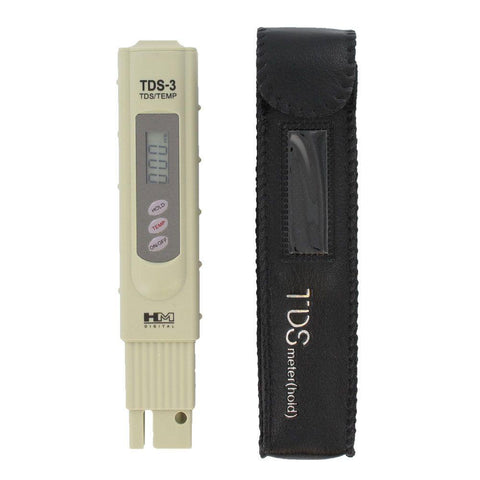
| Concentrate GPM drops without feed flow change | Concentrate-side mineral scaling or blockage | Check concentrate valve position; verify mineral scaling via handheld TDS meter |
A differential pressure increase of 40–50 PSI between feed inlet and concentrate outlet confirms advanced membrane fouling — requiring CIP or full membrane element replacement. Permeate flow rate decline below 80% of the normalized baseline confirms membrane rejection failure, cross-verified with a handheld TDS meter reading against feed water TDS.
How Do Flow Meters and Pressure Gauges Prevent RO Membrane Failure?
Early fouling detection via flow meter and pressure gauge monitoring extends RO membrane service life by 6–8 months beyond reactive maintenance schedules. Industrial RO membrane elements cost $200–$800 per element — a 12-element system replacement totals $2,400–$9,600 per cycle. Unmonitored feed pressure operating above 150 PSI accelerates membrane compaction, reducing permeate flux by 20–30%. A feed-to-concentrate differential pressure increase reaching 40–50 PSI is the industry-recognized threshold — confirmed against DuPont FilmTec normalized performance data — that triggers CIP or membrane element replacement before rejection failure occurs.
What Specifications Matter When Selecting RO Flow Meters and Pressure Gauges?
4 specifications determine flow meter and pressure gauge suitability for RO system installation.
- Match flow range to system GPM — residential RO systems operate at 0.1–5 GPM; commercial systems at 5–45 GPM; select a meter whose mid-range aligns with nominal operating flow
- Select pressure gauge range at 1.5× operating pressure — a system at 100 PSI requires a 0–160 PSI gauge minimum to prevent dial saturation and reading inaccuracy
- Specify glycerin-filled gauges for pump-adjacent installations — glycerin fill dampens needle oscillation from pump pulsation, maintaining stable ±accuracy readings
- Choose 316L stainless steel internals for brackish or high-TDS feed water — brass internals corrode above 2,000 PPM TDS; 316L SS internals resist chloride corrosion
The table below compares panel mount and inline flow meter configurations across 4 selection factors.
| Selection Factor | Panel Mount Flow Meter | Inline Flow Meter |
|---|---|---|
| Installation type | Skid / control panel mounting | Direct pipe installation |
| Max pressure rating | 125 PSI | 150 PSI |
| Accuracy | ±5% | ±4% |
| Best application | Fixed monitoring stations | Tight-space pipe runs |
AXEON Supply stocks flow meters across the 0.1–45 GPM range and pressure gauges from 0–1,000 PSI for RO system instrumentation applications.
Frequently Asked Questions About RO System Diagnostics
What Is the Normal Pressure Range for an RO System?
The normal operating pressure for a commercial RO system is 50–150 PSI at the membrane inlet, depending on feed water salinity and membrane type. Residential RO systems operate at 40–80 PSI. Pressure below 40 PSI reduces permeate output; pressure above 150 PSI accelerates membrane compaction.
What Causes a Drop in RO Permeate Flow Rate?
A drop in RO permeate flow rate is caused by 4 conditions: membrane fouling, pre-filter blockage, feed pressure loss below 40 PSI, or membrane scaling. A flow meter reading 15% or more below the normalized baseline confirms output reduction and triggers a diagnostic inspection cycle.
AXEON Supply stocks flow meters across the 0.1–45 GPM range and pressure gauges from 0–1,000 PSI for RO system instrumentation across residential, commercial, and industrial applications. Panel mount flow meters, inline flow meters, glycerin-filled gauges, and 316L SS gauge configurations are available through the Measuring & Testing category at axeonsupply.com.