





Water treatment plants use different combinations of intake, pretreatment, clarification, filtration, membrane separation, disinfection, monitoring, storage, and pumping equipment. The exact treatment train depends on the source water, contaminants, required finished-water quality, plant capacity, and applicable regulations.
AXEON Water Technologies engineers and manufactures membrane filtration systems and components, with more than three decades of experience in the field. AXEONSupply.com provides water treatment plant operators, engineers, and procurement teams with access to water treatment systems, replacement components, chemicals, and related equipment, wholesale across the United States and Canada.
This guide covers what plant operators, engineers, and procurement teams need at each stage, from raw water intake through final distribution.
What Equipment Is Used in a Water Treatment Plant?
A water treatment plant draws on equipment across seven process areas: intake and screening, pretreatment and chemical feed, coagulation/flocculation/clarification where required, filtration or membrane separation, disinfection or final conditioning, monitoring and controls, and storage and distribution. Not every plant uses every stage.
Intake pumps and screens pull raw water from its source and remove large debris. Pretreatment and chemical feed systems condition the water before it reaches clarification or filtration. Where required, coagulation, flocculation, and clarification equipment removes suspended particles that settle out by gravity.
Filtration or membrane separation equipment removes remaining suspended solids and dissolved constituents, using media filters, cartridge filters, or membrane technology such as reverse osmosis. Disinfection or final conditioning equipment then addresses bacteria, viruses, and parasites through chlorine, ultraviolet light, or ozone.
Monitoring and control instruments track parameters such as pH, turbidity, and disinfectant residual throughout the process. Storage and distribution equipment moves finished water to the system at the required pressure and flow.
Intake and Pretreatment Equipment for Water Treatment Plants
Water Intake Pumps and Raw Water Screening
Raw-water intake pump capacity varies widely with the plant’s design flow, source elevation, intake configuration, redundancy requirements, and expected peak demand. Centrifugal pumps, axial flow pumps, and submersible pumps are the three common types used at this stage.
Intake systems may use coarse bar screens, traveling screens, strainers, or fine screens. Opening size is selected according to the source water and the equipment being protected.
AXEONSupply.com offers pumps and motors for commercial and industrial water-treatment systems. Large municipal raw-water intake pumps may require specialized engineering and sourcing outside AXEON’s standard catalog. Axeon Supply’s Pumps and Motors collection includes booster pumps and delivery pumps for these applications.
Why Pre-Treatment Protects Downstream Equipment
Pre-treatment prevents fouling and mechanical wear in filtration and membrane systems. Removing sediment, grit, and debris early reduces the load on cartridge filters, media filters, and reverse osmosis membranes further down the line.
A plant that skips adequate pre-treatment sees faster membrane fouling, more frequent backwashing, and higher maintenance costs. Read more on why pre-filtration is important for a reverse osmosis system. AXEON’s media and cartridge filtration systems function as this protective layer, extending the service life of higher-value membrane components.
Coagulation, Flocculation, and Sedimentation Equipment
Coagulation, flocculation, and sedimentation work together to remove suspended particles too small for screens to catch. Coagulant dosing units add chemicals such as alum or ferric chloride, which neutralize the charge on fine particles so they clump together.
Flocculation tanks provide slow, sustained mixing that lets these particles grow into larger clusters called flocs. Flocculation detention time and mixing intensity are established through process design, water testing, and, where appropriate, jar testing or pilot evaluation.
Sedimentation tanks then let the flocs settle by gravity. Circular clarifiers use a rotating arm to collect settled sludge, while lamella clarifiers use inclined plates to speed up the settling process in a smaller footprint.
Chemical-feed pumps and dosing systems can be configured to introduce coagulants, pH-adjustment chemicals, disinfectants, antiscalants, or other treatment chemicals. The chemical itself must be selected for the specific process and water analysis. Axeon Supply’s Chemical Injection Systems collection and chemicals product lines support this stage of treatment.
Filtration Equipment for Water Treatment Plants
Media and Cartridge Filtration Systems
Granular media filters remove suspended particles through straining, sedimentation, adsorption, and attachment within the media bed. Actual removal performance depends on media selection, bed depth, loading rate, pretreatment, and particle characteristics, and these filters require periodic backwashing to stay effective.
Cartridge filters use a replaceable, self-contained filtration element and reach much finer removal rates, often 1 to 5 microns. Axeon Supply’s Filtration Systems collection covers both media filtration and cartridge filtration, along with the filter cartridges these systems use as replacement parts.
Reverse Osmosis and Membrane Filtration Systems
Reverse osmosis uses pressure to move water through a semipermeable membrane, substantially reducing dissolved salts, many metals, and other dissolved constituents. Rejection varies by membrane, contaminant, feedwater chemistry, pressure, temperature, recovery, and system design. RO is widely used as a core desalination and high-purity-water technology, often alongside pretreatment and downstream polishing processes. For more detail, see choosing the right membrane filter for water purification.
Reverse osmosis systems may be categorized by feedwater and application, including tap-water, brackish-water, seawater, process-water, reuse, high-purity, and specialty separation systems. They may also be classified by production capacity and system configuration. Industrial plants sizing a new system should review 5 factors to consider when sizing an industrial reverse osmosis system.
AXEON’s published membrane elements primarily use polyamide thin-film composite membrane technology, with configurations developed for tap water, brackish water, seawater, low-fouling, and nanofiltration applications. See how to choose the right RO membrane for your application for a full comparison. A single reverse osmosis system typically pairs a membrane housing with one or more membrane elements, sized to the plant’s required flow rate.
How Filtration and UV Control Waterborne Protozoa
Appropriately designed filtration or membrane processes can physically remove protozoan pathogens such as Cryptosporidium and Giardia, while validated UV treatment can inactivate them. Treatment performance depends on the technology, integrity, operating conditions, and required regulatory log-removal or inactivation credit. Chlorine alone is notably less effective against these chlorine-resistant organisms, according to the CDC.
Reverse osmosis and ultrafiltration membranes physically remove protozoa due to their pore size, while UV light damages the genetic material of susceptible organisms to prevent reproduction.
Disinfection Equipment for Water Treatment Plants
Disinfection equipment reduces or inactivates susceptible bacteria, viruses, and protozoa before finished water enters storage or distribution. The required process and dose depend on the target organism and applicable treatment standards. Chlorine dosing devices, ultraviolet disinfectors, and ozone generators are commonly used technologies at this stage.
Chlorine or chloramine systems may be used to establish a disinfectant residual in the distribution system. The operating target must comply with federal, state, and local requirements while controlling microbial risk and disinfection by-products.
Many low-pressure UV systems operate near 254 nanometers, while other validated UV technologies may use different wavelength ranges or lamp configurations. This method works well as a chemical-free complement to filtration, as covered in the previous section on parasite removal.
Ozone generators produce a strong oxidizing gas that disinfects water and breaks down certain organic contaminants, though it requires more energy and specialized equipment than chlorine or UV. Axeon Supply’s Disinfection Systems collection includes ultraviolet sterilization equipment sized for these applications.
Monitoring and Control Equipment for Water Treatment Plants
Monitoring instruments track water quality in real time so operators can adjust treatment before a problem reaches the distribution system. Common instruments include flow, pressure, level, pH, conductivity, turbidity, disinfectant residual, temperature, and differential-pressure devices. The required instrumentation depends on the treatment process and regulatory obligations.
pH meters measure acidity and alkalinity, since consistent pH directly affects how well coagulants and disinfectants perform. Turbidity meters measure water clarity by detecting suspended particles that filtration may have missed.
Continuous or periodic disinfectant-residual monitoring may be required by federal and state drinking-water regulations. Utilities may also use relevant AWWA standards and industry guidance when designing and operating monitoring programs. Flow meters track the volume moving through each stage, helping operators confirm the plant is running at its designed capacity.
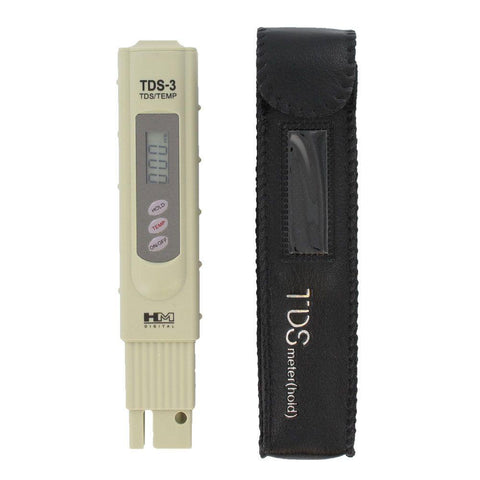
Axeon Supply’s Measuring and Testing collection includes flow meters, pressure gauges, handheld meters, and inline monitors built for these monitoring requirements.
Storage, Distribution, and System Components
Finished-water storage may include clearwells, atmospheric tanks, ground-level reservoirs, elevated tanks, standpipes, or hydropneumatic tanks, depending on plant scale and distribution design. Finished-water or high-service pumps then move water into the distribution system at the required pressure and flow.
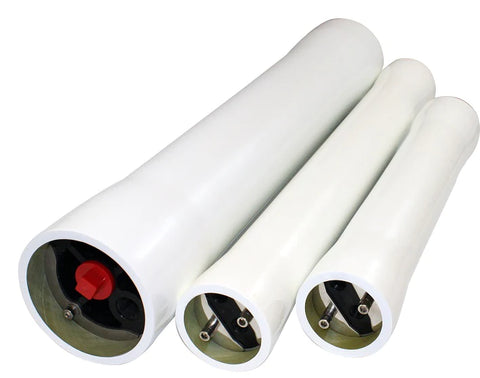
Membrane housings hold membrane elements in place during the filtration stage, keeping water flowing through the membrane surface under consistent pressure. Filter housings serve the same structural role for cartridge and bag filters. If a system develops performance issues, see troubleshooting common issues in reverse osmosis systems.
Check valves help prevent reverse flow, pressure-relief devices protect against excessive pressure, and automatic isolation or shutoff valves stop flow when specified operating conditions occur. Dedicated backflow-prevention assemblies may be required where cross-connections exist.
AXEONSupply.com provides a centralized wholesale source for many membrane-filtration systems, elements, housings, filters, pumps, controls, tanks, chemicals, instruments, valves, and replacement components used in commercial and industrial water treatment, including storage tanks, membrane housings, and filter housings.
Municipal vs. Industrial vs. Commercial Water Treatment Equipment — What's the Difference?
Municipal, industrial, and commercial water treatment plants use the same core equipment categories, but differ in scale, feed water source, and regulatory requirements. Municipal plants treat surface or groundwater for public drinking water systems under EPA and state primacy agency oversight.
Industrial water treatment equipment handles process water for manufacturing, power generation, food and beverage production, and similar applications. Feed water quality varies widely by industry, so industrial systems often require more customized filtration and reverse osmosis configurations than municipal plants.
Commercial facilities use application-specific treatment equipment that may include filtration, softening, membrane treatment, disinfection, monitoring, or chemical conditioning. Requirements vary significantly by building and water use: a hospital, hotel, restaurant, laboratory, or commercial laundry can each have very different water-quality needs.
See a guide to selecting the right RO system for your hospital for a commercial-scale example.
| Equipment Category | Municipal | Industrial | Commercial |
|---|---|---|---|
| Filtration | May include granular media, membranes, biologically active filtration, GAC, or other processes for large-volume public water | Custom RO and UF systems matched to process water needs | Cartridge, media, or RO systems sized to building demand |
| Disinfection | Chlorine and UV disinfection under EPA standards | Chlorine, UV, or ozone depending on process, product quality, microbial control, or discharge requirements | UV, chlorine, or other methods matched to application |
| Monitoring | Continuous chlorine and turbidity monitoring | Application-specific water quality monitoring | Ranges from basic pH and flow monitoring to more sophisticated validation, depending on the application |
Axeon Supply serves all three markets with the same wholesale product catalog, from residential-scale components to industrial reverse osmosis systems.
How AXEON and Axeon Supply Equip Water Treatment Plants Across the US and Canada
AXEON Water Technologies manufactures water treatment equipment, and Axeon Supply distributes it wholesale to plant operators, engineers, and procurement teams across the United States and Canada. AXEON has engineered membrane filtration systems and components for the last 3 decades, working directly with industrial, municipal, and commercial customers.
Axeon Supply operates from a warehouse fulfillment center in Temecula, California, shipping most orders via UPS or freight carriers depending on size. Customers can register for a wholesale account to access AXEON’s full product catalog, including reverse osmosis systems, filtration systems, membrane elements, and replacement parts.
For eligible AXEON-manufactured products, customers can receive complimentary technical guidance from AXEON’s support team within the warranty period, covering installation assistance, troubleshooting, and system verification. This support team is available by phone Monday through Friday. Support for third-party products may be subject to the applicable manufacturer’s policies.
Frequently Asked Questions
What Equipment Is Used in a Water Treatment Plant?
A water treatment plant uses intake pumps, screens, coagulation and flocculation units, filtration systems, disinfection equipment, monitoring instruments, and storage and distribution pumps. Each stage removes a specific type of contaminant, from large debris at intake to dissolved solids during filtration. See the equipment breakdown above for the full stage-by-stage detail.
What Kills Parasites in Water?
Filtration or membrane processes can physically remove waterborne parasites such as Cryptosporidium and Giardia, while validated UV treatment can inactivate susceptible organisms. Chlorine alone is notably less effective against these chlorine-resistant parasites, according to the CDC. Reverse osmosis and ultrafiltration membranes remove parasites by pore size, while UV light damages their genetic material to prevent reproduction.
What Are the Main Types of Reverse Osmosis Systems Used in Water Treatment Plants?
Reverse osmosis systems used in water treatment plants are typically categorized by feedwater and application, including tap-water, brackish-water, seawater, process-water, reuse, high-purity, and specialty separation systems. They may also be classified by production capacity and system configuration. The right category depends on the feedwater source, required finished-water quality, and production capacity for the specific application.
What Information Is Needed to Size Water Treatment Plant Equipment?
Equipment sizing typically requires source-water analysis, average and peak flow, operating schedule, finished-water requirements, available pressure, temperature, electrical service, recovery targets, discharge limitations, redundancy requirements, and site constraints. Working through these factors with a qualified engineer or manufacturer helps confirm the right equipment configuration before purchase.
Choosing the Right Equipment Partner
A water treatment plant runs reliably when every equipment category, from intake pumps to distribution systems, is sized correctly and sourced from a manufacturer that stands behind it. AXEONSupply.com gives plant operators, engineers, and procurement teams a centralized wholesale source for much of this equipment across the United States and Canada.
AXEON’s 37 years of membrane filtration and water purification manufacturing back every product in the catalog, supported by complimentary technical support within the warranty period. Explore AXEONsupply.com’s product categories or contact a water quality specialist to size the right equipment for your plant.