







Reverse Osmosis (RO) water is produced by pressure-driven membrane separation, Deionized water (DI) by removing dissolved ions, and Distilled Water (DW) by evaporation and condensation. RO can meet general process-water needs, DI serves applications requiring low ionic content, and distilled water is used where procedures or equipment specify it.
The right choice depends on the required water quality. None of these methods guarantees removal of every contaminant, and the treatment name alone does not confirm suitability.
The comparison below explains what each process targets, its limitations and operating requirements, helping you assess which approach meets your application’s specifications.
Deionized Water vs Reverse Osmosis Water vs Distilled Water: Comparison At-a-Glance
The main differences are the contaminants each process targets and the resources needed to produce water that meets your requirements.
| If your priority is… | Consider… | What to evaluate |
|---|---|---|
| Reducing dissolved salts across a range of applications | RO water | Contaminant rejection, feed-water quality and output volume |
| Achieving low ionic content | Deionized water | Conductivity or resistivity targets and other purity requirements |
| Producing water through evaporation and condensation | Distilled water | Required water specification, energy use and potential volatile contaminants |
| Meeting a demanding purity specification | A treatment combination | Whether RO, DI or another polishing stage is needed |
Typical water quality varies with the treatment system, feed water and operating conditions. The following figures provide context, not guaranteed output specifications.
| Water type | Illustrative conductivity or resistivity indicator | Important qualification |
|---|---|---|
| RO permeate | Approximately 5–50 µS/cm in some systems | Illustrative range only; actual output depends on feed water, membrane performance and operating conditions. |
| Deionized water | Up to 18.2 MΩ·cm resistivity for ultrapure water at 25°C | This is an ultrapure-water benchmark, not a typical result for every DI system. |
| Distilled water | Can be below 1 µS/cm immediately after effective distillation | Not guaranteed; purity depends on the still, feed water, volatile contaminants and handling. |
These values are indicative, not acceptance limits for every application. Conductivity and resistivity measurements are temperature-dependent, and results can change during storage and handling. Always compare measured water quality with the specification required by your process or equipment.
Water quality standards provide a more reliable basis for comparison than treatment methods alone. ASTM D1193-24 specifies requirements for reagent water, including conductivity, resistivity, total organic carbon (TOC), silica and microbiological parameters. ISO 3696:1987 defines three grades of water for analytical laboratory use. These standards illustrate why the intended application and its required water grade must guide treatment selection.
Low conductivity or TDS does not prove that water is free of organic compounds or microorganisms. Verify the parameters that matter to the process.
No method is universally best or cheapest. Compare the required output specification, source-water quality, production demand and lifecycle costs before selecting treatment equipment.
How Do RO, Deionization and Distillation Work?
Reverse Osmosis: Membrane Separation
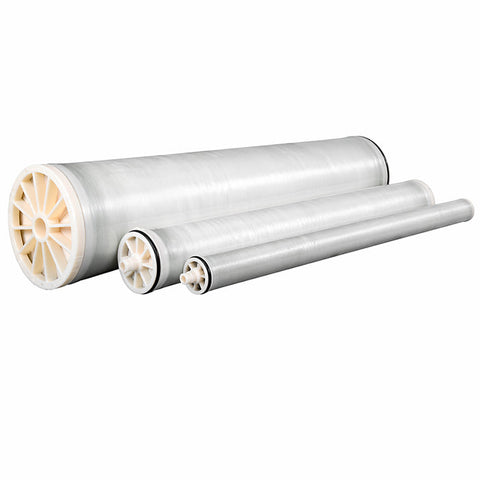
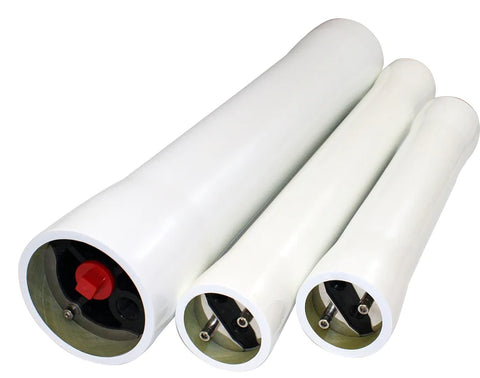
Reverse osmosis uses applied pressure to drive water through a semipermeable membrane. It produces two streams: treated water, called permeate, and concentrate, which carries rejected contaminants.
The membrane reduces many dissolved salts and other contaminants, but rejection varies by substance. Feed-water composition, temperature, operating pressure and membrane condition affect both output quality and production rate.
Pretreatment helps control scaling, fouling and exposure to chemicals that can damage the membrane. Filter replacement, performance monitoring and cleaning help maintain operation. RO treatment alone does not establish that water is sterile or ultrapure. Those requirements need additional controls and testing.
Deionization: Removing Dissolved Ions
Ion-exchange deionization uses cation resins to exchange positively charged ions for hydrogen ions and anion resins to exchange negatively charged ions for hydroxide ions. The released hydrogen and hydroxide ions combine to form water.
Reducing ionic content helps limit mineral residue during rinsing and ionic interference in laboratory and manufacturing processes.
Resins have finite capacity. As exchange sites become exhausted, ions begin passing into the treated water. Conductivity or resistivity monitoring helps identify when replacement or regeneration is needed.
DI alone does not reliably remove non-ionic organic compounds, particles or microorganisms. Electrodeionization offers another approach, combining ion-exchange media, membranes and an electric field.
Distillation: Evaporation and Condensation
Distillation heats water to produce vapor, then cools the vapor to collect liquid water. Many dissolved minerals, salts and other non-volatile substances remain behind.
Some volatile contaminants can travel with the vapor and enter the collected water. Performance depends on the contaminants present and the equipment’s separation controls.
Distillation requires heating energy and cooling capacity. Scale buildup can impair heat transfer and increase maintenance needs. Clean collection vessels, suitable storage materials and hygienic handling help prevent recontamination after treatment. Water intended for sensitive applications must still be tested against the required specification.
What Do TDS, Conductivity and Resistivity Tell You?
Conductivity, resistivity and conductivity-based TDS readings help assess dissolved ionic content, but they do not establish complete water purity.
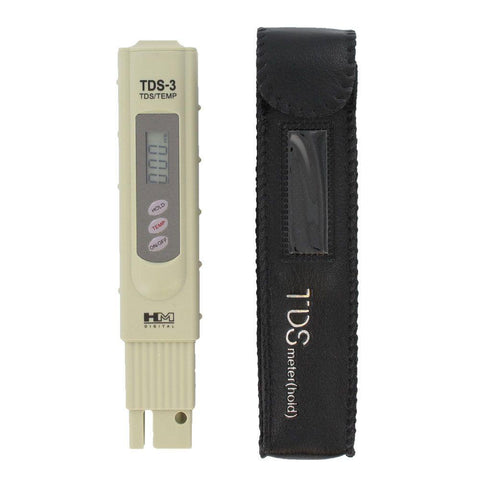
Conductivity measures how readily water conducts electricity. Resistivity is its reciprocal: lower conductivity means higher resistivity. Many handheld TDS meters estimate total dissolved solids from conductivity rather than measuring them directly.
Low estimated TDS or conductivity, or high resistivity, does not confirm the absence of organic compounds, microorganisms or endotoxins. RO, DI and distilled describe treatment approaches, not certified water grades. Your process specifications and equipment instructions determine which measurements and contaminant tests are required.
Which Type of Water Is Best for Your Application?
Use the water that meets your process or equipment specification. RO may be sufficient for some operations; others require DI polishing, distillation or a validated multi-stage system.
Industrial and Manufacturing Processes
RO can provide suitable process water when its measured output meets the required contaminant limits. Requirements differ between processes: water suitable for equipment washing may not meet the specification for a final product rinse.
Identify the contaminants of concern, acceptable concentrations and equipment sensitivity. Size treatment capacity around daily consumption and peak demand. Where RO output exceeds an allowable limit, assess additional polishing or another treatment stage.
Laboratories and Precision Applications
The analytical method, equipment instructions and required water grade determine treatment selection. DI water is not automatically laboratory-grade, and distilled water is not suitable for every analytical method.
Check requirements for ionic content, organic compounds, particles and microbial contamination where relevant. Sensitive instruments and procedures may need several purification stages, controlled storage and testing at the point of use. Select treatment against those requirements rather than assuming that a low conductivity reading confirms suitability.
Spot-Free Cleaning and Rinsing
RO may meet rinse-water requirements where the remaining dissolved minerals do not leave unacceptable residue. DI polishing can reduce residual ionic content further when the finish demands it.
Assess the surface material, acceptable spotting, source-water conditions and measured rinse-water quality. Verify results on the intended surface under actual cleaning conditions, since water readings alone do not establish the quality of the finished rinse.
Can RO Replace DI or Distilled Water?
Substitute Only When the Required Specification Is Met
Sometimes RO can replace Deionization or Distilled water, but only when RO water meets the application’s water-quality specification and equipment requirements. Similar TDS readings alone do not prove that two water types are interchangeable.
Depending on the process, substitution may require checking ionic, organic, microbial or other contaminant limits. If equipment instructions or a procedure specifies distilled water or a particular water grade, verify that an alternative is permitted and meets those requirements before using it.
Why Combine RO and DI?
RO reduces the ionic load entering Deionization, which can help extend resin service life. DI then removes residual ions to meet tighter ionic-purity targets.
When comparing commercial reverse osmosis systems, check whether the expected output meets your specification or requires downstream polishing. Do not assume DI is included in every RO system.
For guidance on your application’s specific water quality and purification requirements, AXEON Supply’s experts can help you define your needs and identify a suitable treatment approach.
How Do You Choose a Commercial Water Purification System?
Define Feed-Water Conditions and Required Output
Select a system against a measured feed-water analysis and a defined output specification. A general claim of pure water gives you no measurable basis for equipment selection.
Prepare the following before requesting a recommendation:
- Source-water analysis identifying relevant contaminants.
- Required output limits, including conductivity and other process-specific parameters.
- Average daily consumption and peak flow.
- Operating hours and production schedule.
- Storage capacity and distribution requirements.
These inputs help determine pretreatment, purification stages, system capacity and monitoring. Account for seasonal changes in source water and planned increases in demand. Storage can help meet peak usage, but tank materials and distribution hygiene must suit the required water quality. Ask suppliers to state the feed-water conditions behind their projected performance.
Compare Lifecycle Costs and Maintenance
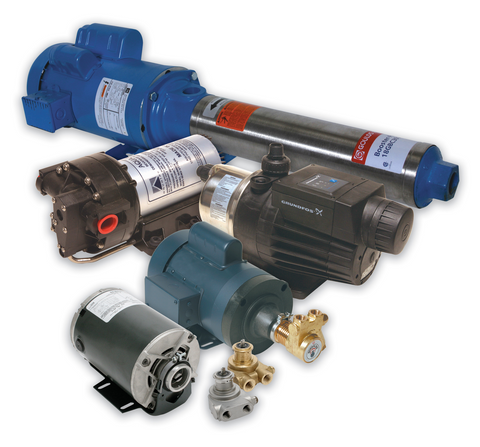
Compare operating costs at the same required output quality and production volume. For RO, assess pumping energy, water recovery, concentrate handling, filter replacement and maintenance of membrane elements. For DI, consider resin capacity and replacement or regeneration costs. For distillation, include heating, cooling, scale removal and equipment upkeep.
Include testing, servicing, labor and expected downtime. A lower purchase price may come with higher consumable use or maintenance costs.
If your requirements point toward RO, consult the guide to AXEON commercial RO systems before narrowing equipment options. Check system specifications against your actual feed water and demand.
Frequently Asked Questions
Is Deionized Water the Same as Distilled Water?
No. Deionization removes dissolved ions, while distillation uses evaporation and condensation. Both can have low ionic content but different remaining contaminants.
Can a TDS Meter Confirm Water Quality?
No. Most handheld TDS meters estimate dissolved solids from conductivity. They cannot confirm organic, microbial or every other application-specific purity requirement.
Can Purified Water Become Contaminated During Storage?
Yes. Contact materials, exposure to air and poor storage or distribution hygiene can change water quality. Where the application requires it, test water at the point of use rather than relying only on results measured immediately after treatment.
Choose Water Treatment Based on Your Required Specification
RO reduces many contaminants through membrane separation; DI targets dissolved ions, while distillation separates water from many non-volatile substances. Choose an approach based on verified output quality, operating demand and lifecycle requirements.
Connect with AXEON Supply experts to determine the right water treatment solution for your application or industry.
Prepare your feed-water analysis, required output limits and production demand before discussing a configuration, including whether pretreatment, downstream polishing or storage is needed to meet your requirements.