







Data center water treatment is the process of filtering, softening, and chemically conditioning the water used to cool servers. It protects cooling equipment from scale, corrosion, and biological growth while controlling how much water a facility consumes.
AI infrastructure has made this process more urgent. Google alone consumed 10.9 billion gallons of water in 2025, up 34% from the year before, largely to cool the servers running AI training and inference workloads.
AXEON Supply provides the membrane filtration systems and components that make this treatment possible. For 37 years, AXEON has engineered reverse osmosis systems, filters, and water softening equipment, available wholesale through AXEON Supply for facilities managing rising cooling water demand.
What Is Data Center Water Treatment?
Data center water treatment is the process of filtering, softening, disinfecting, and chemically conditioning water used in cooling systems. It combines mechanical filtration, membrane separation, and chemical dosing to prevent scale, corrosion, and biofouling in cooling equipment.
This process directly affects two things: equipment lifespan and total water consumption. The American Society of Heating, Refrigerating and Air-Conditioning Engineers (ASHRAE) recommends regular water quality monitoring in data center cooling loops for this reason.
Reverse osmosis membranes, sediment filters, and water softeners each target a specific contaminant. A treatment train usually combines several of these technologies rather than relying on one alone.
Why Does AI Infrastructure Increase Cooling Water Demand?
AI training and inference workloads generate three to ten times more heat per server rack than traditional computing. Traditional racks dissipate 5 to 15 kW of heat. AI training racks with modern GPU accelerators dissipate 40 to 120 kW, forcing cooling systems to use more water for the same cooling job.
How Much Water Do AI Data Centers Actually Consume?
Hyperscale facilities running at 50 to 100+ MW consume 1 to 5 million gallons of water per day at peak summer operation. Training a single large AI model uses approximately 185,000 gallons.
These figures compound quickly across a growing footprint. Google disclosed 10.9 billion gallons of daily water usage across its operations in 2025 alone. Researchers at UC Riverside project US AI data center water use could reach 68 billion gallons by 2028, a near threefold increase in five years. Data centers rely on this volume of water because evaporative cooling remains the most energy efficient way to reject heat at scale.
What Role Does Evaporative Cooling Play in Water Consumption?
Evaporative cooling is the dominant method for rejecting heat in large data centers. Warm water circulates through a cooling tower, where a portion evaporates and cools the water that remains.
This process concentrates dissolved minerals in the water left behind. Blowdown, the deliberate discharge of this concentrated water, typically represents 20 to 40% of total cooling tower water consumption. In regions where water is scarce, reducing this blowdown volume becomes a priority alongside reducing overall water usage.
What Problems Does Untreated Cooling Water Cause in Data Centers?
Untreated cooling water causes three primary problems: scale buildup, corrosion, and biofouling. Each reduces heat transfer efficiency, increases energy consumption, and raises the risk of unplanned cooling system downtime.
How Does Scale Formation Reduce Cooling Efficiency?
Scale is a hard mineral deposit, mostly calcium and silica, that accumulates on heat exchange surfaces. As scale builds up, it insulates these surfaces and forces the cooling system to work harder to remove the same amount of heat.
Water softeners remove the calcium and magnesium ions responsible for scale before they reach the cooling loop. Antiscalants work differently: they keep dissolved minerals suspended in the water so they cannot bond to equipment surfaces. AXEON Supply carries both Water Softening Systems and Antiscalants built for this purpose.
How Does Corrosion Damage Cooling System Components?
Corrosion occurs when dissolved oxygen and chlorides react with metal piping and heat exchangers, thinning the metal over time. Left untreated, corrosion leads to leaks and equipment failure well before its expected service life ends.
Corrosion inhibitors, delivered through chemical dosing systems, form a protective layer on metal surfaces. This layer blocks the chemical reactions that cause corrosion without requiring a change in water source.
What Causes Biofouling in Cooling Towers?
Biofouling is the buildup of bacteria, algae, and other microorganisms inside cooling towers and piping. Warm, recirculating water creates ideal conditions for this growth, which can clog pipes and reduce flow.
UV disinfection and chlorination systems control biofouling by killing microorganisms before they multiply. Most cooling towers require ongoing biocide treatment rather than a one-time application, since biological growth resumes quickly once treatment stops.
What Water Treatment Technologies Manage Data Center Cooling Water?
Data centers manage cooling water through five core technologies: reverse osmosis membranes, sediment and sand filters, water softeners, UV disinfection, and chemical dosing systems. Each targets a specific contaminant class, and most facilities combine multiple technologies in one treatment train.
What Does Reverse Osmosis Do for Cooling Tower Makeup Water?
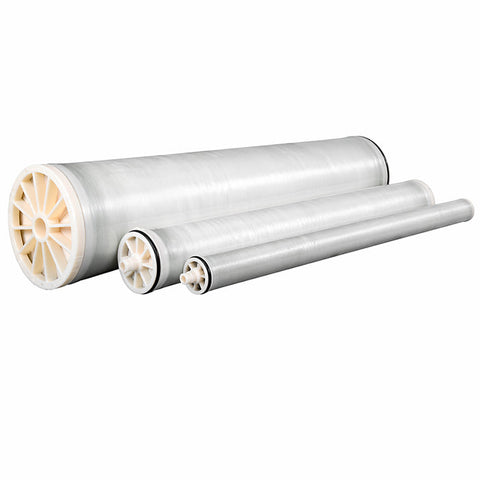
Reverse osmosis uses a semipermeable membrane to remove dissolved solids from makeup water before it enters the cooling tower. This lowers the mineral load the system has to manage, which allows the tower to run at higher cycles of concentration.
Cycles of concentration measure how many times water can recirculate before it must be discharged as blowdown. Untreated makeup water typically limits a tower to 3 to 5 cycles. RO pretreated water raises that to 8 to 15 cycles, cutting total water use by 20 to 40%.
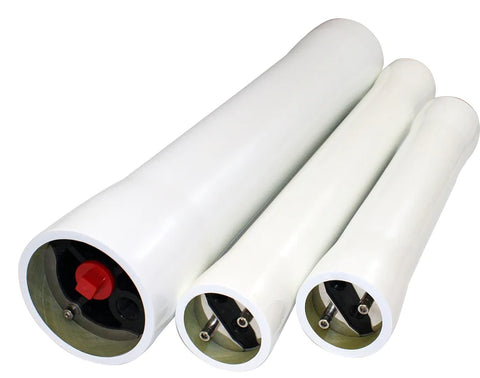
AXEON Supply offers Commercial Reverse Osmosis Systems and Industrial Reverse Osmosis Systems sized for these applications, along with Low Fouling RO Membranes and Brackish Water RO Membranes for facilities drawing from more challenging water sources.
How Do Sediment and Sand Filters Protect Downstream Equipment?
Sediment filters and sand filters remove suspended solids, such as dirt and debris, before water reaches more sensitive equipment. This first stage of filtration protects reverse osmosis membranes and softening resin from premature fouling.
AXEON Supply carries Sediment Cartridges and Media Filtration Systems built for this pretreatment role.
What Is the Function of Water Softeners in Cooling Systems?
Water softeners use ion exchange resin to remove calcium and magnesium hardness ions from water. Removing these ions before water enters the cooling loop prevents the scale formation described earlier in this article.
AXEON Supply's Water Softening Systems are built for this exact function, sized for commercial and industrial cooling applications.
How Does UV Disinfection Prevent Biological Growth?
UV disinfection exposes water to ultraviolet light that disrupts the DNA of bacteria and algae, preventing them from reproducing. Unlike chemical treatment, UV disinfection adds no residual chemicals to the water.
AXEON Supply's Ultraviolet Sterilization Systems provide this disinfection step without altering water chemistry.
What Do Chemical Dosing and Chlorination Systems Control?
Chemical dosing systems automatically inject precise amounts of biocides, corrosion inhibitors, and antiscalants into the cooling loop. Chlorination systems specifically control biological growth by maintaining a consistent chlorine residual throughout the system.
AXEON Supply's Chemical Injection Systems and Chemicals collection, including antiscalants and antifoulants, support this ongoing dosing requirement.
How Can Data Centers Recover and Reuse Cooling Water?
Data centers recover cooling water primarily through blowdown recovery using reverse osmosis. This process reclaims 70 to 80% of concentrated blowdown as reusable makeup water, cutting fresh water intake and reducing draw from local water supplies.
What Is Cooling Tower Blowdown Recovery?
Blowdown recovery treats the concentrated water a cooling tower would normally discharge. A dedicated RO system processes this stream separately from incoming makeup water, since blowdown carries a much higher mineral concentration.
Combined with RO pretreated makeup water, blowdown recovery can reduce total fresh water consumption by 50 to 65% compared to an untreated baseline. The remaining 20 to 30% of the blowdown stream, now further concentrated, requires disposal or additional treatment.
What Alternative Water Sources Can Reduce Fresh Water Demand?
Facilities in water stressed regions increasingly look beyond municipal water for cooling makeup. Reclaimed water, brackish groundwater, and surface water can all serve as alternative water sources when treated to the right specification.
Reverse osmosis polishes these alternative sources to cooling tower quality, whether the input is reclaimed water from a municipal treatment plant or brackish groundwater with naturally higher mineral content. This flexibility matters most for data center locations where local water availability is limited.
What Role Do Storage Tanks and Flow Control Valves Play in Water Recovery Systems?
Storage tanks hold recovered water until the cooling system needs it, buffering the gap between when water is treated and when it is used. AXEON Supply's Storage and Distribution collection includes pressurized and atmospheric tanks sized for this function.
Flow control valves regulate how much water moves through each part of the system at a given time. AXEON Supply's Valves and Switches collection covers the check valves, ball valves, and pressure relief valves that keep a recovery system balanced.
What Is the Return on Investment for Data Center Water Treatment?
Data center water treatment typically pays back its capital cost in 2 to 4 years. Municipal water and sewer rates range from $4 to $8 per 1,000 gallons in many US markets.
A facility consuming 2 million gallons of water daily spends between $2.9 million and $5.8 million a year on water and sewer costs alone. Cutting that consumption by 50% through RO pretreatment and blowdown recovery saves $1.5 million to $2.9 million annually.
Drought surcharges change this math further. Under overage rates of 200 to 400% during severe drought conditions, the payback period shortens considerably, since every gallon saved is worth more.
How Should Data Centers Choose a Water Treatment Partner?
Data centers should select a water treatment partner based on three factors: manufacturing reliability, component availability, and technical support responsiveness. These factors determine whether a system stays operational during the facility's busiest cooling periods.
What Makes AXEON Supply's Membrane Filtration Systems Suited to Data Center Cooling Water?
AXEON has engineered membrane filtration systems and components for 37 years, serving residential, commercial, industrial, and ultrapure markets. This experience covers the same reverse osmosis, softening, and disinfection technologies described throughout this article.
AXEON Supply distributes this equipment wholesale across the USA and Canada, with same-source availability for replacement membranes, filters, and chemicals. Direct customers receive complimentary technical support within the warranty period, including help with system start-up and troubleshooting.
For facilities specifying custom configurations, AXEON also offers private labeling and custom engineering, built around a facility's specific water chemistry and cooling load.
Related Water Treatment Considerations for Data Center Facilities
How Does Water Treatment Differ for Direct Liquid Cooling Systems?
Direct liquid cooling circulates coolant through cold plates attached directly to server components, rather than relying on air cooled cooling towers. This reduces evaporative water use, but most facilities still run evaporative cooling for backup or supplemental capacity, so water treatment needs do not disappear entirely.
What Monitoring Tools Track Water Quality in Real Time?
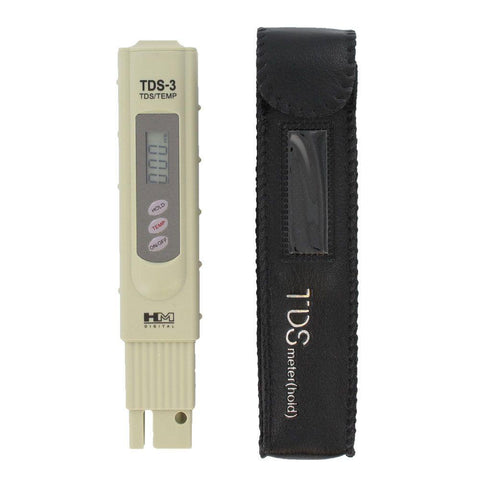
Flow meters and inline monitors track water usage and chemistry continuously, alerting operators to changes before scale or corrosion sets in. AXEON Supply's Measuring and Testing collection includes these instruments alongside water test kits for periodic manual checks.
Many data centers now treat daily water monitoring as a standard operating requirement, not an optional add-on, given how directly it affects both equipment life and total water consumption.
Get Started with Data Center Water Treatment from AXEON Supply
AXEON Supply offers wholesale reverse osmosis systems, filters, water softeners, and chemicals for data centers managing rising cooling water demand, shipped across the USA and Canada. Browse Commercial Reverse Osmosis Systems, Industrial Reverse Osmosis Systems, or the full Chemicals collection to find equipment sized for your facility.
For custom configurations or larger cooling loads, Request a Quote directly from AXEON Supply's engineering team.