







Boiler feed water treatment removes dissolved minerals, suspended solids, and dissolved gases from water before it enters a boiler.
Untreated feed water causes scale, corrosion, and fouling inside the boiler and its piping. A scale layer just 1/32 inch thick can raise fuel consumption by 2 to 10 percent.
Left unmanaged, scale and corrosion lead to tube failures, unplanned outages, and expensive repairs.
This article explains what boiler feed water treatment involves, why untreated water damages boiler systems, and why reverse osmosis has become a standard part of modern treatment programs for improving efficiency and lowering maintenance costs.
What Is Boiler Feed Water Treatment?
Boiler feed water treatment is the combination of external pretreatment and internal chemical treatment used to condition water before and after it enters a boiler. It removes hardness, dissolved solids, and dissolved gases that cause scale and corrosion, protecting the boiler and extending its service life.
Feed water itself is made up of two sources: makeup water drawn from a raw, city, or well supply, and condensate returned from the steam system.
External pretreatment conditions the makeup water before it ever reaches the boiler. Internal chemical treatment then manages any trace impurities that remain once the water is inside the system.
Together, these two phases form a complete boiler feed water treatment program.
What Is Feed Water in a Boiler?
Feed water is the water supplied to a boiler to generate steam.
It combines two sources: makeup water and returned condensate. Makeup water replaces water lost during operation and can come from raw water, city water, well water, or in-plant recycled sources.
Condensate is the steam that has already cycled through the system and returned to the boiler as hot water. Because it is already treated and heated, condensate reduces the total treatment load on the makeup water supply.
What Is the Difference Between Boiler Feed Water and Boiler Water?
Boiler feedwater is treated water entering the boiler. Boiler water is the water already inside the boiler during steam generation.
This distinction matters operationally. As steam leaves the boiler, dissolved solids in the boiler water become more concentrated.
Blowdown exists to control this concentration. It removes a portion of the boiler water regularly, preventing dissolved solids from building up to levels that cause scale, foaming, or carryover into the steam system.
Why Does Untreated Feed Water Damage Boiler Systems?
Untreated feed water introduces dissolved and suspended contaminants that cause three primary failure modes: scale, corrosion, and fouling.
Scale forms when calcium, magnesium, and silica precipitate out of the water and harden onto boiler surfaces. Even a thin scale layer acts as insulation, forcing the boiler to burn more fuel to transfer the same amount of heat. A scale deposit just 1/32 inch thick can increase fuel consumption by 2 to 10 percent, and thicker deposits raise the risk of overheating and tube failure.
Corrosion results from dissolved oxygen, carbon dioxide, and low pH reacting with metal surfaces inside the boiler and its piping. Left unchecked, corrosion causes pitting, leaks, and damage to condensate return lines, all of which shorten equipment life and increase repair frequency.
Fouling and sludge form when suspended solids settle inside the boiler rather than passing through with the water flow. This buildup reduces heat transfer efficiency and creates hot spots on boiler surfaces, both of which accelerate wear on internal components.
These three failure modes rarely appear in isolation. In most facilities, an unplanned tube failure or forced outage is the direct result of scale, corrosion, or fouling that went unaddressed for months or years before the failure occurred.
What Are the Two Phases of a Boiler Feed Water Treatment Program?
A complete boiler feed water treatment program combines two phases: external pretreatment and internal chemical treatment.
External pretreatment conditions the makeup water before it enters the boiler. It reduces hardness, dissolved solids, and dissolved gases at the source, lowering the workload placed on internal chemistry.
Internal chemical treatment manages the impurities that remain once water is inside the boiler. It controls pH, scavenges residual oxygen, and keeps suspended solids from settling into scale or sludge.
Both phases work together. Strong pretreatment reduces the volume of chemicals needed internally, while internal treatment protects against whatever pretreatment does not fully remove.
The next two sections break down exactly how each phase works.
External Pretreatment Methods
External pretreatment removes contaminants from makeup water before it reaches the boiler, following a consistent sequence across most facilities.
Filter suspended solids and particulate matter first, using media filtration, cartridge filtration, or sand filtration depending on the raw water source.
Soften the water next through ion exchange, which removes calcium and magnesium hardness ions before they can form scale.
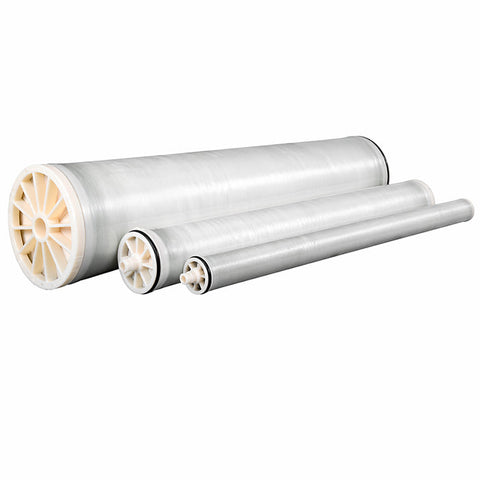
Treat dissolved solids using reverse osmosis membranes. RO membranes remove up to 99 percent of dissolved salts, minerals, and organic matter, making it the most effective single step for reducing the load on downstream treatment.
Remove dissolved oxygen and carbon dioxide through deaeration or degasification, which prevents these gases from causing corrosion once the water enters the boiler.
Each step in this sequence protects the ones that follow it. Filtration protects the softening resin, softening protects the RO membranes, and RO reduces the burden on deaeration and internal chemical treatment.
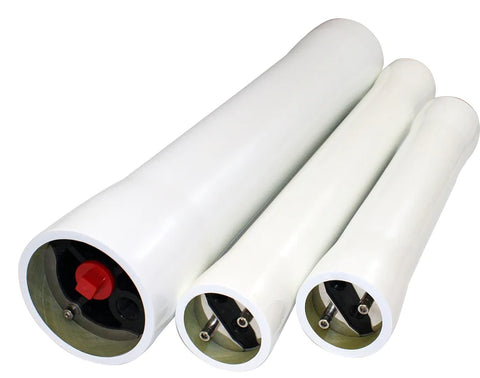
AXEON Supply carries industrial reverse osmosis systems and ion exchange systems used in exactly this kind of pretreatment sequence, along with the membrane housings, filtration systems, and components that support them.
Internal Chemical Treatment Methods
Internal chemical treatment manages the impurities that remain in the water once it is inside the boiler.
Scavenge residual dissolved oxygen using chemicals such as sodium sulfite. This prevents pitting corrosion on internal boiler surfaces that pretreatment alone cannot fully eliminate.
Inhibit scale formation using phosphates or polymers. These chemicals buffer pH and keep calcium and silica from solidifying into hard deposits on boiler tubes.
Condition sludge using polymers that keep suspended solids loose and fluid. This allows sediment to be flushed out easily during routine blowdown rather than settling and hardening inside the boiler.
Adjust pH using alkaline dosing. Maintaining the correct pH range protects metal surfaces from acidic corrosion and keeps the internal chemistry stable across changing feed water conditions.
These four treatments work continuously, since even well-pretreated feed water still carries trace impurities that must be managed inside the boiler itself.
AXEON Supply stocks antiscalants, antifoulants, and other treatment chemicals used to support these internal dosing programs. For a closer look at how these chemicals prevent scale and fouling in RO systems specifically, see Which Water Treatment Chemicals Prevent Scaling and Fouling in RO Systems?
What Are the Chemical Treatments for Boiler Feed Water?
The main chemical treatments for boiler feed water are oxygen scavengers, scale inhibitors, sludge conditioners, and pH adjusters.
Oxygen scavengers remove residual dissolved oxygen to prevent corrosion. Scale inhibitors keep calcium and silica from hardening into deposits. Sludge conditioners keep suspended solids loose enough to flush out during blowdown. pH adjusters maintain alkalinity to protect metal surfaces from acidic corrosion.
These four treatments work inside the boiler, after external pretreatment has already reduced the bulk of incoming impurities.
Why Do RO Systems Improve Boiler Efficiency and Reduce Maintenance Costs?
RO systems remove up to 99 percent of dissolved solids before water reaches the boiler, which reduces chemical dosing, blowdown frequency, and scale-related fuel loss, cutting both operating costs and unplanned maintenance.
Efficiency gains from RO pretreatment are well documented across industrial facilities. Chemical consumption typically drops by 50 to 60 percent once RO replaces or supplements conventional softening, since the membrane removes most dissolved minerals before any internal chemical treatment is needed.
Blowdown volume falls by 4 to 5 percent, and fuel costs decline by 3 to 4 percent as scale-related heat transfer loss decreases.
Boilers supplied with RO-treated feed water can also run at much higher cycles of concentration, in some cases 80 to 100 cycles, before blowdown becomes necessary. Higher cycles mean less heat and water are discarded with every blowdown event, directly improving overall plant efficiency.
Maintenance cost reduction follows directly from cleaner feed water. Fewer scale deposits mean fewer tube failures, and internal components last longer when they are not compensating for poor water quality year after year.
A single tube failure can cost tens of thousands of dollars in repair parts, labor, and lost production during the outage. Preventing even one such failure often justifies the capital cost of an RO system on its own, which is why many facilities treat RO as a reliability investment rather than a discretionary upgrade.
Compliance with industry standards becomes easier to maintain with RO-treated water. ASME and ABMA guidance recommends maintaining pH between 10.5 and 11.0 for steam boilers and 8.5 to 10.0 for hydronic systems, while keeping dissolved oxygen below 7 ppb in feedwater.
RO pretreatment makes these targets far easier to hit consistently, since the membrane has already removed the bulk of the minerals and organics that would otherwise require heavier chemical dosing to control.
AXEON Supply offers a Membrane Chemical Selector and Sizing Tool that helps facilities evaluate which RO configuration fits their water quality, flow rate, and pressure requirements.
How Do You Know If Your Facility Needs Boiler Feed Water Treatment Upgrades?
Several signs indicate that a facility's current feed water treatment is no longer adequate: recurring blowdown problems, rising chemical treatment costs, unplanned tube failures, seasonal water quality variability, and difficulty maintaining consistent feed water quality.
Recurring blowdown often means dissolved solids are building up faster than the system can control.
Rising chemical treatment costs signal that pretreatment is no longer removing enough hardness, leaving internal dosing to compensate.
Unplanned tube failures are frequently the first visible evidence of scale or corrosion that developed over months.
Seasonal water quality variability can overwhelm a softener sized for a narrower hardness range.
Inconsistent feed water quality across shifts usually points to a system operating beyond its design capacity.
AXEON Supply provides complimentary technical support for pre-sale sizing, evaluation, and system selection to help facilities match treatment to their specific water source and boiler requirements.
Key Takeaways
Boiler feed water treatment protects boiler assets by combining external pretreatment with internal chemical treatment.
Reverse osmosis has become a standard part of this process because it removes the majority of dissolved solids before water ever reaches the boiler, improving efficiency and reducing maintenance costs over the life of the equipment.
AXEON Supply manufactures and supplies the reverse osmosis systems, ion exchange systems, chemicals, and components used across this treatment process, along with technical support for facilities evaluating an upgrade.